





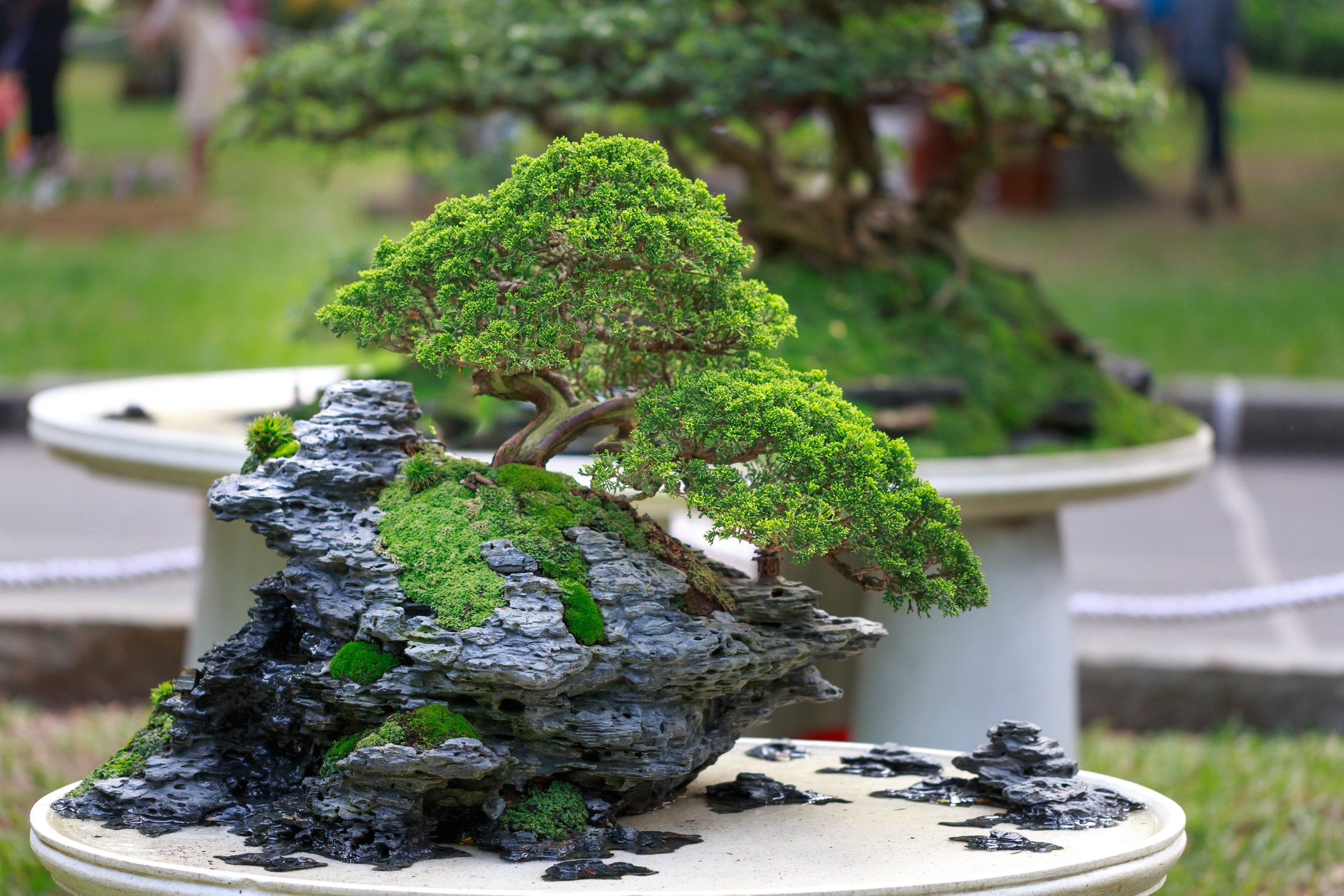

Patience is often treated as a personality trait—something you either have or lack. In self-help books and wellness apps, patience is framed as a mental muscle, strengthened through meditation, breathwork, and cognitive reframing. Meanwhile, on a quiet windowsill or in a small garden, a bonsai tree grows at its own pace, indifferent to our schedules, deadlines, and desires. This contrast raises a fascinating question: can bonsai guides teach patience better than meditation?
At first glance, comparing bonsai cultivation with meditation might seem unfair. One is a contemplative mental discipline refined over thousands of years; the other is a horticultural art that requires pruning shears, wire, and soil. Yet when patience is examined not as a vague virtue but as a learned skill—an embodied capacity to wait, observe, and respond wisely—the comparison becomes surprisingly rich.
This article explores patience through the lens of bonsai guides and meditation practices. We will look at how each method trains attention, time perception, emotional regulation, and decision-making. We will examine why bonsai guides—those instructional traditions passed down by growers—may offer a uniquely tangible, slow-burning education in patience, sometimes surpassing meditation in everyday effectiveness. The goal is not to crown a winner, but to understand how patience is cultivated when the mind works alone, and when the hands must collaborate with time itself.
What Do We Really Mean by “Patience”?
Before comparing methods, we need to clarify what patience actually is. Patience is not merely waiting. Waiting can be passive, impatient, even resentful. Patience is active waiting with awareness. It involves:
- Tolerating delay without frustration
- Resisting the urge for premature action
- Accepting uncertainty and imperfection
- Aligning expectations with reality
- Maintaining care and attention over long periods
In psychology, patience overlaps with emotional regulation, impulse control, and delayed gratification. In philosophy, it connects to virtue ethics and wisdom. In everyday life, patience is what keeps a student practicing fundamentals, a professional refining a skill, or a parent responding calmly for the hundredth time.
Meditation aims to train these capacities internally. Bonsai guides aim to shape them externally, through interaction with a living system that refuses to be rushed.
Meditation as a Training Ground for Patience
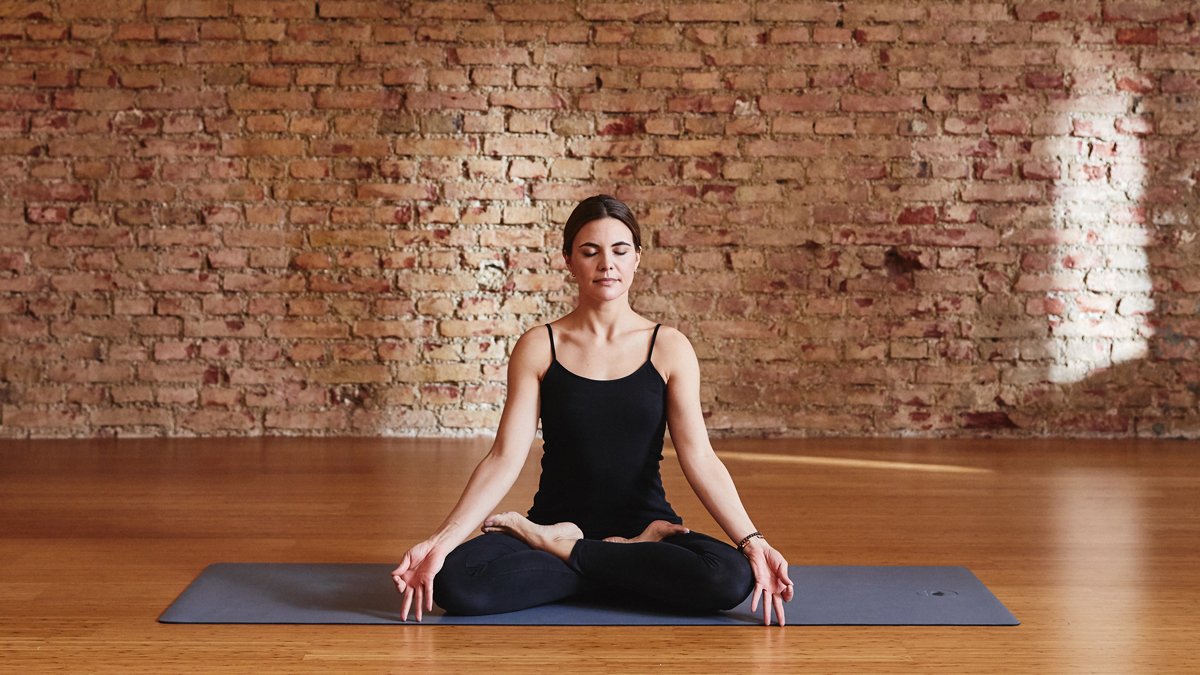
Meditation is often presented as the gold standard for cultivating patience. Its logic is elegant: by sitting still, observing the breath, and watching thoughts arise and pass without reaction, one learns to endure discomfort, boredom, and distraction. Over time, this builds tolerance for delay and frustration.
How Meditation Trains Patience
- Temporal Stretching
Sitting quietly for 10, 20, or 40 minutes stretches one’s sense of time. Impatience becomes visible as restlessness or mental chatter. - Non-Reactivity
Meditation teaches practitioners not to immediately act on impulses. An itch arises; one notices it instead of scratching. - Acceptance of Impermanence
Thoughts, emotions, and sensations change on their own. This realization softens the need to control outcomes. - Metacognitive Awareness
By observing the mind, practitioners learn to recognize impatience as a mental event rather than an identity.
These are powerful skills. Decades of research and lived experience confirm meditation’s benefits for attention, emotional balance, and stress reduction.
The Limits of Meditation for Some Learners
Despite its strengths, meditation has limitations when it comes to teaching patience in practical life.
- Abstract Feedback: Progress is subtle and hard to measure. Beginners often feel unsure whether they are “doing it right.”
- Context Gap: Sitting still does not always translate smoothly into patience during work, relationships, or creative projects.
- Motivational Drop-Off: Without visible results, many people abandon meditation before patience has time to develop.
- Cognitive Bias: Some practitioners use meditation to escape discomfort rather than engage with it constructively.
Meditation trains patience internally, but it relies heavily on self-discipline and introspection—skills not everyone finds accessible at first.
Bonsai Guides: Patience Made Visible
Bonsai is often misunderstood as simply “keeping small trees.” In reality, it is a disciplined art form governed by biological laws, aesthetic principles, and long time horizons. Bonsai guides—books, mentors, and traditional teachings—do not merely instruct technique. They encode a philosophy of time, restraint, and respect for natural processes.
What Bonsai Demands from the Practitioner
- Long-Term Commitment: A bonsai is not finished in months. It may take years or decades to approach maturity.
- Delayed Reward: Many actions—pruning, wiring, repotting—show their true effects only after seasons have passed.
- Irreversibility: Mistakes can permanently alter or kill the tree. Impulsive action is costly.
- Observation Over Control: The tree responds to climate, light, and soil more than to human intention.
In this environment, impatience is not just uncomfortable—it is destructive.
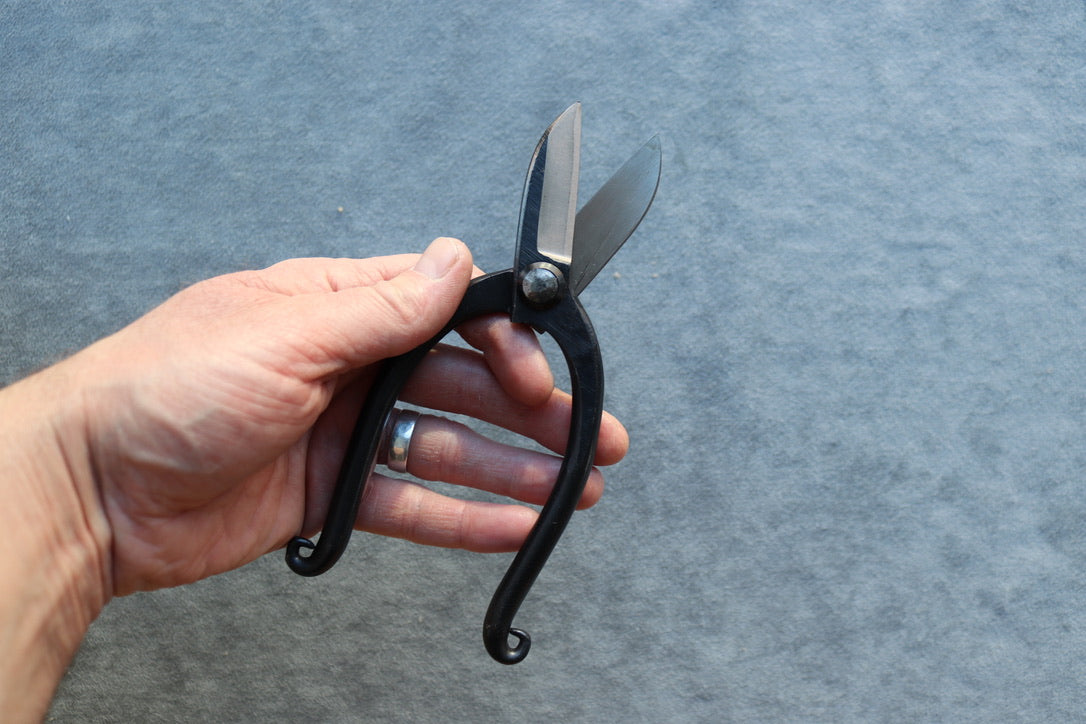
How Bonsai Guides Teach Patience Step by Step
Unlike meditation, which often begins with minimal instruction and maximum self-awareness, bonsai guides scaffold patience through concrete practices.
1. Slow Instruction by Design
Bonsai guides emphasize when not to act. They teach beginners to wait:
- Wait for the right season before pruning
- Wait for roots to recover before shaping
- Wait for growth to stabilize before styling
This repeated instruction to delay action trains patience through obedience to biological timing.
2. Visible Consequences Over Time
A rushed cut does not fail immediately. It fails months later. This delayed feedback teaches a deep lesson: impatience often looks efficient in the short term but costly in the long term.
3. Externalized Attention
Instead of monitoring thoughts, the practitioner monitors a living organism. Attention shifts outward:
- Leaf color signals health
- Bud formation indicates readiness
- Soil moisture dictates care
Patience becomes a form of listening rather than self-control.
4. Seasonal Thinking
Bonsai guides teach practitioners to think in seasons, not days. This reframes time itself. Progress is measured in cycles, not checklists.
The Psychology of Tangible Waiting
One reason bonsai guides can be so effective is that they align with how humans naturally learn.
Embodied Learning
Patience is not just a mental concept; it is embodied. Hands that prune too quickly learn restraint through loss. Eyes that watch slow growth learn endurance through repetition.
Concrete Metrics
Unlike meditation, bonsai offers visible indicators of progress:
- Stronger root systems
- Improved branch structure
- Healthier foliage
These tangible outcomes reinforce patience more reliably than abstract mental states.
Emotional Investment Without Immediate Gratification
A bonsai tree evokes care and responsibility. The practitioner wants results, but must accept delay. This tension is precisely what trains patience in a realistic context.
Bonsai vs. Meditation: A Functional Comparison
Rather than framing the question philosophically, let’s compare how each approach trains patience across key dimensions.
1. Feedback Speed
- Meditation: Slow, subtle, internal
- Bonsai: Slow, visible, external
Both are slow, but bonsai feedback is easier to interpret.
2. Error Cost
- Meditation: Low—wandering thoughts have no lasting damage
- Bonsai: High—mistakes can permanently harm the tree
Higher stakes encourage careful restraint.
3. Transfer to Daily Life
- Meditation: Requires conscious transfer
- Bonsai: Naturally generalizes to planning, work, and relationships
Tending a tree trains habits that spill into other domains.
4. Engagement Style
- Meditation: Inward, still, minimalist
- Bonsai: Outward, tactile, creative
Different personalities resonate differently with each.
Why Bonsai Guides May Teach Patience More Effectively for Many People
The claim is not that bonsai is inherently superior, but that it may be more accessible and durable as a patience teacher for certain learners.
Patience as a Byproduct, Not a Goal
In meditation, patience is often an explicit goal. Ironically, striving for patience can create impatience. Bonsai guides rarely talk about patience directly. They teach care, timing, and respect. Patience emerges as a byproduct.
Natural Resistance to Shortcuts
Meditation can be gamified: streaks, timers, apps. Bonsai resists shortcuts. A tree cannot be optimized beyond its biological limits.
Meaningful Attachment
Meditation often emphasizes non-attachment. Bonsai encourages responsible attachment—caring deeply without forcing outcomes. This mirrors real life more closely.
The Aesthetic Dimension of Waiting
One overlooked aspect of patience is aesthetics. Bonsai guides train patience through beauty.
Learning to See Potential
A young bonsai often looks unimpressive. Guides teach practitioners to see what is not yet visible: future branch lines, imagined canopies, long-term form. This trains patience through vision.
Appreciating Imperfection
Bonsai aesthetics value asymmetry, scars, and age marks. Waiting is not about achieving perfection quickly, but about allowing character to emerge.
Meditation also values acceptance, but bonsai makes acceptance visible and sharable.
When Meditation Teaches Patience Better
It would be unfair to ignore the areas where meditation excels.
- Inner Turbulence: Meditation directly addresses mental agitation, which bonsai may not touch.
- Portability: Patience learned through meditation can be practiced anywhere.
- Emotional Awareness: Meditation develops insight into emotional triggers that external practices may bypass.
For individuals dealing with anxiety, rumination, or emotional overload, meditation may be the more direct path to patience.
Integrating Bonsai and Meditation
The most interesting conclusion may not be either-or. Bonsai and meditation complement each other beautifully.
- Meditation sharpens awareness, making bonsai observation more precise.
- Bonsai grounds meditation insights in daily responsibility.
- Together, they train patience as both an inner stance and an outer practice.
Some bonsai practitioners even meditate before pruning, aligning mind and hand. Some meditators take up gardening to embody what they contemplate.
Patience in a Fast World
Modern life rewards speed, efficiency, and instant feedback. Patience is increasingly countercultural. Bonsai guides quietly rebel against this trend. They insist that some things cannot be rushed, optimized, or scaled.
Meditation teaches us to slow the mind. Bonsai teaches us to slow our expectations.
In a world obsessed with productivity, tending a tree that grows millimeters per year is a radical act. It teaches patience not through slogans, but through seasons.
Final Reflection: Which Teaches Patience Better?
So, can bonsai guides teach patience better than meditation?
For many people, yes—not because they replace meditation, but because they embed patience in action. Bonsai guides turn waiting into a skill practiced with the hands, eyes, and heart. They make time a collaborator rather than an obstacle.
Meditation refines patience internally. Bonsai cultivates it externally. One trains the mind to wait; the other trains the self to cooperate with reality.
Ultimately, patience is not learned by thinking about time, but by living with it. A bonsai tree, quietly growing on a windowsill, may be one of the most patient teachers we will ever have.