







The world of mental health care is evolving rapidly. With technological breakthroughs redefining the way we live, work, and interact, it’s no surprise that therapy is also stepping into the digital age. One of the most striking innovations in recent years is Virtual Reality (VR) therapy, a treatment method that leverages immersive digital environments to address psychological conditions. The question arises: could VR therapy ever replace traditional counseling?
To answer this, we must explore how VR therapy works, its advantages, its limitations, and how it compares to face-to-face counseling. This article will provide a comprehensive, nuanced, and engaging examination of VR therapy, its current status, and the potential future of mental health care.
Understanding VR Therapy
Virtual Reality therapy, often referred to as VR exposure therapy, is a form of treatment that uses computer-generated simulations to place users in interactive, immersive environments. These simulations can range from calming nature landscapes to scenarios that safely provoke anxiety, allowing patients to confront and manage their fears under controlled conditions.
At its core, VR therapy combines psychological principles with cutting-edge technology. Traditional cognitive-behavioral therapy (CBT), exposure therapy, and even mindfulness exercises can all be adapted into VR formats. By blending therapeutic techniques with immersive environments, VR offers a unique way to engage the brain, creating opportunities that were previously impossible in conventional therapy settings.
VR therapy usually involves a headset, sensors, and sometimes haptic feedback devices. The user navigates a 3D environment that feels real, while the therapist monitors reactions, physiological responses, and progress through a connected interface. This setup allows for precise tracking of triggers, emotional responses, and behavioral changes.
How VR Therapy Works
The effectiveness of VR therapy relies on two psychological principles: immersion and exposure.
Immersion: The human brain responds to virtual environments similarly to real-world experiences. This means that when a patient enters a VR scenario, the body reacts authentically—heart rate increases with anxiety-inducing simulations, and relaxation can be felt in calming settings. Immersion allows therapists to manipulate variables in real time, offering a controlled, repeatable, and safe therapeutic experience.
Exposure: Traditional exposure therapy requires patients to face their fears gradually. VR amplifies this by offering realistic scenarios that might be impractical or unsafe in real life. For example, someone with a phobia of flying can “experience” a flight multiple times in VR, gaining coping strategies and desensitization without ever leaving the therapist’s office.
VR also allows for the integration of gamification elements—rewards, progress tracking, and interactive challenges—which can motivate patients and make therapy less intimidating. These interactive experiences often reduce the stigma and resistance associated with traditional counseling.
Advantages of VR Therapy
- Accessibility: One of the most exciting aspects of VR therapy is its potential to increase access to mental health care. Individuals living in remote areas, those with mobility issues, or those hesitant to visit a therapist in person can now participate in immersive therapy sessions from home.
- Safety: High-risk scenarios that are difficult or impossible to replicate in real life—like crossing a busy street for someone with agoraphobia—can be safely simulated in VR. Patients can confront fears without exposure to real-world danger, allowing for risk-free practice.
- Precision and Measurement: VR systems can collect detailed data on user behavior, physiological responses, and progress. Therapists can use this data to refine treatments, personalize interventions, and track outcomes more objectively than traditional methods.
- Consistency: Unlike real-world exposure therapy, VR ensures that every session is identical, providing consistency in stimuli and allowing precise control over the therapeutic environment.
- Cost-effectiveness: While initial VR setups can be expensive, scaling therapy through digital platforms can reduce long-term costs, particularly for individuals requiring frequent or prolonged sessions.
- Engagement: Many patients find VR sessions more engaging than traditional therapy. The novelty and immersive nature of VR can encourage participation, especially among younger patients who are accustomed to digital environments.

Limitations of VR Therapy
Despite its advantages, VR therapy is not without limitations.
- Technical Barriers: VR requires hardware, software, and reliable internet connectivity. Users must be comfortable with technology, and technical issues can interrupt or reduce the effectiveness of sessions.
- Accessibility Challenges: While VR increases access in some ways, the cost of devices and software can be prohibitive for some individuals, creating a digital divide in mental health care.
- Physical Side Effects: Extended VR use can cause motion sickness, eye strain, or headaches. These issues must be managed carefully to avoid detracting from the therapeutic experience.
- Limited Scope: While VR excels in exposure-based therapy, mindfulness, and anxiety management, it may not be as effective for deeper, more complex psychological issues, such as unresolved trauma, personality disorders, or interpersonal conflicts. Human empathy, nuanced understanding, and intuition remain essential in these cases.
- Ethical Concerns: Data privacy and security are critical considerations. The detailed physiological and behavioral data collected by VR systems must be protected to prevent misuse. Additionally, the line between reality and virtual experiences may become blurred for some users, potentially leading to dependence on virtual environments.
- Absence of Human Connection: One of the biggest criticisms is that VR cannot replicate the empathetic, emotional connection between therapist and patient. Nonverbal cues, body language, and the subtle nuances of human interaction are difficult to fully capture in a digital setting.
Comparing VR Therapy and Traditional Counseling
To understand whether VR could replace traditional counseling, we must directly compare their strengths and weaknesses.
| Feature | VR Therapy | Traditional Counseling |
|---|---|---|
| Accessibility | High for tech-savvy users; can be done remotely | Limited by geography, scheduling, and therapist availability |
| Immersion | Extremely immersive; controlled exposure | Limited to imagination and discussion; relies on patient visualization |
| Human Connection | Minimal; interactions mediated through avatars or monitors | Direct human empathy, emotional nuance, and rapport |
| Data Tracking | Detailed and precise; physiological and behavioral metrics | Mostly subjective; relies on patient self-report and therapist observation |
| Cost | High initial cost, potential for long-term savings | Ongoing cost per session; insurance coverage may vary |
| Scope | Effective for phobias, anxiety, PTSD, and some mindfulness exercises | Effective for broad psychological conditions, including complex emotional and relational issues |
This comparison reveals that VR therapy is a powerful complement to traditional counseling, but it struggles to fully replace the human element essential to mental health care.
Case Studies and Real-World Applications
Several real-world applications demonstrate the potential of VR therapy:
- PTSD Treatment: VR exposure therapy has been used effectively with veterans suffering from PTSD. By recreating battlefield scenarios in a controlled environment, patients can process trauma gradually and safely.
- Phobia Management: Fear of heights, flying, spiders, or public speaking can be treated through VR exposure therapy. Patients often show measurable reductions in anxiety after only a few sessions.
- Social Anxiety: Virtual social environments allow patients to practice conversations, public speaking, and interpersonal skills in a safe setting, gradually building confidence for real-world interactions.
- Pain Management: VR environments designed to distract and engage the brain can help reduce the perception of pain during medical procedures or chronic conditions, offering a non-pharmaceutical intervention.
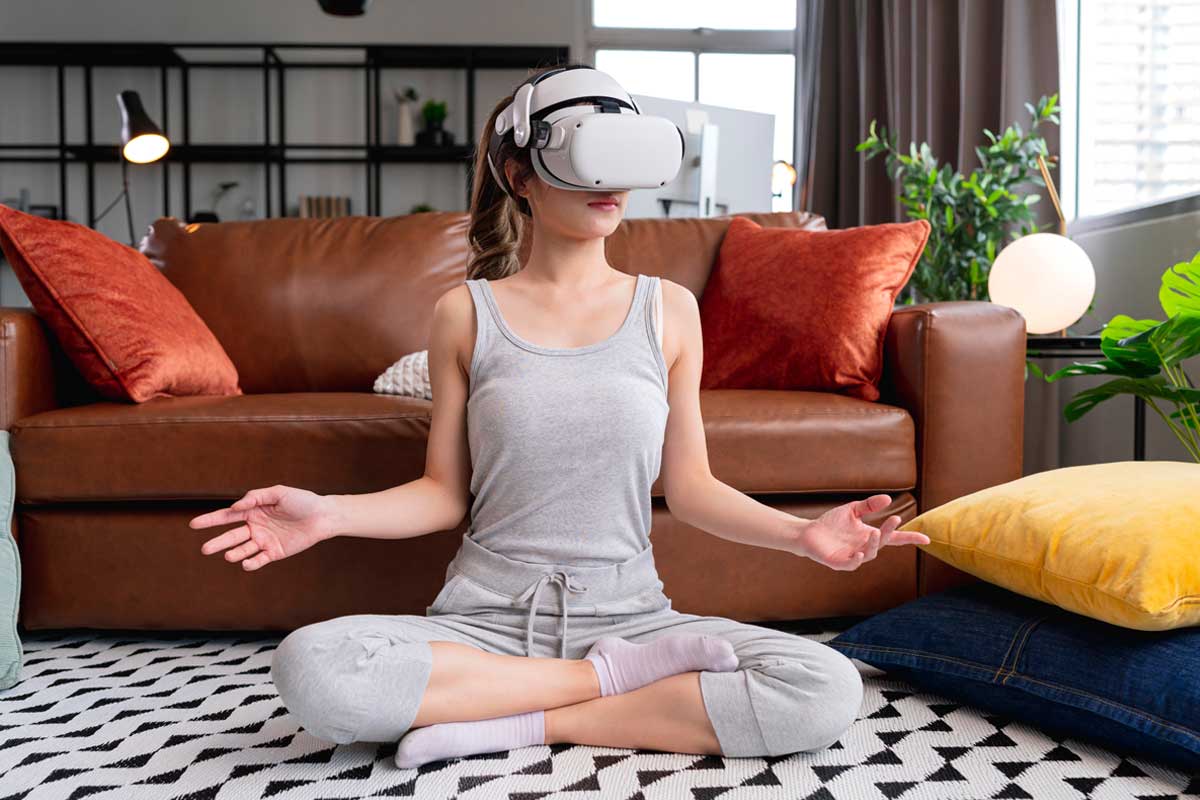
- Mindfulness and Stress Reduction: Immersive natural landscapes and guided meditations in VR can enhance relaxation, helping users manage stress and cultivate mindfulness more effectively than traditional audio-based methods.
These examples highlight that VR therapy is versatile and effective, especially when used in combination with traditional counseling or as part of a hybrid treatment plan.
The Psychology Behind VR Therapy
VR therapy works because of the brain’s ability to respond to virtual stimuli as if they were real. Neuroscientific studies have shown that immersive VR environments can activate neural circuits associated with fear, empathy, and learning. This makes VR a powerful tool for behavioral change and emotional regulation.
Cognitive-behavioral principles are particularly well-suited for VR. For instance, exposure therapy relies on repeated, controlled exposure to triggers. VR provides a way to conduct exposure in a repeatable, measurable, and safe environment, enhancing learning and desensitization.
Moreover, VR can enhance motivation through gamification. By incorporating progress tracking, rewards, and interactive challenges, VR therapy can increase adherence and engagement, which are often barriers in traditional counseling.
Hybrid Approaches: The Future of Therapy
Rather than replacing traditional counseling, VR is more likely to complement it. Hybrid approaches, combining face-to-face therapy with VR sessions, offer the best of both worlds:
- Therapist-guided VR: The therapist can observe the patient’s reactions in real time and provide guidance, interpretation, and emotional support, enhancing the effectiveness of VR exposure.
- Remote VR sessions: Patients can practice skills or confront fears at home, while therapists monitor progress digitally, providing support and feedback asynchronously.
- Integration with Traditional Therapy: VR can be used as a preparatory or supplementary tool, helping patients build skills and confidence before or between counseling sessions.
This hybrid model preserves the essential human connection while leveraging the technological advantages of VR, creating a more flexible, accessible, and effective mental health system.
Challenges for Widespread Adoption
While promising, VR therapy faces several challenges before it can be widely adopted:
- Standardization: Different VR programs vary in quality, effectiveness, and adherence to psychological principles. Creating standardized, evidence-based VR protocols is essential for widespread adoption.
- Training Therapists: Mental health professionals must be trained to use VR tools effectively, which requires time, resources, and adaptation of traditional therapeutic techniques.
- Regulation and Ethics: Ensuring patient safety, data privacy, and ethical use of VR technology is critical. Regulatory frameworks are still developing, and misuse could undermine trust in the technology.
- Cultural Acceptance: Some patients may resist VR therapy due to skepticism, fear of technology, or preference for human interaction. Overcoming cultural and personal biases will be important for adoption.
Conclusion
VR therapy is an exciting and rapidly advancing field, offering unique benefits that complement traditional counseling. Its immersive, engaging, and controlled environments provide new ways to address phobias, anxiety, PTSD, and stress, while expanding accessibility to mental health care.
However, VR therapy cannot fully replace traditional counseling. The human connection, empathy, and nuanced understanding provided by a trained therapist remain irreplaceable. The most promising path forward is a hybrid approach, where VR is integrated into broader therapeutic programs, enhancing effectiveness, engagement, and accessibility without losing the critical human element.
In short, VR therapy is not a replacement—it’s an evolution. By merging the best of technology with the irreplaceable value of human interaction, the future of mental health care promises to be both innovative and deeply humane.