





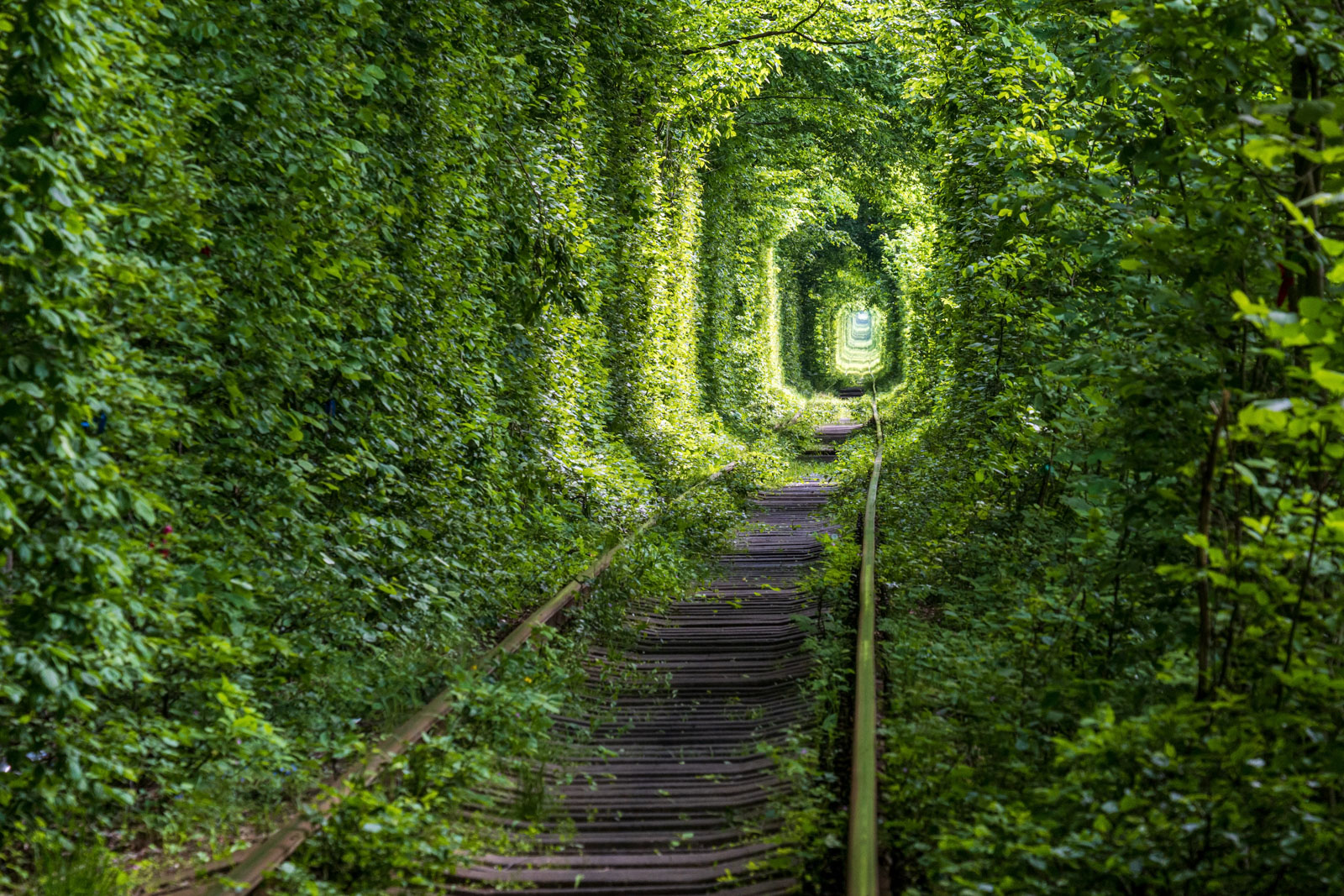

Imagine stepping into a corridor where the ceiling is alive—woven from leaves, light, and wind—and the walls are not walls at all but trunks rising patiently from the earth. The path ahead narrows and lengthens, bending your sense of distance. Time seems to soften. Sound changes. Even your breathing falls into a different rhythm. This is the quiet alchemy of a tree-lined tunnel: an ordinary path transformed into a passage that feels ceremonial, immersive, and gently transformative.
Tree-lined tunnels exist across cultures and continents, shaped by intention or by the slow choreography of nature. They are found in cities and countrysides, near palaces and farms, along rivers and through parks. Some are meticulously planned; others are accidental masterpieces, born when trees lean toward one another over decades, branches knitting overhead like clasped hands. To walk through one is to experience a rare blend of design and wildness—architecture without architects, or architecture co-authored by time.
This article explores why tree-lined tunnels feel magical, how they work on the mind and body, how they’ve been designed and revered throughout history, and what makes them so enduringly compelling. We’ll examine the science behind their allure, the artistry of their formation, the cultural meanings they carry, and the practical principles that make them successful. Along the way, we’ll consider whether “magic” is the right word at all—or whether something even more interesting is happening beneath the canopy.
1. What Is a Tree-Lined Tunnel, Really?
At its simplest, a tree-lined tunnel is a pathway flanked by trees whose branches meet or nearly meet overhead, forming a continuous canopy. But this definition misses the essence. A true tree-lined tunnel is not just a row of trees; it is a spatial experience.
Several elements distinguish a tunnel from a mere avenue:
- Enclosure: The sense that the space wraps around you, narrowing your visual field.
- Continuity: A sustained canopy that carries the experience forward rather than breaking it into fragments.
- Perspective: A strong vanishing point that draws the eye—and the body—forward.
- Atmosphere: Changes in light, sound, temperature, and even smell.
When these elements align, the path becomes immersive. You don’t just walk along it; you walk within it.
Tree-lined tunnels can be formal or informal. In formal landscapes, they are often symmetrical, with evenly spaced trees trained or pruned to maintain a precise arch. In informal settings, they may curve gently, branches overlapping unevenly, leaves filtering sunlight in constantly changing patterns. Both types can feel magical, but they speak different visual languages: one of order and ceremony, the other of intimacy and surprise.
2. The Psychology of Walking Through a Green Corridor
Why does walking through a tree-lined tunnel feel so different from walking down an open road? The answer lies in how the human brain processes space, pattern, and nature.
2.1 Enclosure Without Confinement
Humans are paradoxical creatures when it comes to space. We crave openness, yet we feel safest when we are partially enclosed. Tree-lined tunnels strike this balance beautifully. The canopy creates a ceiling, offering a sense of shelter, while the open path ahead preserves freedom of movement.
This combination activates what environmental psychologists call prospect and refuge: the ability to see forward (prospect) while feeling protected (refuge). It’s the same reason people love window seats overlooking landscapes or benches tucked beneath pergolas.
2.2 The Power of Rhythmic Repetition
Rows of trees create rhythm. Trunks repeat at regular intervals, branches echo one another overhead, and shadows fall in patterns that shift with the sun. The brain finds rhythm soothing. It reduces cognitive load, allowing attention to relax without disengaging entirely.
As you walk, your steps synchronize with the visual cadence. This can induce a mild meditative state—alert but calm, focused but unhurried.
2.3 Soft Fascination and Mental Restoration
Natural environments are known to promote mental restoration through what researchers describe as soft fascination: stimuli that gently hold attention without demanding effort. Leaves fluttering, light dappling the ground, birds moving between branches—these details engage the senses while allowing the mind to wander.
Tree-lined tunnels concentrate this effect. By narrowing the field of view, they reduce distractions and amplify subtle natural cues. The result is a space that feels both rich and restful.
3. Light: The Quiet Magician Overhead
If trees are the walls and ceiling of the tunnel, light is the atmosphere that brings it to life.
3.1 Dappled Light and Temporal Awareness
Sunlight filtering through leaves creates dappled patterns that shift minute by minute. This dynamic light makes time visible. You become aware of movement—not just your own, but the slow turning of the world.
Unlike artificial lighting, which is static and predictable, natural light in a tree tunnel is endlessly variable. Clouds pass, leaves sway, seasons change. Each walk is technically unique, even if the path never changes.
3.2 Seasonal Transformations
A tree-lined tunnel is never the same place twice across the year:

- Spring: Fresh leaves soften the light, blossoms add fragrance and color.
- Summer: Dense foliage deepens shade, cooling the air and intensifying contrast.
- Autumn: Leaves thin and turn luminous, bathing the path in gold and amber.
- Winter: Bare branches reveal structure, allowing light to stream through skeletal arches.
These transformations give the tunnel a narrative quality. Returning across seasons feels like revisiting a familiar story told in different moods.
4. Sound, Temperature, and the Invisible Architecture
The magic of tree-lined tunnels isn’t only visual. It’s multisensory.
4.1 Acoustic Softening
Trees absorb and diffuse sound. In a tunnel, traffic noise fades, footsteps sound softer, and voices carry differently. Even in urban environments, this acoustic shift can feel dramatic. The space becomes quieter without being silent, intimate without being isolating.
4.2 Microclimates on Foot
Tree canopies regulate temperature and humidity. Shade cools the air; transpiration adds moisture. On a hot day, entering a tree-lined tunnel can feel like stepping into a natural climate-controlled room.
This physical comfort enhances emotional comfort. When the body relaxes, the mind follows.
5. A Brief History of Tree-Lined Paths
Tree-lined tunnels are not a modern invention. They appear wherever humans have shaped landscapes with care and patience.
5.1 Ancient Processional Ways
In many ancient cultures, tree-lined avenues marked ceremonial routes—paths to temples, palaces, or sacred sites. Trees emphasized the importance of the journey itself, not just the destination. Walking beneath a canopy became a ritual transition from the ordinary to the significant.
5.2 Formal Gardens and Power
In Renaissance and Baroque Europe, straight, symmetrical tree-lined avenues demonstrated control over nature. Trees were planted and trained to create precise corridors that extended sightlines and reinforced hierarchy. Walking these paths was an experience of order, perspective, and power.
5.3 Romantic Landscapes and Naturalism
Later landscape movements favored more naturalistic designs. Curving paths, irregular canopies, and varied species created tunnels that felt discovered rather than imposed. The magic here was not authority but intimacy—a sense of wandering into a private green world.
6. Design Principles Behind a Successful Tree Tunnel
Whether planned or accidental, the most memorable tree-lined tunnels share certain design qualities.
6.1 Species Selection
Different trees create different experiences. Key considerations include:
- Growth habit: Trees with arching or spreading branches are ideal.
- Leaf density: Determines how enclosed the tunnel feels.
- Seasonal interest: Flowers, autumn color, or bark texture add layers of appeal.
- Longevity: A tunnel is a long-term investment; durable species matter.
6.2 Spacing and Alignment
Tree spacing affects rhythm and enclosure. Too far apart, and the tunnel effect dissolves. Too close, and trees may compete or require heavy pruning. Alignment—straight or curved—shapes the emotional tone: formal or relaxed, ceremonial or exploratory.

6.3 Maintenance as Craft
A tree-lined tunnel is not static. It requires ongoing care:
- Pruning to maintain canopy shape.
- Monitoring tree health.
- Managing light levels as trees mature.
Well-maintained tunnels feel intentional without appearing artificial. Neglected ones may feel wild, which can be charming—or chaotic—depending on context.
7. Why Walking Through Feels Like a Story
One reason tree-lined tunnels feel magical is that they behave like narratives.
7.1 A Clear Beginning and End
You enter, you move through, you emerge. This structure mirrors the arc of a story: introduction, progression, resolution. Even a short tunnel can feel complete in a way an open path does not.
7.2 Anticipation and Reveal
The narrowing perspective draws you forward, encouraging curiosity about what lies ahead. The exit, often brighter or more open, feels like a reveal—a gentle reward for the journey.
This narrative quality makes tree tunnels popular in photography, film, and literature. They are visual metaphors for transition, growth, and passage.
8. Cultural Meanings and Symbolism
Across cultures, tree-lined paths carry symbolic weight.
- Transition: Moving from one state or place to another.
- Protection: Trees as guardians or witnesses.
- Continuity: Living structures that outlast individual lives.
- Connection: Between earth and sky, human and nature.
These meanings are rarely explicit, yet they resonate. Even without knowing the cultural history, walkers often feel that a tree-lined tunnel is “significant” in a way that defies easy explanation.
9. The Role of Speed: Why Walking Matters
Could you drive through a tree-lined tunnel and feel the same magic? Possibly—but walking unlocks its full potential.
Walking slows perception. It allows time for sensory details to register: the crunch of gravel, the brush of air, the pattern of light. At walking speed, the tunnel envelops you rather than flashing past.
This may explain why tree-lined tunnels are so beloved by walkers, runners, and cyclists. They turn movement itself into a pleasure, not just a means to an end.
10. Urban Tree Tunnels: Nature in the City
In cities, tree-lined tunnels take on additional significance. They become refuges from density, noise, and visual overload.
Urban planners increasingly recognize their value:
- Environmental benefits: Shade reduces heat, trees improve air quality.
- Psychological benefits: Green corridors reduce stress and improve mood.
- Social benefits: Pleasant walking routes encourage active transport and street life.
When a city street becomes a tree-lined tunnel, it stops being merely a conduit for traffic and starts becoming a place.
11. Accidental Tunnels and the Beauty of Time
Not all tree-lined tunnels are designed. Some emerge when trees are left to grow without strict control. Branches lean inward, crowns interlace, and over decades, a tunnel forms.
These accidental tunnels often feel especially magical because they seem earned rather than engineered. They are records of time made visible—proof that patience can shape space as powerfully as planning.
12. Is It Really Magic, or Just Good Design?
So, could a tree-lined tunnel be the most magical walk ever? The answer depends on how you define magic.
If magic means something supernatural, then no. Tree-lined tunnels are the result of biology, physics, and design. But if magic means an experience that feels larger than its components—one that quietly changes how you feel, think, or move—then yes, absolutely.
The magic lies in the alignment of factors:
- Living architecture that breathes and changes.
- Sensory environments tuned to human comfort.
- Spatial narratives that invite movement and reflection.
- Time, allowed to do its work.
Tree-lined tunnels remind us that some of the most profound experiences are not loud or dramatic. They are gentle, repeatable, and accessible. You don’t need a ticket or a guide. You only need to walk, look up, and keep going.
13. Designing Your Own Magical Walk (In Theory)
While not everyone can plant an avenue of trees, the principles behind tree-lined tunnels can inspire smaller-scale spaces:
- Use plants to frame paths.
- Create partial canopies with vines or pergolas.
- Think in terms of sequence, not just destination.
- Allow time to be part of the design.
Magic, in this sense, is not about spectacle. It’s about attention.
14. The Lasting Appeal of the Green Corridor
In a world of screens, speed, and constant stimulation, the appeal of a tree-lined tunnel feels almost radical. It asks you to slow down, to notice, to move through space rather than over it.
Perhaps that is why these tunnels endure. They offer a simple promise: walk here, and something in you will settle. Walk here often enough, and the path will become part of your memory, your rhythm, your sense of place.
Is it the most magical walk ever? Maybe. Or maybe it’s something better—a reminder that magic doesn’t always announce itself. Sometimes, it just grows quietly overhead, leaf by leaf, waiting for you to step beneath it.