






Introduction: The Promise Behind the Power Switch
There is a particular sound that defines modern life: the quiet hum of electricity. It follows us everywhere—through glowing screens, buzzing appliances, and the invisible signals that stitch our world together. To live off-grid is, in some sense, to turn down that hum or silence it entirely. It is to step outside centralized systems of power, water, food distribution, and sometimes even governance. For many, this idea carries a powerful emotional charge. It suggests freedom, independence, self-reliance, and a return to something more authentic.
But does living off-grid truly mean freedom?
The question is deceptively simple. Freedom itself is a slippery concept—part philosophical ideal, part lived experience. Is freedom the absence of external control? The presence of choice? The ability to meet one’s needs without asking permission? Or is it the time and mental space to pursue meaning beyond survival?
This article explores off-grid living not as a trend or aesthetic, but as a serious lifestyle choice with deep practical, psychological, social, and ethical dimensions. We will examine what “off-grid” really means, why it appeals to so many people today, what freedoms it genuinely offers, and what hidden constraints it introduces. In doing so, we may discover that freedom is not something you simply unplug into—it is something you actively negotiate.
1. What Does “Off-Grid” Actually Mean?
At its core, living off-grid means operating independently from public utilities and centralized infrastructure. This typically includes:
- Energy independence (solar, wind, micro-hydro, or generators)
- Water independence (wells, rainwater harvesting, natural springs)
- Waste management (composting toilets, septic systems)
- Food production (gardening, hunting, foraging, livestock)
- Reduced reliance on centralized services (grocery stores, municipal systems, sometimes even the internet)
However, off-grid living is not a binary state. It exists on a spectrum.
Some people live fully off-grid in remote areas with no physical connection to public systems. Others are partially off-grid—connected to the grid but capable of operating independently when needed. Still others adopt the philosophy without the full infrastructure, focusing on minimal consumption and resilience rather than total separation.
This diversity matters, because freedom looks very different depending on where you fall along this spectrum.
2. The Modern Appeal of Off-Grid Life
The recent resurgence of interest in off-grid living is not accidental. It is a response to several overlapping pressures in modern society.
2.1 Digital Saturation and Cognitive Overload
We live in a world of constant notifications, updates, metrics, and comparisons. Even leisure has become optimized and quantified. Off-grid living promises relief from this cognitive noise—a slower rhythm where attention is directed toward tangible tasks rather than abstract digital demands.
2.2 Economic Vulnerability
Rising housing costs, unstable job markets, and growing debt have made traditional lifestyles feel increasingly precarious. Off-grid living is often framed as a way to reduce monthly expenses and escape wage dependency.
2.3 Environmental Anxiety
Climate change, resource depletion, and ecological collapse weigh heavily on many people’s minds. Living off-grid can feel like a direct, personal response—an attempt to reduce harm and live within ecological limits.
2.4 Desire for Autonomy
Perhaps most powerfully, off-grid living appeals to a fundamental human desire: to be in control of one’s own life. Producing your own energy, growing your own food, and managing your own systems feels like reclaiming agency from distant institutions.
But appeal is not proof. To understand whether off-grid living delivers freedom, we must look at what freedom actually means in practice.
3. Freedom From What? Redefining the Question
When people say they want freedom through off-grid living, they are usually seeking freedom from something:
- Freedom from utility bills
- Freedom from corporate dependence
- Freedom from government oversight
- Freedom from consumer culture
- Freedom from environmental guilt
This “freedom from” framing is important, but incomplete. Freedom is not just about removing constraints; it is also about gaining capabilities.
The more interesting question is not “What does off-grid living free you from?” but “What does it require you to take responsibility for?”
4. Energy Independence: Power Without Permission
Energy is often the first and most symbolic step toward off-grid living.
4.1 The Liberation of Self-Generated Power
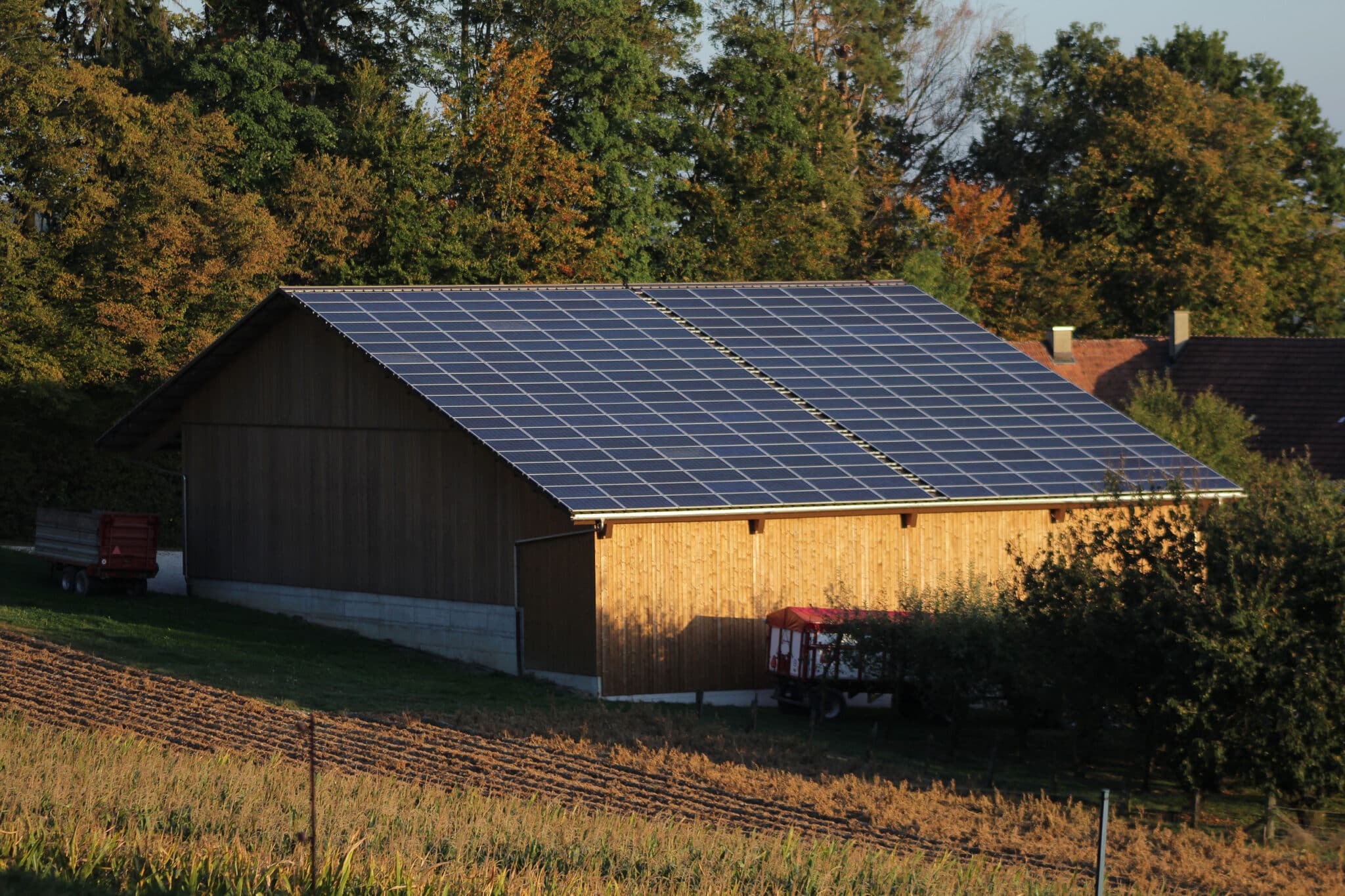
Producing your own electricity can feel deeply empowering. The sun rises, your panels capture light, and your home comes alive—no utility company involved. Blackouts elsewhere become irrelevant. Energy use becomes visible and intentional rather than abstract and limitless.
This visibility can reshape behavior. People naturally conserve more when they understand where power comes from and how finite it is.
4.2 The Constraints of Autonomy

However, energy independence comes with trade-offs:
- Systems are expensive to install
- Maintenance is constant and non-negotiable
- Energy availability fluctuates with weather and seasons
- Expansion is limited by storage capacity
Off-grid energy does not eliminate limits—it reveals them. Freedom here is not unlimited consumption, but informed restraint.
5. Water: The Hidden Backbone of Independence
Water is easy to ignore when it arrives effortlessly at the turn of a tap. Off-grid living makes water impossible to ignore.
5.1 Reconnecting With a Fundamental Resource
Collecting, filtering, storing, and managing water fosters an intimate relationship with the landscape. Rain patterns matter. Ground conditions matter. Waste matters.
This awareness often leads to a profound shift in values. Water becomes precious not because of price, but because of effort.
5.2 Fragility and Risk
Yet water independence can also be precarious:
- Droughts can threaten supply
- Systems can fail
- Contamination risks require constant vigilance
The freedom gained is real, but it is inseparable from responsibility. Off-grid living does not free you from nature’s constraints—it places you directly within them.
6. Food: From Consumption to Participation
Food is one of the most transformative aspects of off-grid life.
6.1 The Satisfaction of Self-Produced Food
Growing or sourcing your own food can be deeply fulfilling. It connects daily sustenance to seasons, soil, and labor. Meals carry stories. Waste decreases. Appreciation increases.
Food autonomy can feel like the purest form of freedom: nourishment without intermediaries.
6.2 The Labor Reality
However, food production is demanding:
- Gardening requires time, knowledge, and resilience
- Crop failure is common
- Preservation and storage add complexity
- Diets may become more limited and seasonal
The supermarket offers abundance and choice at the cost of dependence. Off-grid food systems offer autonomy at the cost of convenience.
7. Time: Gained or Reallocated?
One of the most surprising aspects of off-grid living is its relationship with time.
7.1 Escaping the Clock
Many off-grid lifestyles reduce or eliminate commuting, rigid schedules, and constant digital interruption. Days become shaped by daylight, weather, and physical tasks rather than calendars and alarms.
This can feel like freedom in its purest form: time reclaimed from artificial structures.
7.2 The Myth of Leisure
Yet off-grid living is labor-intensive. Systems must be maintained. Problems must be solved immediately. There is no customer service line for a broken pump.
Time is not necessarily increased—it is reallocated. The question becomes whether you prefer to spend your time earning money to pay for services, or performing the services yourself.
8. Psychological Freedom: Identity and Meaning
Beyond practical considerations, off-grid living profoundly affects how people see themselves.
8.1 Competence and Confidence
Learning to meet your own needs builds confidence. Skills replace abstractions. Mistakes become lessons rather than failures.
This sense of competence can be deeply liberating, especially for those who feel alienated by specialized, fragmented modern roles.
8.2 Isolation and Mental Load
However, independence can slide into isolation. Without social infrastructure, emotional labor increases. Decision fatigue can become intense when every choice carries real consequences.
Freedom here is not guaranteed—it depends on personality, support networks, and psychological resilience.
9. Social Freedom or Social Distance?
Off-grid living is often portrayed as solitary, but reality is more nuanced.
9.1 Community as Infrastructure
Many successful off-grid lifestyles rely on strong communities. Skill-sharing, mutual aid, and cooperation reduce risk and increase resilience.
In this sense, off-grid living can deepen social bonds rather than weaken them.
9.2 Stepping Outside the Mainstream
At the same time, living off-grid can create distance from mainstream culture. Shared reference points disappear. Legal and bureaucratic systems may feel misaligned with your lifestyle.
Freedom from social norms can be empowering—or alienating.
10. Economic Freedom: Less Money, More Value?
One of the most common motivations for off-grid living is economic independence.
10.1 Reducing Monetary Dependency
Lower living costs can reduce the need for full-time employment. This opens space for creative work, learning, and self-directed projects.
Money becomes a tool rather than a constant concern.
10.2 The Cost of Entry
However, off-grid systems often require significant upfront investment. Land, equipment, and education are not free.
Economic freedom emerges slowly, and only with careful planning.
11. Legal and Ethical Dimensions of Freedom
Freedom does not exist in a vacuum.
11.1 Regulations and Reality
Zoning laws, building codes, and resource rights shape what off-grid living looks like in practice. Complete autonomy is rare; negotiation with systems remains necessary.
11.2 Ethical Responsibility
Off-grid living raises ethical questions:
- Are you reducing harm, or shifting it elsewhere?
- Are you withdrawing from collective responsibility?
- What do you owe to shared systems?
True freedom may require engagement rather than escape.
12. The Romantic Myth vs. Lived Reality
Off-grid living is often romanticized as a return to simplicity. In reality, it is a shift from complexity you don’t see to complexity you manage directly.
Modern life hides its machinery. Off-grid life exposes it.
Neither is inherently more free. They simply distribute responsibility differently.
13. Freedom as Alignment, Not Absence
Perhaps the most important insight is this: freedom is not about removing all constraints. It is about choosing which constraints you are willing to live with.
Off-grid living replaces financial dependence with physical labor, convenience with competence, abstraction with immediacy. For some, this alignment feels like liberation. For others, it feels like burden.
Conclusion: So, Does Living Off-Grid Mean Freedom?
Living off-grid does not automatically mean freedom. It means a different relationship with dependence.
You trade dependence on institutions for dependence on your own skills, your environment, and your community. You gain visibility, agency, and meaning—but you also accept limits, uncertainty, and responsibility.
Freedom, in this context, is not a destination. It is a practice. It is the ongoing act of choosing how you meet your needs and why.
For those whose values align with self-reliance, ecological awareness, and intentional living, off-grid life can feel profoundly freeing. For others, the same conditions may feel restrictive or exhausting.
The real freedom lies not in living off-grid, but in understanding what kind of life allows you to feel most fully alive—and having the courage to build it, whether plugged in or not.