







Creativity is often portrayed as a lightning strike: sudden, mysterious, and impossible to summon on demand. Yet across history, artists, scientists, philosophers, and inventors have searched for reliable ways to invite that lightning—to shape conditions in which original ideas are more likely to appear. Among sleep routines, walking habits, solitude, and music, one practice has recently drawn both scientific and cultural attention: intermittent fasting.
Intermittent fasting, broadly defined, refers to eating patterns that alternate between periods of eating and periods of little or no caloric intake. It is frequently discussed in relation to metabolism, longevity, and physical health. But a quieter and more intriguing question is emerging at the edges of neuroscience and psychology: can intermittent fasting influence the mind in ways that support creativity?
This article explores that question from multiple angles. We will examine what creativity actually is, how the brain generates creative insight, what happens in the body and brain during fasting, and where these two domains might intersect. We will also consider historical patterns, cognitive trade-offs, personality differences, and the limits of current understanding. The goal is not to promote fasting as a lifestyle choice, but to investigate whether and how changes in eating rhythms might influence creative thought.
1. Defining Creativity Beyond the Myth
Before asking whether intermittent fasting can enhance creativity, we must clarify what creativity means. Popular culture often treats creativity as artistic expression alone—painting, writing, composing music. In cognitive science, however, creativity is defined more broadly as the ability to produce ideas or solutions that are both novel and useful.
Creativity includes:
- A scientist generating an unexpected hypothesis
- An engineer solving a design constraint in an elegant way
- A student finding an original approach to a problem
- A writer connecting familiar ideas in a surprising pattern
From a psychological perspective, creativity involves several mental processes working together: memory retrieval, pattern recognition, abstraction, emotional sensitivity, and flexible attention. It is not a single mental skill, but a dynamic system.
Importantly, creativity is not always loud or dramatic. Some creative moments are explosive “aha” insights, while others are quiet recombinations of ideas that mature slowly over time. Any factor that alters attention, mood, energy, or cognitive flexibility could theoretically influence creative output.
2. The Brain on Creativity: A Brief Tour
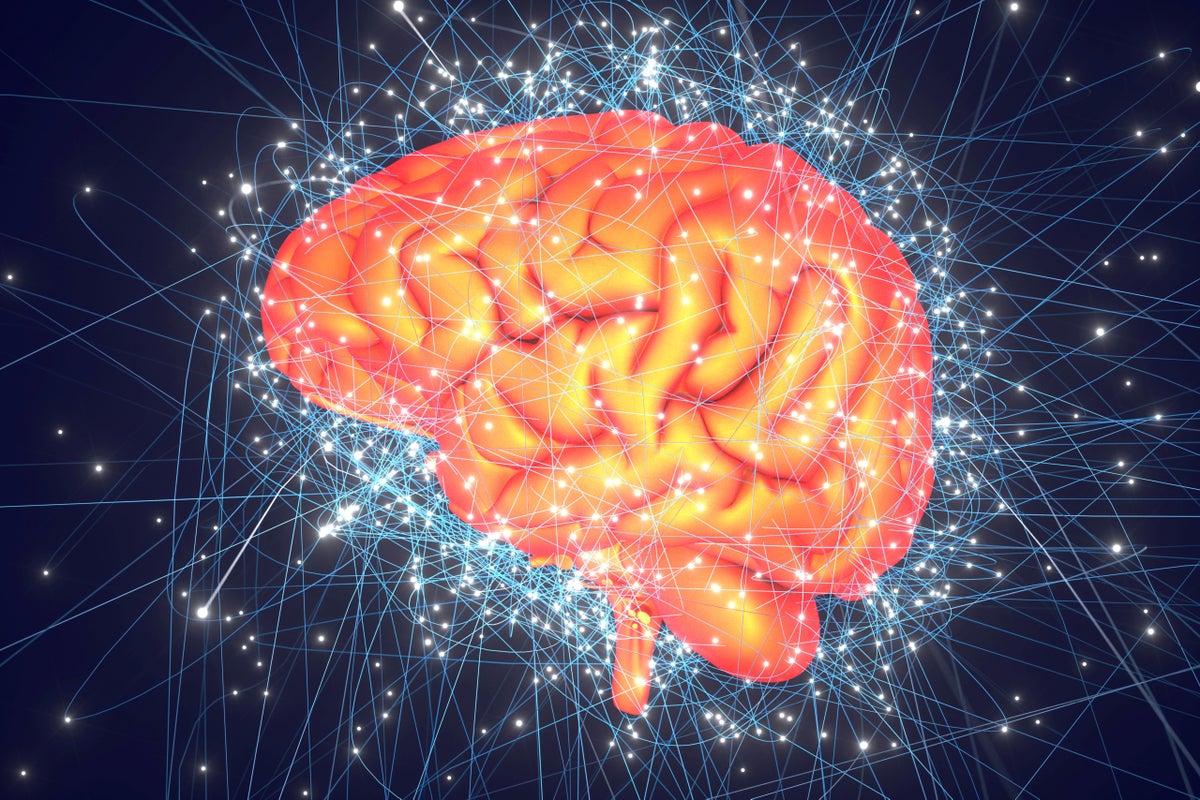
Creativity does not reside in a single “creative center” of the brain. Instead, it emerges from interactions between large-scale neural networks.
Three networks are particularly relevant:
The Default Mode Network (DMN)
This network becomes active during rest, mind-wandering, daydreaming, and internal reflection. It is associated with imagination, autobiographical memory, and spontaneous idea generation. Many creative insights occur when the DMN is active.
The Executive Control Network (ECN)
This network supports focus, planning, and evaluation. It helps refine ideas, test them against reality, and decide which are worth pursuing.
The Salience Network
This network helps switch between the DMN and ECN by detecting what is important. It determines when to let the mind wander and when to apply control.
Highly creative thinking often involves a flexible balance between these networks. Too much control can suppress originality. Too much wandering can produce ideas without structure. Creativity thrives in dynamic tension.
Any physiological or psychological state that shifts this balance—stress, fatigue, excitement, hunger—can influence creative cognition.
3. What Happens During Intermittent Fasting?
Intermittent fasting changes more than meal timing. It alters hormonal signaling, metabolic pathways, and neurochemical activity. To understand its potential cognitive effects, we need to look at what happens inside the body during periods of fasting.
Metabolic Shifts
After several hours without food, the body begins to shift from using glucose as its primary fuel to using fatty acids and ketone bodies. This metabolic transition is associated with changes in energy availability and cellular signaling.
Hormonal Changes
Fasting affects hormones such as insulin, cortisol, growth hormone, and norepinephrine. Some of these hormones influence alertness, motivation, and stress response—all relevant to creative thinking.
Neurochemical Effects
Periods of fasting can increase levels of certain neurotransmitters involved in attention and arousal. At the same time, fasting may reduce fluctuations in blood sugar that can lead to mental fog or fatigue.
These physiological changes do not guarantee improved cognition. They create a different internal environment—one that may support some mental processes while challenging others.
4. Hunger as a Cognitive Signal
Hunger is not merely a physical sensation; it is a cognitive signal shaped by evolution. For much of human history, hunger meant one thing: resources were scarce, and survival depended on finding solutions.
In this context, hunger may have functioned as a mild cognitive stressor—one that sharpened perception, encouraged exploration, and rewarded novel problem-solving. Some researchers argue that mild metabolic stress can promote mental flexibility and adaptive thinking.
This does not mean extreme hunger is beneficial. Severe deprivation impairs cognition, emotional regulation, and judgment. But moderate hunger, especially when familiar and predictable, may alter attention in subtle ways.
Many people report that during light fasting:
- Distractions feel less compelling
- Thoughts become more streamlined
- Sensory awareness increases
- The mind feels alert but calm
These subjective experiences align with cognitive states associated with certain forms of creativity, particularly insight-based and associative thinking.
5. Focus, Flow, and the Absence of Constant Eating
Modern life is characterized by frequent eating, snacking, and constant access to food. Each eating episode involves decision-making, sensory stimulation, and digestion—all of which draw on cognitive resources.
Intermittent fasting reduces the number of daily eating events. This simplification can create longer uninterrupted periods of mental continuity. For creative work that requires immersion—writing, coding, composing—this continuity may support flow states.
Flow is a psychological condition marked by deep focus, loss of self-consciousness, and intrinsic motivation. It is often associated with high-quality creative output. While flow depends on many factors, reduced interruptions and stable energy levels can make it easier to enter.
By consolidating meals into defined windows, intermittent fasting may unintentionally support the environmental conditions that allow flow to emerge.
6. Creativity and Constraint: A Paradox
One of the most counterintuitive findings in creativity research is that constraints often enhance creativity. Limitations force the mind to explore unconventional pathways. This is why:
- Poets write sonnets instead of free verse
- Designers work within strict budgets
- Musicians create variations within fixed scales
Intermittent fasting introduces a form of temporal constraint around eating. While not directly related to creative tasks, this constraint may subtly prime the brain to operate within boundaries.
When resources feel limited—even symbolically—the mind may become more inventive. This does not require suffering; it requires structure. The predictability of fasting windows can transform hunger from a distraction into a known background condition.
In this sense, intermittent fasting may act as a cognitive frame rather than a direct enhancer: it changes how the day is structured, which in turn influences mental rhythms.
7. Emotional Tone and Creative Sensitivity
Creativity is deeply intertwined with emotion. Mood influences not only what ideas we generate, but how we evaluate them. Positive moods tend to broaden attention and encourage playful exploration. Mildly subdued moods can enhance detail-oriented refinement.
Intermittent fasting can influence emotional tone, particularly during the adaptation phase. Some individuals experience increased calmness and emotional clarity. Others may feel irritability or restlessness.
From a creative standpoint, emotional sensitivity is not inherently negative. Many creative traditions value heightened awareness, introspection, and emotional nuance. However, emotional volatility can also disrupt sustained creative work.
This highlights an important point: the cognitive effects of intermittent fasting are not uniform. They interact with personality, stress levels, sleep quality, and existing habits.
8. Historical Patterns: Fasting and Creative Traditions
Throughout history, fasting has appeared in religious, philosophical, and artistic traditions—not primarily as a productivity tool, but as a means of mental clarity and insight.
Philosophers in ancient Greece, monks in medieval monasteries, and mystics across cultures practiced fasting alongside contemplation. While their goals were often spiritual, the practices were associated with reflection, symbolism, and creative expression.
It would be inaccurate to claim that fasting caused their creativity. Cultural context, education, and community played enormous roles. Yet the recurring association between reduced consumption and heightened inner experience is notable.
In pre-industrial societies, intermittent fasting was often a natural consequence of food availability. Creativity emerged within these rhythms, not despite them.
9. Modern Creativity and Cognitive Overload
One challenge to creativity in the modern world is not a lack of stimulation, but an excess of it. Constant notifications, multitasking, and information streams fragment attention and leave little room for incubation—the process by which ideas develop unconsciously.
Intermittent fasting, when paired with intentional routines, may encourage periods of reduced stimulation. Without frequent food-related cues, the mind may settle into longer arcs of thought.
This does not imply that fasting alone reduces cognitive overload. But it can complement other practices—such as focused work blocks, walking, or analog tools—that support creative depth.
Creativity often requires boredom, silence, or emptiness. Fasting introduces a mild form of emptiness that, for some, creates psychological space.
10. Divergent Thinking vs. Convergent Thinking
Creativity involves both divergent thinking (generating many ideas) and convergent thinking (selecting and refining the best ones). These modes rely on different cognitive states.
Divergent thinking benefits from:
- Relaxed attention
- Associative memory
- Low inhibition

Convergent thinking benefits from:
- Focused attention
- Working memory
- Cognitive control
Intermittent fasting may support one mode more than the other, depending on timing and individual response. Some people report increased mental clarity and focus during fasting, which could support convergent tasks. Others experience more spontaneous associations, which could support divergent thinking.
The key insight is that creativity is not a single skill. A practice that enhances one phase may not enhance another. Effective creative routines often alternate between modes.
11. The Role of Sleep and Circadian Rhythms
Creativity is strongly influenced by sleep quality and circadian rhythms. Intermittent fasting can interact with these systems by altering meal timing, which in turn affects biological clocks.
Eating earlier in the day and allowing a long overnight fast may support more stable circadian rhythms for some individuals. Stable rhythms are associated with better mood regulation and cognitive performance.
However, poorly timed fasting—especially when combined with sleep deprivation—can impair creativity by reducing cognitive flexibility and emotional balance.
This reinforces a central theme: context matters. Intermittent fasting does not operate in isolation. Its effects depend on alignment with sleep, light exposure, and daily structure.
12. Individual Differences: One Size Does Not Fit All
Perhaps the most important consideration is individual variability. People differ widely in:
- Metabolic sensitivity
- Stress response
- Personality traits
- Creative styles
For some, fasting feels energizing and clarifying. For others, it feels distracting and draining. Highly anxious individuals may find hunger amplifies rumination. Highly sensitive individuals may experience heightened sensory input.
Creativity itself also varies. A mathematician’s creative process differs from a dancer’s. A novelist’s needs differ from a product designer’s.
Therefore, it would be misleading to claim that intermittent fasting universally enhances creativity. At best, it may create conditions that some individuals can leverage creatively.
13. Risks of Romanticizing Fasting
Any discussion of fasting and cognition must avoid romanticization. Creativity does not require deprivation. Many creative people thrive with regular meals, rich sensory experiences, and social engagement.
Moreover, restrictive eating can be harmful, particularly for young people or those vulnerable to stress. Cognitive benefits, if any, arise from stability and intention—not from pushing the body beyond its limits.
Creativity flourishes in environments that support physical and psychological well-being. If a practice undermines health, it will eventually undermine creativity as well.
This article examines intermittent fasting as a cognitive variable, not as a prescription.
14. Creativity as an Emergent Property
Rather than asking whether intermittent fasting enhances creativity directly, a more accurate question may be: does intermittent fasting change mental conditions in ways that sometimes support creative processes?
Creativity emerges from:
- Attention patterns
- Emotional tone
- Energy regulation
- Environmental structure
Intermittent fasting can influence each of these, indirectly and variably. It is not a creative tool in itself, but a modifier of internal context.
Seen this way, fasting is similar to walking, music, or solitude. None of these create ideas on their own, but they can make the mind more receptive.
15. Integrating Structure and Freedom
One of the paradoxes of creativity is the need for both structure and freedom. Too much structure stifles imagination. Too much freedom leads to chaos.
Intermittent fasting introduces a simple structure around eating. For some, this structure frees mental energy. For others, it becomes another rule to manage.
The creative benefit, if present, lies not in the fasting itself, but in how it interacts with the rest of life. When structure supports focus without stress, creativity has room to emerge.
16. What the Question Reveals About Creativity
The popularity of the question “Can intermittent fasting enhance creativity?” reveals something important. It reflects a desire to understand creativity as a biological process, not a mystical gift.
This perspective is empowering. It suggests that creativity can be supported through thoughtful design of habits, environments, and rhythms.
At the same time, it cautions against reductionism. Creativity is not a switch that can be flipped by skipping breakfast. It is a living process shaped by meaning, curiosity, and engagement with the world.
17. A Balanced Perspective
So, can intermittent fasting enhance creativity?
The most responsible answer is: sometimes, indirectly, for some people, under certain conditions.
Intermittent fasting can:
- Alter attention and energy patterns
- Reduce interruptions
- Introduce structure
- Change emotional tone
These changes may support certain aspects of creative thinking. They may also hinder others. The effect is neither guaranteed nor universal.
Creativity remains a dialogue between mind and environment. Food timing is one voice in that dialogue—not the loudest, but not silent either.
18. Final Thoughts: Creativity Is Fed by Many Things
Ironically, creativity is not only fed by absence, but by abundance: of ideas, experiences, conversations, and curiosity. While intermittent fasting may create mental space, creativity ultimately grows from engagement.
The most creative minds are not those that deprive themselves, but those that listen closely—to their thoughts, their bodies, and the world around them.
Intermittent fasting may, for some, quiet the noise enough to hear that inner dialogue more clearly. For others, creativity may arrive with a full table and a lively discussion.
Both paths are valid. Creativity is generous that way.