







Open any app store and you’ll be greeted by a familiar promise: do more, faster, better. Productivity apps pledge to tame chaos, sharpen focus, and transform scattered intentions into perfectly executed plans. From minimalist to-do lists to AI-powered life organizers, these tools position themselves as the missing link between who we are and who we want to be.
Yet a quiet discomfort lingers beneath the polished interfaces and motivational slogans. If productivity apps are so powerful, why do so many people still feel overwhelmed? Why do we jump from one system to another, convinced that the next app will finally “work”? And why does organizing tasks sometimes feel like a task in itself?
This article explores a provocative question: are we overestimating the power of productivity apps? Rather than dismissing them outright or praising them uncritically, we will examine what these tools genuinely do well, where they fall short, and how our expectations may be misaligned with reality. Along the way, we’ll look at psychology, behavior design, cultural narratives around productivity, and the subtle ways technology reshapes how we think about work and time.
The goal is not to abandon productivity apps, but to understand them more clearly—so we can use them wisely instead of hoping they will save us.
1. The Rise of the Productivity App Culture
Productivity apps didn’t emerge in a vacuum. They are a direct response to a world that feels increasingly fragmented. Work spills into evenings, messages arrive at all hours, and information competes aggressively for attention. In this environment, productivity apps present themselves as digital lifeboats—small, manageable systems that promise order.
Historically, humans have always used tools to manage work: calendars, notebooks, filing cabinets, and personal assistants. What’s new is the scale and intimacy of modern tools. Productivity apps live in our pockets, track our habits, analyze our behavior, and nudge us with reminders. They don’t just support work; they actively shape how work is done.
This shift coincided with several broader trends:
- Knowledge work becoming dominant
- Remote and hybrid work blurring boundaries
- Cultural glorification of busyness
- The idea that self-optimization is a moral virtue
In this context, productivity apps feel not just helpful, but necessary. To be productive without them can seem almost irresponsible, like refusing to use a calculator for complex math.
But necessity breeds expectation. And expectation is where overestimation begins.
2. What Productivity Apps Actually Do Well
Before criticizing productivity apps, it’s important to acknowledge their real strengths. These tools are not useless; in many cases, they are genuinely effective.
Externalizing Memory
One of the most powerful benefits of productivity apps is cognitive offloading. Humans are terrible at holding multiple tasks in working memory. By moving to-dos, deadlines, and notes into an external system, we reduce mental clutter and free up attention for deeper thinking.
A well-designed task manager can act like a reliable second brain—one that never forgets and doesn’t panic.
Providing Structure in Chaos
When work lacks clear boundaries, structure becomes invaluable. Productivity apps impose order: tasks have due dates, projects have hierarchies, and days have plans. This structure can be calming, especially for people who struggle with overwhelm or anxiety.
Even simple features—like checking off a completed task—can create a sense of progress that keeps momentum alive.
Supporting Consistency
Habit trackers, streaks, and reminders help people maintain routines they care about. For behaviors that benefit from repetition—like studying, exercising, or journaling—apps can provide just enough friction to keep users on track.
In these cases, productivity apps function less as motivators and more as guardrails, preventing backsliding.
Enabling Collaboration
In team environments, productivity apps shine. Shared task boards, real-time updates, and transparent workflows reduce confusion and align expectations. Here, the value is less about personal discipline and more about coordination.
For distributed teams especially, these tools are often indispensable.
3. The Myth of the Perfect System
If productivity apps can do all this, why do so many people feel unsatisfied?
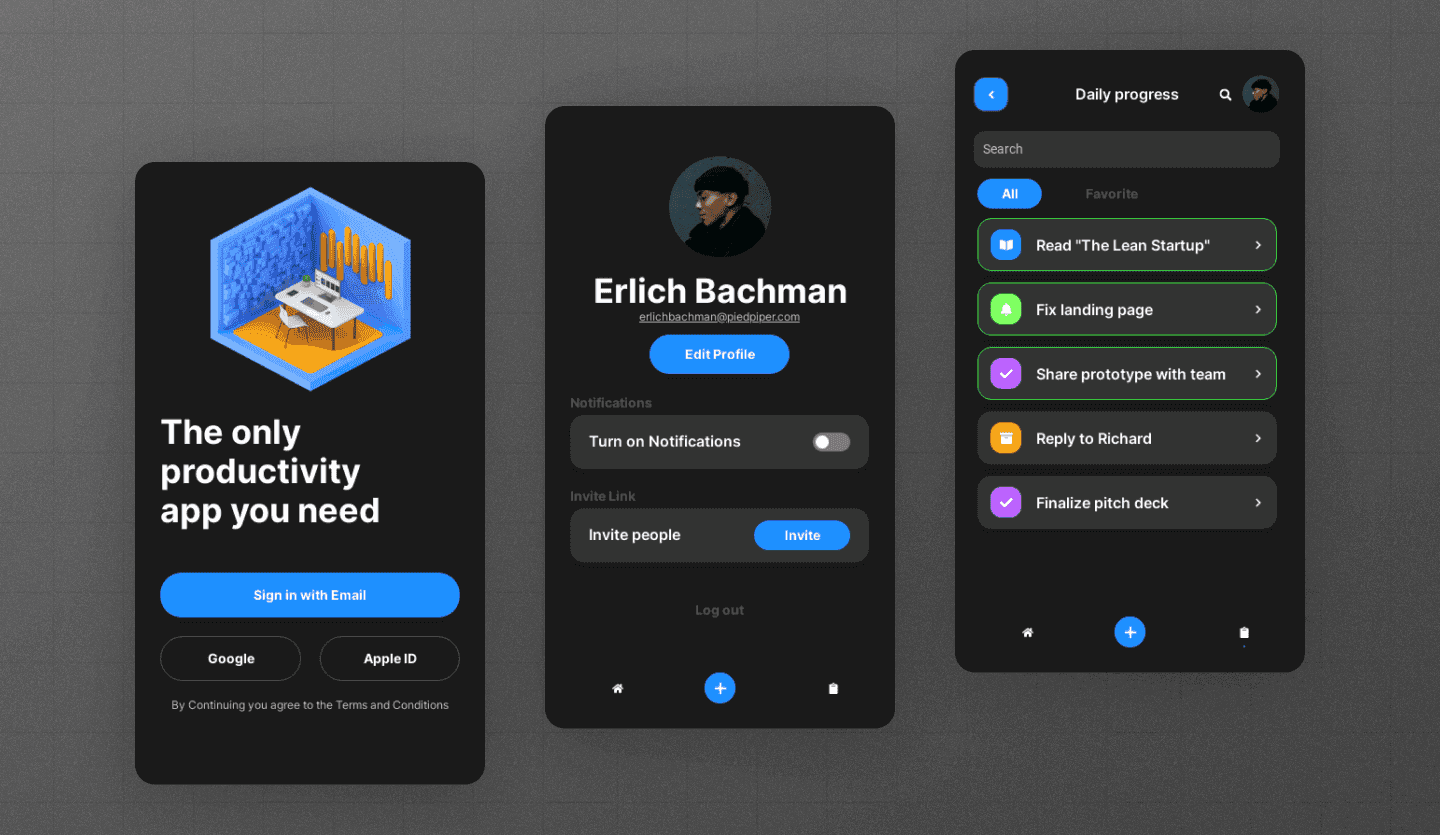
One reason is the persistent belief in the perfect system—the idea that somewhere out there is an app or workflow that will eliminate friction entirely. Once found, productivity will become effortless.
This belief is deeply seductive and deeply flawed.
Productivity Is Not a Technical Problem
Most productivity challenges are not caused by a lack of tools. They stem from:
- Unclear priorities
- Emotional resistance to certain tasks
- Fear of failure or success
- Lack of energy, not time
- Conflicting goals
No app, no matter how sophisticated, can resolve these issues on its own. Yet marketing language often implies that better features equal better outcomes, reinforcing the illusion that productivity is primarily a software problem.
System-Hopping as Procrastination
Ironically, searching for the perfect productivity app can become a form of procrastination. Tweaking workflows, customizing tags, and migrating tasks feels productive—but often avoids the discomfort of actually doing the work.
This behavior is sometimes called productive procrastination: the appearance of progress without its substance.
The app becomes a sandbox where effort feels safe, controlled, and endlessly adjustable. Reality, by contrast, is messy and resistant.
4. When Tools Become a Burden
At a certain point, productivity apps can start working against the very goals they claim to support.
The Overhead Problem
Every system has overhead: time and energy required to maintain it. Complex productivity setups often demand:
- Daily reviews
- Frequent updates
- Manual categorization
- Constant attention
When the cost of managing the system approaches—or exceeds—the benefit it provides, productivity declines.
Some users spend more time organizing tasks than completing them. The system becomes the job.
Fragmentation and App Overload
Many people use multiple productivity apps simultaneously: one for tasks, one for notes, one for habits, one for calendars. Each app solves a specific problem, but together they create fragmentation.
Switching between systems introduces cognitive friction. Instead of clarity, users experience constant low-level confusion about where things live and what deserves attention.
Paradoxically, more tools can mean less focus.
5. The Psychology Productivity Apps Can’t Fix
To understand the limits of productivity apps, we need to look beyond tools and into psychology.
Motivation Is Contextual
Apps can remind you what to do, but they can’t always help you want to do it. Motivation depends on:
- Meaning and purpose
- Emotional state
- Environmental cues
- Social context
A beautifully designed task list does little for a task that feels pointless, frightening, or ambiguous. In fact, seeing such tasks repeatedly can increase avoidance.
Attention Is Not Obedient
Many productivity apps assume that attention can be directed at will: set a priority, schedule a block, and focus will follow. In reality, attention is influenced by fatigue, stress, curiosity, and novelty.
When apps fail to account for this, users may blame themselves rather than the flawed assumption behind the tool.
Guilt as a Feature
Some apps unintentionally weaponize guilt. Overdue tasks turn red, streaks break, reminders pile up. While accountability can be helpful, excessive guilt undermines motivation and self-trust.
Instead of empowering users, these systems can reinforce a narrative of personal failure—“I’m bad at productivity”—which is rarely true or helpful.
6. Productivity as Identity Performance
Productivity apps don’t just help us work; they shape how we see ourselves.
The Aesthetic of Being Busy
Clean interfaces, neatly checked boxes, and impressive dashboards create a visual language of competence. Using productivity apps can feel like performing productivity, even when output doesn’t change significantly.
This aesthetic appeal is not accidental. Many apps are designed to feel satisfying, rewarding, and even virtuous. The risk is confusing looking productive with being effective.
Self-Optimization Culture
In a culture obsessed with improvement, productivity apps become tools of self-surveillance. Every habit is tracked, every hour accounted for. While this can lead to insight, it can also erode spontaneity and rest.
When life becomes a continuous optimization project, productivity stops being a means to an end and becomes the end itself.
7. Where Productivity Apps Truly Shine
Despite these criticisms, productivity apps are not the villains of modern work. They are simply often misused or overvalued.
They are most effective when:
- Tasks are well-defined
- Goals are clear and meaningful
- Systems are kept simple
- The user understands their own limits
In these conditions, productivity apps act as amplifiers, not replacements. They enhance existing clarity rather than creating it from nothing.
A sharp tool in unskilled hands is still sharp—but not necessarily helpful.
8. Rethinking Productivity Without Abandoning Tools
The alternative to overestimating productivity apps is not rejecting them, but reframing their role.
Tools as Support, Not Salvation
Productivity apps should be treated like supportive assistants, not life coaches or moral judges. They help remember, organize, and coordinate—but they do not decide what matters.
That responsibility remains human.
Fewer Features, Deeper Use
Often, a simple system used consistently outperforms a powerful system used sporadically. Limiting features, reducing apps, and focusing on core functions can dramatically improve effectiveness.
Complexity is rarely a substitute for clarity.
Designing for Energy, Not Time
Many productivity systems focus on time management, ignoring energy levels. Aligning tasks with natural rhythms—high-energy work when alert, low-energy work when tired—often yields better results than rigid schedules.
Apps that allow flexibility, rather than enforcing idealized routines, tend to age better.
9. The Real Work Happens Outside the App
Perhaps the most important insight is this: productivity apps do not do the work. They do not think, decide, create, or care.
The real work happens in moments of focus, discomfort, curiosity, and commitment—none of which can be automated.
Apps can point the way, but they cannot walk it for us.
When we overestimate productivity apps, we risk underestimating ourselves: our judgment, our adaptability, and our capacity to navigate complexity without perfect systems.
10. A Healthier Relationship with Productivity
A healthier approach to productivity recognizes limits—both human and technological.
It allows for:
- Imperfect days
- Changing priorities
- Emotional fluctuations
- Rest without justification
Productivity apps can coexist with this mindset, but only if we stop asking them to be more than they are.
They are tools. Useful, sometimes powerful—but never complete.
Conclusion: Power, Properly Measured
So, are we overestimating the power of productivity apps?
In many cases, yes. Not because these tools lack value, but because we often expect them to solve problems that are fundamentally human. We ask software to give us clarity, courage, meaning, and discipline—qualities that emerge from reflection, experience, and choice.
Productivity apps work best when they are quiet partners rather than loud promises. When they support intentional work instead of replacing intention itself.
The challenge, then, is not finding a better app, but developing a better understanding of what productivity really requires—and what no app can ever provide.
Used wisely, productivity apps can help us do meaningful work more smoothly. Used blindly, they risk becoming beautiful distractions from the harder task of deciding how we want to spend our lives.