







Introduction: A Question at the Heart of Modern Education
Few questions provoke as much excitement—and unease—in education today as this one: Can Interactive Study Guides Replace Teachers? The question is not merely technological; it is philosophical, social, and deeply human. At first glance, the idea feels bold, even unsettling. Teachers have existed for as long as civilization itself, shaping minds, values, and societies. How could something as seemingly mechanical as an interactive study guide step into such a role?
Yet the question refuses to fade. Interactive study guides—digital platforms that combine multimedia content, adaptive quizzes, instant feedback, and often artificial intelligence—are no longer experimental tools. They are increasingly polished, personalized, and persuasive. Students can now learn mathematics from animated explanations, practice languages with instant pronunciation feedback, and explore science concepts through simulations that once required a fully equipped lab.
This article does not aim to give a simple yes-or-no answer. Instead, it explores what “replacement” really means, what interactive study guides do exceptionally well, what teachers uniquely provide, and whether the future of education is about substitution or something far more interesting. Along the way, we will examine cognitive science, classroom dynamics, motivation, ethics, and the subtle art of teaching that cannot easily be reduced to algorithms.
Understanding Interactive Study Guides
What Are Interactive Study Guides?
Interactive study guides are structured learning systems designed to actively engage learners rather than passively present information. Unlike traditional textbooks or static PDFs, they respond to user input. They ask questions, adjust difficulty, offer hints, and sometimes even simulate conversation.
Key characteristics include:
- Interactivity: Learners click, type, speak, drag, or explore.
- Feedback loops: Immediate responses help learners correct mistakes in real time.
- Adaptivity: Content often changes based on learner performance.
- Multimodality: Text, audio, video, animation, and simulation work together.
- Data-driven design: Progress is tracked, analyzed, and optimized.
These guides can exist as apps, web platforms, or embedded systems within larger learning environments. Some focus on specific subjects like math or language learning, while others aim to cover entire curricula.
Why They Are So Appealing
The appeal of interactive study guides is not mysterious. They promise efficiency, personalization, and scalability. A single well-designed guide can theoretically serve millions of learners simultaneously. It does not get tired, impatient, or distracted. It is available at any time, in any place, and often at a fraction of the cost of traditional instruction.
For students, especially digital natives, interactive guides can feel intuitive and empowering. Learning becomes something you do, not something that is done to you. Progress bars, badges, and instant feedback create a sense of momentum. Mistakes feel safer when corrected by a system rather than exposed in front of peers.
From an institutional perspective, the appeal is equally strong. Interactive guides promise consistency, measurable outcomes, and reduced dependence on limited human resources. In regions facing teacher shortages, they can appear not just useful but necessary.
What Teachers Actually Do (Beyond Delivering Content)
Teaching Is More Than Explaining
One of the most common misconceptions about teaching is that it is primarily about transferring information. If that were true, teachers would indeed be easily replaceable. After all, information is abundant.
In reality, teaching is a complex, relational practice that includes:
- Diagnosing misunderstandings before students articulate them
- Motivating learners who doubt their own abilities
- Adjusting explanations based on emotional and cognitive cues
- Creating a safe environment for intellectual risk-taking
- Modeling curiosity, ethics, and critical thinking
A teacher does not simply explain a concept; they read the room. A confused glance, a hesitant silence, or an overconfident answer can all signal different needs. Responding to these signals requires judgment, empathy, and experience.
The Human Element: Emotion, Trust, and Identity
Learning is deeply emotional. Students bring anxiety, boredom, curiosity, pride, and frustration into the classroom. Teachers help regulate these emotions, often unconsciously. A well-timed joke, a word of encouragement, or a patient pause can change a learner’s entire trajectory.
Teachers also play a role in identity formation. Many students remember not just what they learned, but who believed in them. Being seen and recognized by a respected adult can be transformative, particularly for young learners. Interactive study guides, no matter how advanced, do not genuinely care. They simulate attention, but they do not form relationships.
Where Interactive Study Guides Excel
Personalization at Scale
One of the strongest arguments in favor of interactive study guides is their ability to personalize learning. In a traditional classroom, a teacher must balance the needs of many students at once. Even the most skilled educator cannot fully individualize instruction for every learner at every moment.
Interactive guides, by contrast, can:
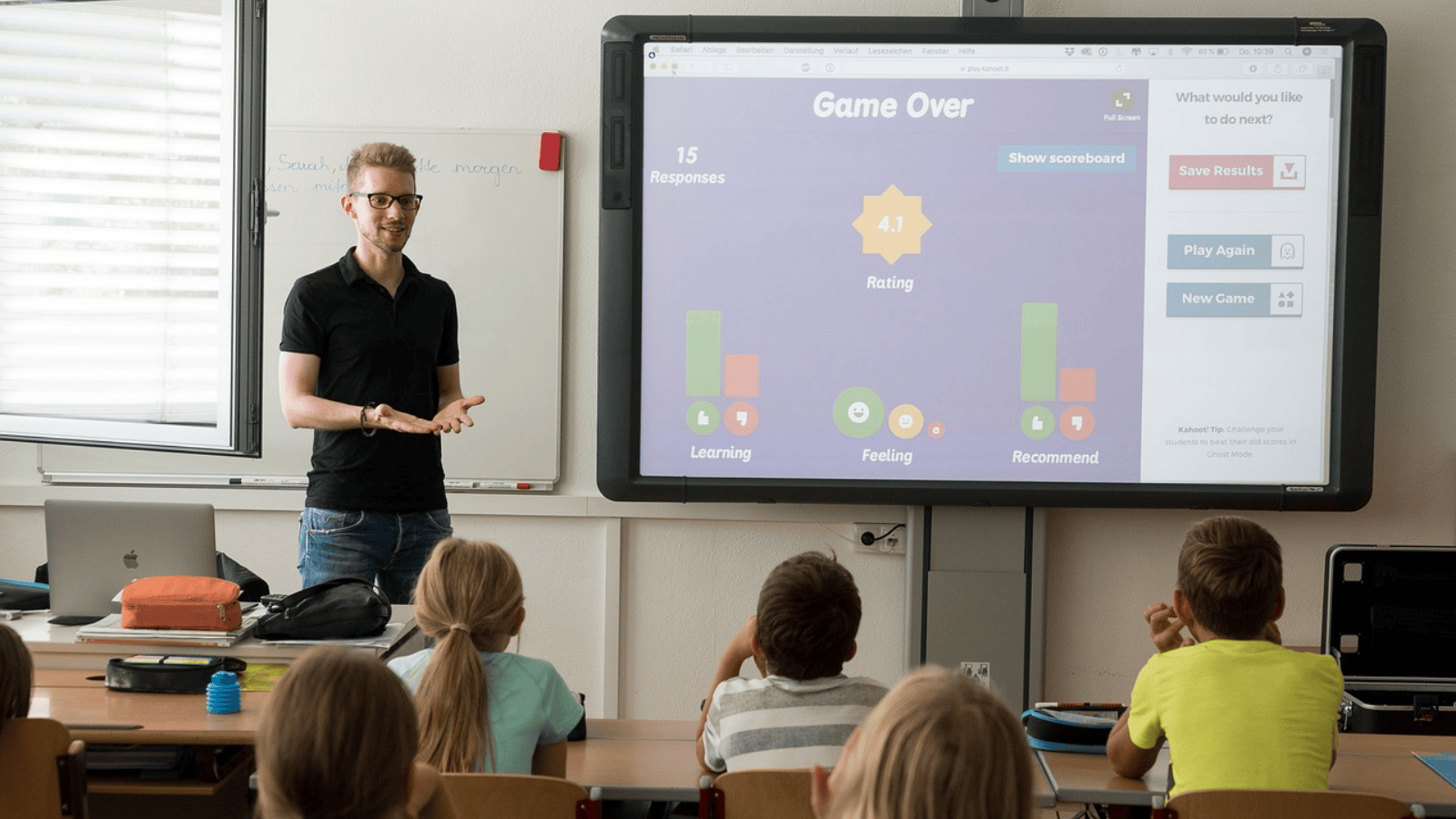
- Adjust difficulty dynamically
- Offer alternative explanations
- Provide extra practice exactly where it is needed
- Allow students to progress at their own pace
This is particularly powerful for foundational skills. A student struggling with basic algebra or grammar can receive targeted support without embarrassment. Meanwhile, advanced learners can move ahead without waiting.
Consistency and Availability
Teachers are human. They have good days and bad days. Their explanations may vary slightly from class to class. Interactive study guides offer consistency. The explanation does not change unless intentionally updated.
They are also always available. Late-night study sessions, last-minute revisions, or moments of sudden curiosity are all supported. For learners balancing school with work or family responsibilities, this flexibility can be life-changing.
Safe Spaces for Practice
Many students fear making mistakes in front of others. Interactive study guides create low-stakes environments where errors are part of the process. This encourages experimentation and persistence.
For subjects like language learning or mathematics, repeated practice is essential. Interactive guides can make repetition less monotonous by varying questions, adding gamified elements, or framing challenges as quests rather than drills.
The Limits of Automation in Learning
Understanding Versus Pattern Recognition
Interactive systems are excellent at detecting patterns in user behavior. They can identify which questions are frequently answered incorrectly and respond accordingly. However, recognizing a pattern is not the same as understanding why a student is confused.
A teacher might notice that a student consistently makes a particular mistake because of a misconception formed years earlier. Addressing this requires probing questions, dialogue, and sometimes improvisation. While interactive guides are improving, they still struggle with deep diagnostic insight.
Creativity and Open-Ended Thinking
Education is not only about arriving at correct answers. It is also about asking good questions, making connections, and exploring ambiguity. Teachers encourage debate, curiosity, and creative risk-taking. They can recognize originality even when it does not fit a predefined template.
Interactive study guides, by necessity, operate within programmed boundaries. They excel in well-structured domains with clear right and wrong answers. When tasks become open-ended, subjective, or creative, their effectiveness diminishes.
Moral and Social Learning
Schools are social spaces. Students learn how to listen, disagree respectfully, collaborate, and take responsibility. Teachers model these behaviors and intervene when conflicts arise. They help students navigate ethical dilemmas and social challenges.
Interactive study guides are largely silent on these dimensions. They do not mediate conflicts or model empathy in a lived sense. While they can present scenarios and ask reflective questions, the learning remains abstract.
Redefining “Replacement”: A False Binary?
Replacement Versus Reconfiguration
The idea of replacing teachers assumes a zero-sum game: either humans teach or machines do. This framing is misleading. History shows that new technologies rarely eliminate professions entirely; they change them.
Calculators did not eliminate mathematicians. Word processors did not eliminate writers. Instead, they shifted focus away from mechanical tasks toward higher-level thinking. Similarly, interactive study guides may reduce the time teachers spend on repetitive explanations, freeing them to focus on mentorship, discussion, and individualized support.
Teachers as Learning Architects
In a technology-rich environment, teachers increasingly act as designers of learning experiences. They choose or create interactive guides, integrate them into lessons, and contextualize them within broader goals.
Rather than delivering content, teachers:
- Curate resources
- Facilitate discussion
- Interpret data from learning platforms
- Support students emotionally and socially
In this model, interactive study guides are powerful tools, but teachers remain the architects who decide how those tools are used.
Evidence from Practice (Without Numbers)
Across diverse educational contexts, a pattern emerges. Interactive study guides are most effective when they complement, not replace, human instruction. Students benefit from structured digital practice paired with opportunities for discussion, reflection, and feedback from a teacher.
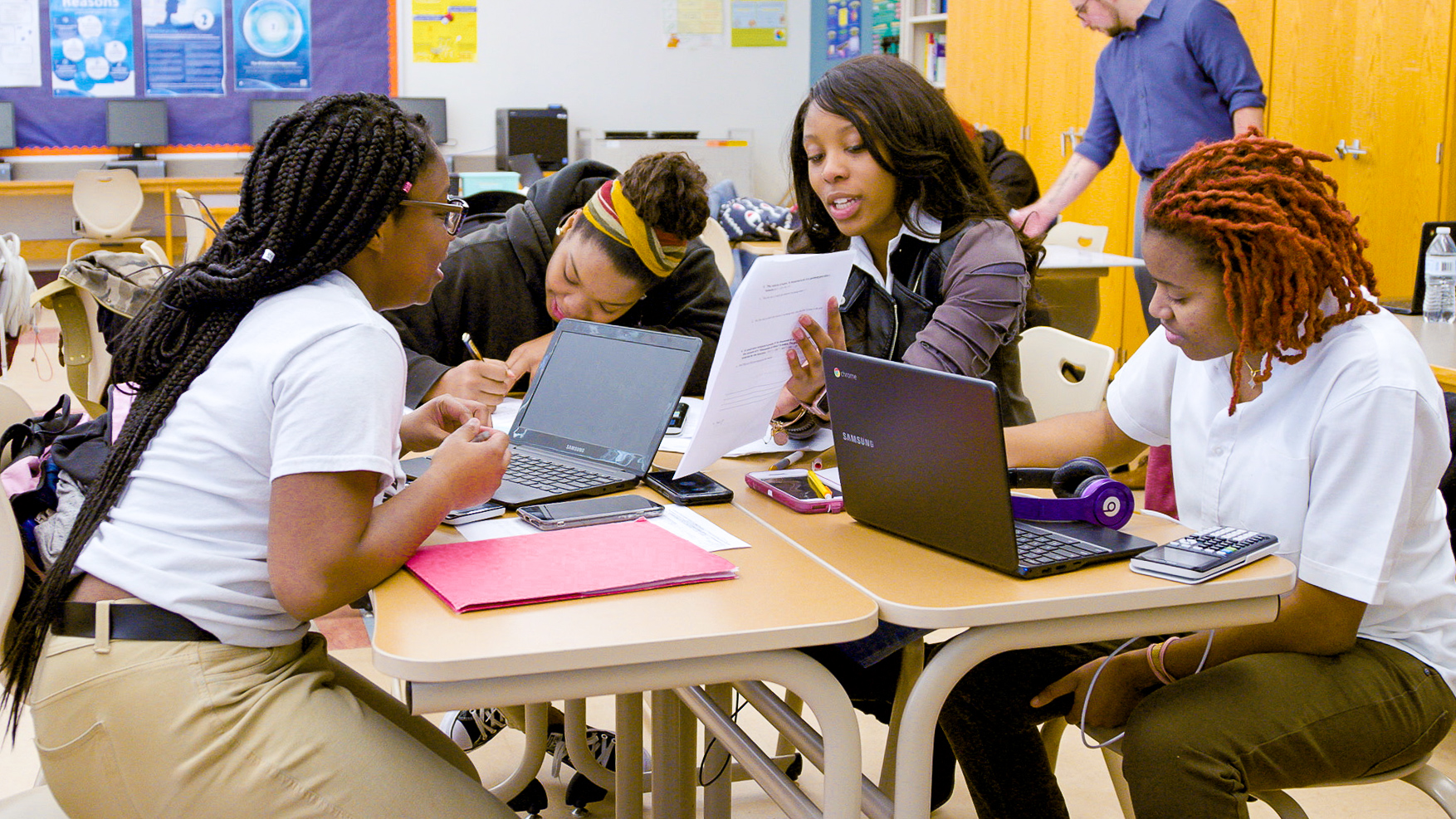
When interactive guides are used in isolation, outcomes are mixed. Highly motivated, self-directed learners may thrive. Others struggle with persistence, misunderstanding, or disengagement. The presence of a teacher often makes the difference between surface-level completion and deep learning.
Equity, Access, and the Risk of Over-Reliance
Bridging or Widening the Gap?
Interactive study guides are often promoted as tools for educational equity. They can reach remote areas, reduce costs, and provide high-quality content where teachers are scarce. This potential is real.
However, there are risks. Access to devices, stable internet, and supportive learning environments is uneven. Without careful implementation, reliance on digital guides can widen existing inequalities. Students who most need human support may be the ones most likely to receive only automated instruction.
The Importance of Guidance
Even the best interactive guide assumes a level of self-regulation. Younger learners, in particular, need guidance to stay focused, manage time, and interpret feedback. Teachers and mentors provide this structure. Removing them entirely places unrealistic demands on learners.
Motivation: The Subtle Art of Keeping Students Engaged
Gamification Versus Meaning
Interactive study guides often use gamification—points, levels, badges—to motivate learners. These features can be effective in the short term. They make learning feel rewarding and playful.
However, long-term motivation is driven by meaning, relevance, and relationships. Teachers help students see why a topic matters, how it connects to their lives, and where it might lead. They notice when a student is disengaged and respond in nuanced ways.
Gamification can spark interest, but it rarely sustains deep commitment on its own.
The Future Classroom: A Hybrid Vision
Blended Learning as the New Normal
The most promising future is not one where teachers disappear, but one where their roles evolve. In blended learning environments, interactive study guides handle routine practice and content delivery, while teachers focus on higher-order tasks.
A typical learning cycle might look like this:
- Students explore concepts through an interactive guide.
- They practice skills with immediate feedback.
- Teachers analyze learning data to identify patterns.
- Class time is used for discussion, problem-solving, and personalized support.
This approach leverages the strengths of both humans and technology.
Lifelong Learning and Changing Roles
As education extends beyond childhood into lifelong learning, interactive guides will play an even larger role. Adults often prefer self-paced, flexible learning. Teachers in this context become coaches, facilitators, and community builders rather than traditional instructors.
A Philosophical Perspective: What Is Education For?
At its deepest level, the question Can Interactive Study Guides Replace Teachers? forces us to ask what we believe education is for. If education is merely about transmitting information efficiently, then replacement seems plausible.
But if education is about developing thoughtful, ethical, socially engaged human beings, then teachers remain essential. Interactive study guides can support this mission, but they cannot fully embody it.
Education is not just a system; it is a relationship. It is a conversation across generations about knowledge, values, and possibilities. Technology can enrich that conversation, but it cannot replace the human voice entirely.
Conclusion: Replacement Is the Wrong Question
So, can interactive study guides replace teachers? In a narrow, technical sense, they can replace certain functions of teaching, particularly content delivery and repetitive practice. In a broader, human sense, they cannot replace teachers without diminishing what education truly is.
The more productive question is not whether teachers will be replaced, but how teaching will be transformed. Interactive study guides are not rivals; they are instruments. Their value depends on how wisely they are designed and used.
In the end, the future of education is not about choosing between humans and technology. It is about designing systems where each amplifies the strengths of the other. Teachers bring empathy, judgment, and inspiration. Interactive study guides bring scalability, personalization, and efficiency. Together, they can create learning experiences that are richer than either could achieve alone.
The classroom of the future is not teacher-less. It is teacher-enhanced.