





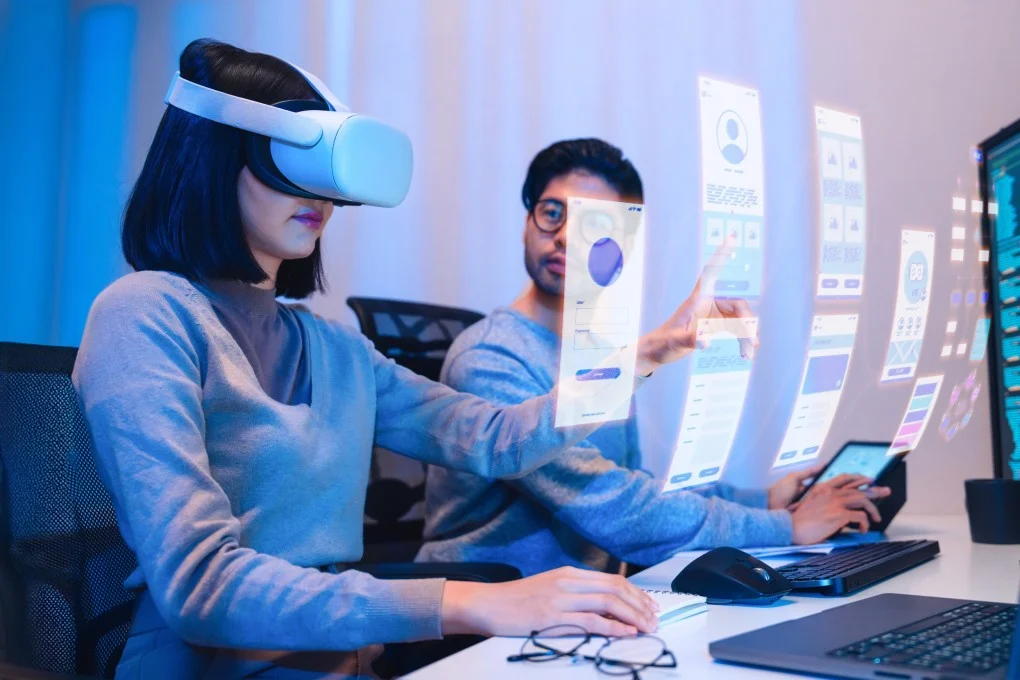

Virtual Reality (VR) has evolved from a futuristic novelty into a transformative educational tool, offering unprecedented ways to experience information, concepts, and environments. Unlike traditional learning methods—textbooks, slideshows, or videos—VR immerses learners in environments that simulate real-world interactions or fantastical scenarios, making education more engaging, interactive, and memorable. But can VR truly make learning guides more immersive, or is it simply a flashy supplement? The answer lies at the intersection of cognitive science, technology, and pedagogical design.
The Psychology of Immersion in Learning
At the heart of effective learning is engagement. Cognitive psychologists have long studied the impact of active participation on knowledge retention, concluding that learners retain more when they are emotionally and physically involved in the process. VR leverages this principle by transforming passive reading or viewing into active exploration. Imagine learning about the solar system not through static images, but by navigating spacecraft among planets, witnessing gravitational pull firsthand, and manipulating celestial bodies to understand orbital dynamics. This multisensory experience engages both visual and kinesthetic learning pathways, reinforcing comprehension through interaction.
Immersion in VR is more than just novelty—it taps into presence, the psychological state of feeling “inside” the virtual world. Research shows that higher presence correlates with stronger memory encoding, as the brain treats immersive experiences similarly to real-life events. Learning guides that incorporate VR can therefore exploit this cognitive response, turning abstract concepts into lived experiences that are easier to remember.
Transforming Traditional Learning Guides
Traditional learning guides often struggle to convey complex concepts effectively. Text alone may fail to capture spatial relationships, temporal changes, or nuanced processes. VR addresses these limitations by providing dynamic visualizations and interactive elements that guide learners through multi-step processes. For instance, a chemistry learning guide in VR could allow students to manipulate molecules, simulate reactions, and observe atomic interactions in three dimensions. The same guide in a book might require mental visualization, which is far less intuitive.
Moreover, VR encourages exploratory learning, a pedagogical approach where learners construct knowledge through investigation rather than passive absorption. Learning guides in VR can offer branching paths, allowing learners to choose how deeply to explore specific topics, test hypotheses in simulations, and receive immediate feedback. This autonomy enhances motivation, critical thinking, and engagement, fostering a more personalized and effective learning experience.
Enhancing Multisensory Learning
Humans learn best when multiple senses are stimulated simultaneously. VR learning guides excel in this area, combining visual, auditory, and even haptic feedback to create a rich, immersive environment. For example, a history guide could allow learners to walk through ancient civilizations, hear ambient sounds, and touch virtual artifacts through haptic gloves. The combination of senses strengthens memory encoding by forming multiple neural associations with the content.
In addition, VR can introduce situational learning, placing learners in realistic scenarios that demand application of knowledge. Medical students, for instance, can practice surgical procedures in VR before stepping into an actual operating room. Language learners can interact with virtual speakers in culturally accurate environments. These experiences enhance retention and comprehension far beyond what static guides can achieve.
Gamification and Motivation
VR also opens the door for gamified learning, integrating elements such as challenges, rewards, and progression systems directly into educational guides. Gamification increases intrinsic motivation by making learning feel playful and achievement-oriented. Consider a VR mathematics guide where learners solve puzzles by manipulating geometric shapes in three dimensions; correct solutions unlock new levels, while incorrect attempts prompt hints and guided practice. The immersive, game-like context reduces anxiety, encourages persistence, and makes abstract concepts tangible.
Additionally, gamified VR learning can foster collaborative learning. Multi-user VR platforms allow learners to work together in shared virtual spaces, solving problems, debating solutions, and experimenting collaboratively. This social dimension adds depth to learning guides, transforming them from solitary references into dynamic, interactive experiences.
Practical Applications Across Subjects

The potential applications of VR learning guides span virtually every discipline. In science, VR can simulate complex systems, from cellular processes to astrophysical phenomena. In history, learners can explore ancient cities, attend virtual reenactments, or examine primary sources in immersive museums. In engineering, students can construct and test virtual prototypes without resource constraints. Language acquisition benefits from simulated cultural immersion, while art and design learners can experiment with spatial composition and perspective in three-dimensional virtual studios.
One striking example is environmental education. Traditional guides on ecosystems may rely on text and images, but VR can transport learners into rainforests, coral reefs, or urban landscapes under climate stress. By experiencing these environments first-hand, learners gain not only factual knowledge but also emotional empathy, a crucial motivator for behavioral change. This demonstrates that VR learning guides can combine cognitive and affective learning, a combination rarely achievable through conventional methods.
Designing VR Learning Guides Effectively
Creating immersive VR learning guides requires careful consideration of design principles. The goal is not merely to dazzle users with high-resolution graphics but to enhance learning outcomes through well-structured, interactive experiences. Key principles include:
- Alignment with learning objectives: VR elements should directly support the intended skills or knowledge rather than serve as distractions.
- Interactivity: Learners should actively manipulate, explore, and test concepts rather than passively observe.
- Progressive complexity: Guides should start with foundational concepts and gradually introduce advanced topics to avoid cognitive overload.
- Feedback and assessment: Immediate, context-sensitive feedback helps learners correct misconceptions and reinforces correct understanding.
- Accessibility and usability: VR guides should accommodate diverse learners, including those with physical or sensory limitations.
By following these principles, VR learning guides can achieve true immersion that translates into measurable learning gains.
Challenges and Considerations
Despite its promise, VR in education is not without challenges. Technical barriers such as hardware costs, motion sickness, and software limitations can restrict access and adoption. Pedagogical challenges include ensuring content alignment with curricula, preventing cognitive overload, and maintaining learner focus. Moreover, overreliance on VR might reduce exposure to complementary learning methods, such as reading, discussion, and writing, which remain essential for critical thinking and knowledge synthesis.
There is also a risk of novelty effect, where initial excitement drives engagement, but long-term learning gains plateau if VR experiences are not thoughtfully integrated into broader educational frameworks. To maximize impact, VR learning guides should complement rather than replace traditional methods, creating blended learning environments that leverage the strengths of both immersive and conventional approaches.
Future Trends in Immersive Learning
The future of VR learning guides is intertwined with advancements in technology and pedagogy. Emerging trends include AI-driven adaptive VR, where the system customizes content based on real-time performance; cross-platform VR, enabling seamless transitions between desktops, tablets, and VR headsets; and mixed reality integration, combining virtual and physical learning elements for hybrid experiences. Advances in haptic feedback, olfactory simulation, and spatial audio promise even richer multisensory experiences, pushing the boundaries of immersion further.
Collaborative VR learning is also set to expand, with virtual classrooms, labs, and study groups connecting learners worldwide. This global connectivity fosters diverse perspectives, cross-cultural understanding, and teamwork skills—all crucial for preparing learners for the complexities of the modern world.
Case Study: VR in Medical Education

Medical education provides one of the clearest examples of VR’s impact on learning guides. Surgical trainees can practice intricate procedures on virtual patients, navigating realistic anatomical models with haptic feedback. VR learning guides provide step-by-step instructions, simulate complications, and allow repeated practice without risk to real patients. Studies indicate that students using VR simulations demonstrate higher skill retention, faster decision-making, and improved confidence compared to traditional learning methods.
Beyond technical skills, VR can also enhance soft skills. Medical students can engage with virtual patients, practicing empathy, communication, and ethical decision-making. Such immersive guides turn theoretical principles into lived experiences, illustrating how VR can bridge the gap between knowledge and application.
VR in STEM Education
In STEM fields, VR learning guides transform abstract concepts into tangible experiences. Consider physics: VR allows learners to experiment with forces, motion, and energy in a safe, manipulable environment. Chemical reactions can be visualized at the molecular level, while biology students can explore microscopic ecosystems in 3D. Engineering students can assemble and stress-test virtual structures, instantly observing the consequences of design choices.
The immersive nature of VR encourages experimentation without consequence, fostering curiosity and problem-solving skills. Students can fail safely, iterate quickly, and internalize lessons more effectively than in traditional classrooms, where trial-and-error is limited by time, cost, or safety concerns.
VR in Humanities and Social Sciences
Immersive learning is not limited to STEM. In the humanities, VR learning guides enable exploration of historical events, literary settings, and cultural phenomena. Students can witness reenactments of historical battles, explore ancient cities, or engage with digital art installations. Social sciences benefit from virtual simulations of economic models, political systems, and sociocultural dynamics. VR allows learners to observe cause-and-effect relationships, test interventions, and experience perspectives different from their own.
For language learners, VR can simulate authentic conversations, offering contextual practice in realistic settings. This situational learning enhances fluency and comprehension far beyond conventional classroom exercises.
Evaluating Learning Outcomes
The effectiveness of VR learning guides depends on measurable outcomes. Metrics include knowledge retention, skill acquisition, engagement levels, and behavioral transfer. Evidence suggests that immersive VR can improve retention by providing experiential encoding, increase engagement through interactivity, and enhance skills via realistic practice. However, rigorous assessment is essential to distinguish between short-term excitement and long-term learning gains.
To maximize effectiveness, educators should combine VR experiences with reflection, discussion, and assessment, ensuring that immersive learning translates into meaningful knowledge and capability.
The Ethical Dimension
As VR becomes more integrated into education, ethical considerations arise. Developers must ensure accessibility, avoid manipulative design practices, and respect learner privacy. Immersive simulations must be sensitive to cultural and social contexts, avoiding stereotyping or misinformation. Transparency in educational content and pedagogical intent is crucial to maintain trust and integrity.
Moreover, educators should consider screen time and cognitive load, balancing immersive experiences with traditional methods to prevent fatigue or overstimulation. Ethical VR design prioritizes learner well-being alongside engagement and efficacy.
Conclusion: The Future of Immersive Learning Guides
Virtual Reality holds immense potential to revolutionize learning guides by making them immersive, interactive, and multidimensional. By engaging multiple senses, fostering active exploration, and providing safe environments for experimentation, VR transforms abstract concepts into tangible experiences. It enhances motivation through gamification, supports collaboration, and bridges cognitive and affective learning, making education more effective and memorable.
However, success requires thoughtful integration, pedagogical rigor, and attention to accessibility. VR learning guides should complement traditional methods, providing enriched pathways to understanding without sacrificing foundational literacy or critical thinking skills. As technology continues to advance, the potential for VR to reshape education is boundless—offering learners experiences that are not only informative but transformative.
The future classroom may not just involve reading guides or watching videos—it will be a place where learners step into knowledge itself, navigating, interacting, and experiencing concepts firsthand. VR learning guides are no longer science fiction; they are the frontier of immersive education, reshaping how knowledge is delivered, absorbed, and applied.