






Introduction: From Dressing Rooms to Digital Mirrors
Shopping has always been more than a transaction. It is a ritual, a sensory experience, and often a social activity. The smell of new fabric, the subtle lighting of fitting rooms, the reassuring—or sometimes brutal—reflection in a mirror, and the spontaneous opinions of friends all shape how we buy. For decades, physical shopping dominated because it offered something screens could not: certainty through touch, fit, and presence.
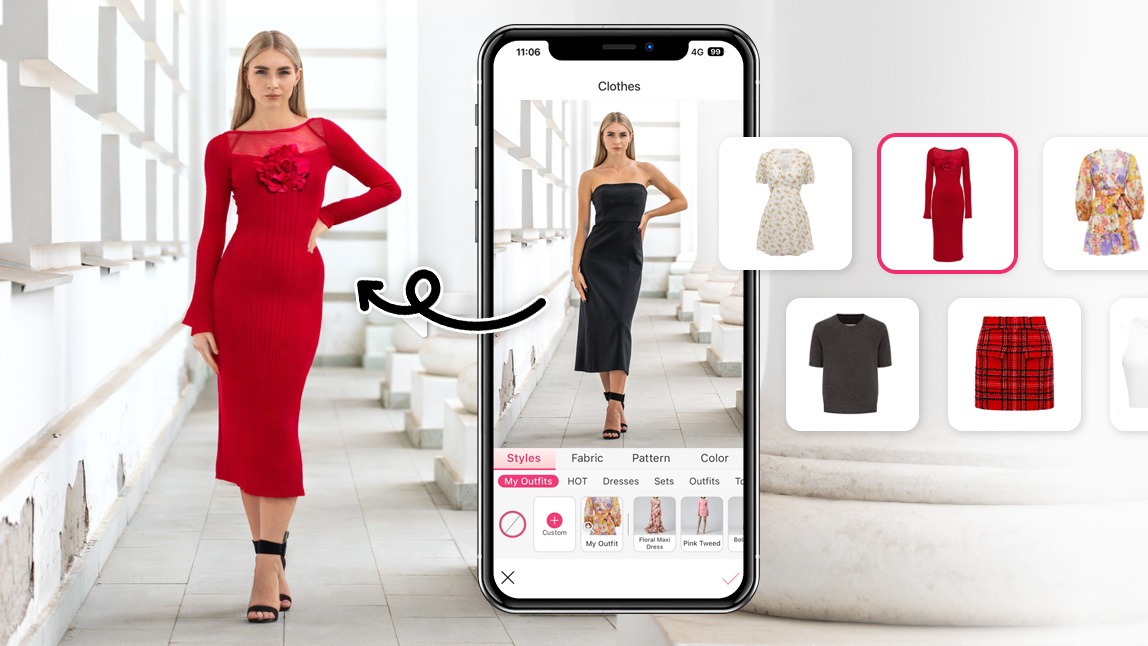
Yet over the last few years, a quiet revolution has been unfolding. Virtual try-ons—powered by augmented reality (AR), artificial intelligence (AI), computer vision, and 3D modeling—have moved from novelty to mainstream. Glasses that appear perfectly aligned on your face, sneakers rotating on a 3D scan of your feet, makeup adapting to your skin tone in real time, and clothing draping over a digital version of your body are no longer science fiction. They are features inside everyday apps.
This raises a bold question that retailers, technologists, designers, and consumers are all asking: Can virtual try-ons replace physical shopping? Not supplement it. Not enhance it. Replace it.
The answer is neither a simple yes nor a stubborn no. It lies in the intersection of technology, psychology, economics, culture, and human behavior. To understand where virtual try-ons truly stand—and where they may go—we must explore how they work, what they do well, where they fail, and how they reshape our expectations of shopping itself.
What Are Virtual Try-Ons, Really?
At their core, virtual try-ons simulate how a product would look, fit, or function on a user without physical contact. But this simple definition hides a complex technological ecosystem.
The Technology Stack Behind the Magic
Virtual try-ons rely on several interconnected systems:
- Computer Vision to detect faces, bodies, hands, or feet from camera input
- 3D Modeling to represent products with accurate geometry and texture
- AI and Machine Learning to predict fit, movement, and deformation
- Augmented Reality (AR) to overlay digital items onto real-world images
- Physics Simulation to mimic fabric drape, stretch, and collision
When you “try on” a jacket virtually, the system is not just pasting an image on your torso. It estimates your body shape, posture, and proportions, then calculates how the garment would hang, fold, and move as you shift.
Categories of Virtual Try-Ons
Virtual try-ons are not a single technology but a family of applications:
- Face-Based Try-Ons
Glasses, makeup, hats, earrings, and skincare effects. - Footwear Try-Ons
Shoes rendered on scanned or estimated foot models. - Apparel Try-Ons
Tops, dresses, pants, and outerwear simulated on full-body avatars. - Accessory Try-Ons
Watches, rings, necklaces, bags, and belts. - Beauty and Cosmetic Try-Ons
Lipstick shades, foundation matching, hair color simulation.
Each category has its own technical challenges and success rates. A virtual lipstick is far easier to simulate convincingly than a pair of jeans.
Why Virtual Try-Ons Are So Appealing
The enthusiasm around virtual try-ons is not accidental. They solve real problems—for consumers and retailers alike.
Convenience Without Compromise
Virtual try-ons eliminate some of the biggest frictions in shopping:
- No travel time
- No fitting room lines
- No awkward lighting
- No pressure from sales staff
- No physical exhaustion
You can try on fifty items in ten minutes, at midnight, from your bedroom. This kind of efficiency fundamentally changes shopping behavior.
Confidence Through Visualization
Static product images force shoppers to imagine how something might look on them. Virtual try-ons reduce imagination and replace it with approximation. Seeing a product on your own face or body—however imperfect—creates a sense of ownership and familiarity.
This psychological effect is powerful. When people can visualize themselves using or wearing a product, they are more likely to buy it and feel satisfied with their decision.
Personalization at Scale
Physical stores can personalize experiences only so much. Virtual systems, however, can adapt instantly:
- Suggest sizes based on your body scan
- Recommend colors that match your skin tone
- Adjust styling based on your preferences
- Learn from your past interactions
This level of personalization was once reserved for luxury boutiques. Now it can be delivered to millions simultaneously.
The Economic Case for Virtual Try-Ons
Retail is a business, and virtual try-ons make compelling economic sense.
Reducing Returns: The Silent Profit Killer
Returns are one of the most expensive problems in e-commerce, especially in fashion. Items that don’t fit or look different than expected often come back, costing retailers money in shipping, restocking, and lost inventory value.
Virtual try-ons help reduce this gap between expectation and reality. Even a modest reduction in return rates can save brands millions.
Lower Operational Costs
Physical stores require:
- Rent
- Staff
- Inventory storage
- Visual merchandising
- Utilities and maintenance
Virtual try-ons allow brands to:
- Operate with fewer physical locations
- Showcase unlimited inventory digitally
- Test new designs without manufacturing samples
For digital-first brands, this can mean faster iteration and lower risk.
Global Reach Without Physical Presence
A virtual fitting room has no borders. A brand can launch globally without opening stores in every region. This democratizes access for consumers and lowers barriers for emerging designers.
Where Virtual Try-Ons Truly Shine
Not all products are equal when it comes to virtual substitution.
Beauty and Eyewear: Near Replacement
In categories like cosmetics and glasses, virtual try-ons are already close to replacing physical trials.
- Lipstick shades can be rendered accurately
- Glasses fit can be estimated reliably
- Face tracking is mature and precise
Many consumers now trust virtual previews enough to buy without trying physically at all.
Accessories and Jewelry: High Visual Impact, Low Risk
Rings, watches, and bags benefit greatly from visualization. Fit matters, but the stakes are lower, and size adjustments are often possible after purchase.
Footwear: Improving Rapidly
Foot scanning and pressure analysis are making shoe try-ons increasingly accurate. While not perfect, they are far better than guessing from a size chart.
Where Virtual Try-Ons Still Fall Short
Despite their promise, virtual try-ons have clear limitations.
The Problem of Touch
Fabric texture, weight, stiffness, and breathability cannot yet be felt through a screen. For many shoppers, touch is not optional—it is essential.
A virtual sweater may look perfect but feel scratchy in reality. This sensory gap remains one of the biggest obstacles to full replacement.
Fit Is More Than Measurements
Bodies are complex. Two people with the same measurements may experience the same garment very differently due to posture, muscle distribution, or movement patterns.
Simulating fit dynamically—how clothes behave when you sit, walk, or raise your arms—is still an unsolved challenge.
Overconfidence and Disappointment
Ironically, better visualization can sometimes increase disappointment. When a virtual try-on looks flawless, the real product may feel like a letdown if it deviates even slightly.
Managing expectations becomes as important as improving accuracy.
The Psychology of Physical Shopping
To understand whether virtual try-ons can replace physical shopping, we must examine why people still go to stores.
Shopping as Experience, Not Task
For many, shopping is entertainment:
- Browsing without a goal
- Discovering unexpected items
- Enjoying curated environments
- Spending time with friends
Physical stores offer atmosphere, storytelling, and human interaction. Virtual try-ons, for all their efficiency, are still largely solitary experiences.
Trust Through Presence
Seeing a product in real life builds trust. It feels more “real” because it is real. This matters especially for high-priced or emotionally significant purchases.
Ritual and Habit
Humans are creatures of habit. Shopping rituals are deeply ingrained culturally and personally. Replacing them requires not just better tools, but new emotional narratives.
Generational Differences in Adoption
Virtual try-ons are not embraced equally across age groups.
Digital Natives: Comfort First
Younger consumers, raised on filters, avatars, and digital self-expression, are far more comfortable trusting virtual representations. For them, the boundary between physical and digital identity is already blurred.
Older Consumers: Skepticism and Learning Curves
Older shoppers may value accuracy and reliability over novelty. If virtual try-ons feel confusing or gimmicky, adoption slows.
Designing intuitive, transparent systems is critical to bridging this gap.
The Hybrid Future: Phygital Shopping
The most realistic future is not replacement, but fusion.
Physical Stores Enhanced by Virtual Try-Ons
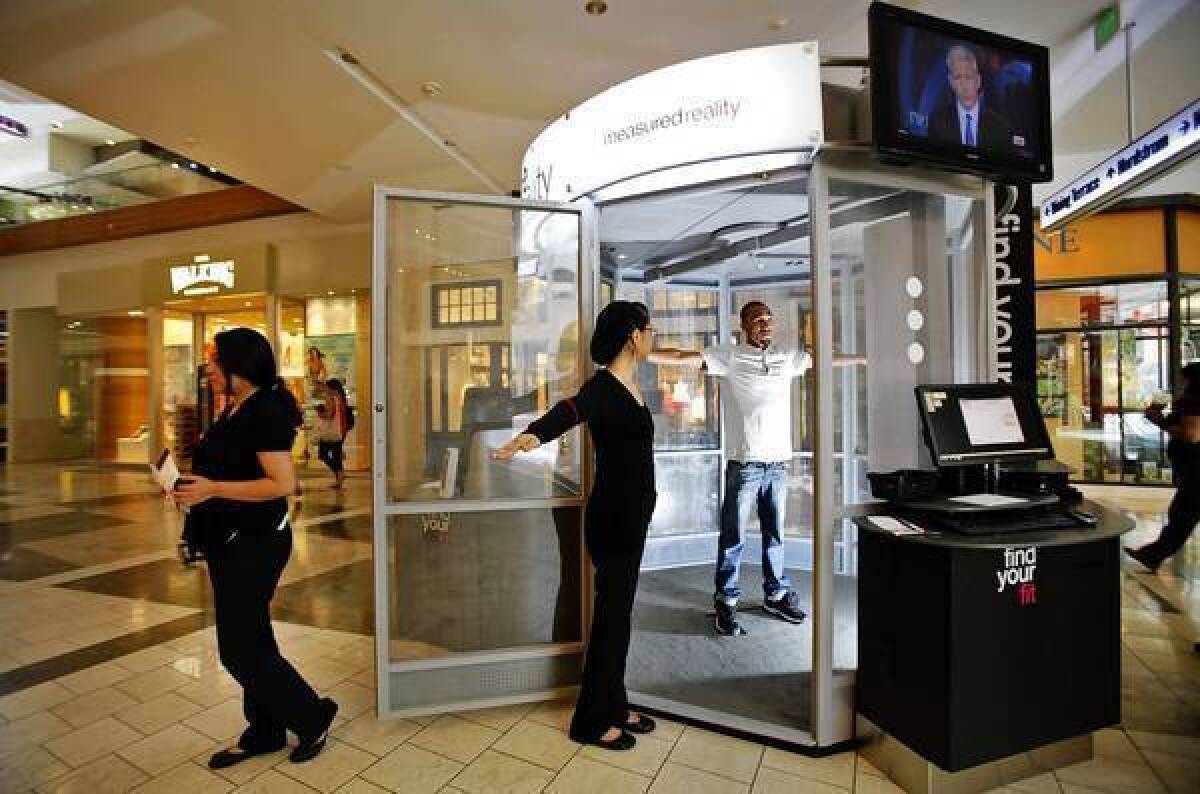
Stores are becoming showrooms where:
- Shoppers scan their bodies once
- Try endless variations digitally
- Receive items from backroom or warehouse
This reduces inventory clutter while preserving physical presence.
Online Shopping with Physical Anchors
Some brands offer:
- Home try-on kits combined with virtual previews
- Easy returns paired with AR sizing tools
- Personalized digital fitting rooms linked to past purchases
The line between online and offline continues to blur.
Data, Privacy, and Ethical Questions
Virtual try-ons rely on deeply personal data.
Body Data Is Sensitive Data
Scans of faces and bodies are not just measurements; they are biometric identifiers. How this data is stored, used, and protected matters enormously.
Transparency Builds Trust
Brands must clearly explain:
- What data is collected
- How long it is stored
- Whether it is shared or sold
Without trust, even the most advanced technology will fail.
Creativity, Identity, and Self-Expression
Virtual try-ons do more than replicate reality. They expand it.
Trying What You’d Never Try in Real Life
Virtual environments remove social pressure. People experiment more boldly when no one is watching. This can lead to more confident, expressive choices.
Avatars as Idealized or Honest Selves
Some prefer avatars that mirror reality. Others want aspirational versions. Both approaches shape how people relate to fashion and self-image.
The question is no longer just “Does this fit?” but “Who do I want to be today?”
Environmental Implications
Sustainability is often cited as a benefit of virtual try-ons.
Potential Benefits
- Fewer returns reduce shipping emissions
- Digital sampling reduces waste
- On-demand manufacturing becomes viable
Hidden Costs
- Data centers consume energy
- Device upgrades generate e-waste
The net environmental impact depends on how responsibly the technology is implemented.
Can Virtual Try-Ons Replace Physical Shopping?
After examining technology, economics, psychology, and culture, the answer becomes clearer.
Virtual try-ons can replace physical shopping in some contexts, for some products, and for some people. But not universally—not yet, and perhaps not ever entirely.
They excel where:
- Visual accuracy is high
- Fit tolerance is forgiving
- Convenience outweighs sensory need
They struggle where:
- Touch is critical
- Emotional experience dominates
- Trust requires physical presence
Rather than replacing physical shopping, virtual try-ons are redefining it. They shift shopping from a location-based activity to an experience-based continuum—one that flows seamlessly between screens and spaces.
Conclusion: A New Definition of “Trying On”
The question “Can virtual try-ons replace physical shopping?” assumes that replacement is the goal. But history suggests otherwise. New technologies rarely erase old ones completely. They reshape them, absorb them, and redefine their purpose.
Physical shopping will not disappear. It will become more intentional, experiential, and social. Virtual try-ons will not remain novelties. They will become infrastructure—quietly embedded in how we discover, evaluate, and express ourselves through products.
In the end, the future of shopping is not virtual or physical. It is human, augmented by technology that understands not just what we wear, but why we wear it.