






Introduction: When Cities Begin to Shrink—Intentionally
Cities have always been defined by density. From the narrow alleyways of medieval towns to the vertical skylines of modern megacities, urban life has been a constant negotiation between space and people. Yet today, a curious reversal is underway. Instead of expanding outward or upward, many urban dwellers are choosing to live smaller—much smaller.
Tiny living, once a fringe lifestyle associated with off-grid cabins or minimalist enthusiasts, has entered the mainstream urban conversation. Micro-apartments, compact co-living units, modular housing pods, and cleverly designed small homes are appearing in cities across the world. For some, tiny living is a practical response to soaring housing costs. For others, it is a philosophical choice—a rejection of excess and an embrace of intentional living.
But is tiny living truly the future of urban life, or is it merely a temporary adaptation to economic pressure and spatial scarcity? To answer this question, we must explore not only architecture and economics, but also psychology, culture, technology, and the evolving meaning of “home” in the modern city.
1. Defining Tiny Living: More Than Just Small Spaces
Tiny living is often misunderstood as simply “living in a small home.” In reality, it represents a broader design and lifestyle philosophy.
What Counts as Tiny?
There is no single global standard, but in urban contexts, tiny living typically includes:
- Micro-apartments ranging from 15 to 35 square meters
- Compact studios with multifunctional furniture
- Co-living spaces with private sleeping areas and shared amenities
- Modular or prefabricated units designed for efficiency
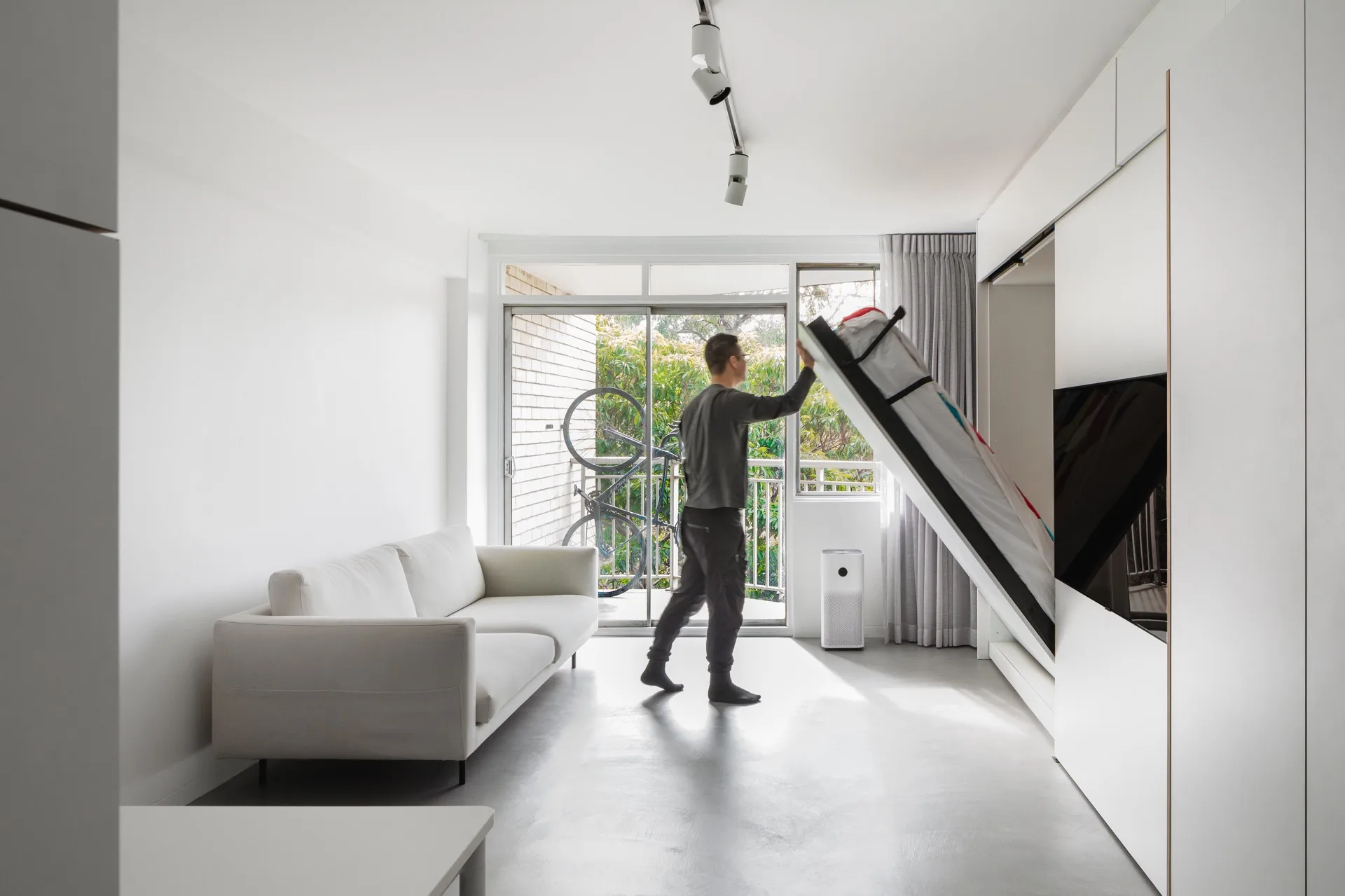
The key feature is not size alone, but intentional design. Every square meter serves a purpose. Walls move. Beds fold. Tables transform. Storage is hidden in unexpected places.
A Mindset, Not Just a Measurement
Tiny living emphasizes:
- Functional minimalism
- Reduced material consumption
- Conscious ownership
- Spatial efficiency without sacrificing dignity
In this sense, tiny living is less about sacrifice and more about precision—designing life to fit what truly matters.
2. Why Cities Are Pushing People to Live Smaller
Urbanization is accelerating. More than half of the world’s population already lives in cities, and that number continues to grow. This trend places enormous pressure on urban housing systems.
The Economics of Scarcity
In many major cities:
- Land is limited and expensive
- Construction costs are rising
- Demand far outpaces supply
As a result, housing prices have increased faster than wages. For younger generations especially, traditional apartments are often financially out of reach.
Tiny living emerges as a market response—not necessarily a perfect solution, but a feasible one.
Time, Location, and Trade-Offs
Urban residents often face a difficult choice:
- Live farther away in a larger home and commute longer
- Or live closer in a smaller space and reclaim time
Tiny living allows people to prioritize proximity—to work, culture, and social life—over square footage.
3. The Architecture of Small: How Design Makes Tiny Work
Without intelligent design, tiny living would feel restrictive. With it, small spaces can feel surprisingly generous.
Design Principles Behind Successful Tiny Homes
- Vertical Thinking
When floor space is limited, height becomes valuable. Lofted beds, tall shelving, and overhead storage expand usable space. - Multifunctionality
One object, many roles:- A sofa becomes a bed
- A wall becomes a desk
- Stairs double as storage
- Light and Visual Openness
Large windows, light colors, mirrors, and minimal visual clutter prevent small spaces from feeling cramped. - Custom Solutions
Tiny spaces rarely succeed with generic furniture. Custom-built elements allow millimeter-level optimization.
Architecture as Storytelling
In tiny living, architecture tells a story of intention. Each design choice reflects a question: Do I really need this? The result is not emptiness, but clarity.
4. The Psychology of Living Small
A smaller home changes more than habits—it reshapes the way people think and feel.
The Comfort of Boundaries
Contrary to intuition, small spaces can feel safe and comforting. Clear boundaries create a sense of containment, similar to a cocoon. For many urban dwellers overwhelmed by constant stimulation, tiny homes offer psychological relief.
Decision Fatigue and Minimalism
Fewer possessions mean:
- Less visual noise
- Fewer decisions
- Lower cognitive load
This can improve focus and reduce stress. Tiny living forces prioritization, which can be mentally freeing.

When Small Becomes Too Small
Of course, tiny living is not universally beneficial. Poorly designed or overcrowded spaces can cause:
- Claustrophobia
- Social withdrawal
- Heightened anxiety
The psychological success of tiny living depends on choice and quality, not compulsion.
5. Tiny Living and Sustainability: A Natural Alliance
One of the strongest arguments for tiny living lies in its environmental potential.
Reduced Resource Consumption
Smaller homes typically require:
- Less construction material
- Less energy for heating and cooling
- Fewer appliances and furnishings
Over time, this translates into a significantly smaller ecological footprint.
Urban Density and Environmental Efficiency
When tiny living is implemented within dense urban environments, it enables:
- Shorter commutes
- More efficient public transport
- Reduced reliance on private cars
The city itself becomes more sustainable, not just individual homes.
A Lifestyle Shift
Tiny living often encourages behavioral changes, such as:
- Conscious consumption
- Repair over replacement
- Sharing over ownership
Sustainability, in this context, is not a technical feature but a lived practice.
6. Technology: The Invisible Expansion of Small Spaces
Technology has quietly become one of tiny living’s greatest allies.
Smart Homes for Small Homes
In compact spaces, smart systems enhance comfort without adding clutter:
- Voice-controlled lighting
- Automated climate control
- Space-saving integrated appliances
Technology replaces bulk with intelligence.
Digital Life Reduces Physical Needs
As more aspects of life become digital, the need for physical storage decreases:
- Books become files
- Offices become laptops
- Entertainment becomes streaming
Tiny living benefits from this shift, as physical space is no longer required for many daily activities.
7. Co-Living: When Tiny Living Becomes Social
One limitation of tiny private spaces is the lack of room for social interaction. Co-living addresses this challenge.
The Hybrid Model
Co-living combines:
- Small private rooms
- Large shared kitchens, lounges, and workspaces
This model maintains privacy while fostering community.
Social Architecture
Well-designed co-living spaces encourage:
- Casual interaction
- Resource sharing
- A sense of belonging
For newcomers to cities, co-living offers instant social infrastructure.
A Return to Urban Villages
In many ways, co-living revives older urban traditions, where private life was compact and social life unfolded in shared spaces.
8. Cultural Differences in Attitudes Toward Space
Tiny living is not perceived equally across cultures.
:max_bytes(150000):strip_icc()/Cas.28ftPayetteUrban_NavalForceWalls-2511-e42ce2eb724748b0bf8a412b068f9051.jpg)
Space as Status
In some societies, large homes symbolize success and stability. Tiny living may be seen as temporary or undesirable.
Space as Function
In other cultures, especially in dense urban regions, compact living is normalized. Efficiency and location matter more than size.
Generational Shifts
Younger generations tend to value:
- Flexibility
- Experiences over possessions
- Urban access over suburban isolation
These values align naturally with tiny living, suggesting long-term cultural change.
9. Families, Aging, and the Limits of Tiny Living
While tiny living works well for individuals and couples, its suitability for other groups is more complex.
Families with Children
Challenges include:
- Storage for growing needs
- Privacy
- Noise management
Some families adapt successfully, but this often requires exceptional design and strong social support outside the home.
Aging in Small Spaces
For older residents, tiny living can offer:
- Lower maintenance
- Accessibility
- Proximity to services
However, careful attention to ergonomics and mobility is essential.
Tiny living is not a one-size-fits-all solution—but it can be part of a diverse housing ecosystem.
10. Policy, Planning, and the Role of Governments
The future of tiny living depends heavily on urban policy.
Zoning and Regulations
Many cities still operate under outdated housing regulations that:
- Set minimum unit sizes
- Restrict alternative housing models
Reforming these rules is crucial for responsible tiny living development.
Avoiding the Pitfall of “Luxury Minimalism”
Without regulation, tiny living risks becoming:
- Overpriced
- Poorly built
- Marketed as lifestyle branding rather than genuine affordability
Public policy must ensure that small homes remain livable, safe, and fair.
11. The Ethical Question: Choice vs. Constraint
Perhaps the most important question surrounding tiny living is not architectural, but ethical.
When Tiny Living Is a Choice
When people choose to live small:
- It can be empowering
- It reflects personal values
- It enhances quality of life
When Tiny Living Is a Necessity
When people are forced into tiny spaces due to economic pressure:
- It may increase inequality
- It can normalize lower living standards
- It risks becoming a new form of overcrowding
The future of tiny living must be guided by choice, dignity, and design quality.
12. Rethinking the Meaning of Home
At its core, tiny living challenges a deeply ingrained assumption: that more space equals a better life.
Home as Experience, Not Storage
Tiny living reframes home as:
- A place to rest, not accumulate
- A base for urban life, not a retreat from it
- A carefully edited environment
The City as an Extension of Home
When living spaces shrink, the city grows in importance:
- Cafés become living rooms
- Parks become backyards
- Libraries become offices
Tiny living only works when cities are inclusive, accessible, and well-designed.
Conclusion: A Smaller Future, or a Smarter One?
So, is tiny living the future of urban life?
The answer is both yes and no.
Tiny living is unlikely to replace all other forms of housing. Cities need diversity—large homes, small homes, shared homes, and everything in between. But tiny living is not a passing trend. It is a meaningful response to real challenges: limited space, environmental strain, economic inequality, and changing lifestyles.
More importantly, tiny living represents a philosophical shift. It asks urban residents to reconsider what they truly need, how they want to live, and how their personal choices shape the collective city.
The future of urban life may not be defined by how big our homes are—but by how intelligently they are designed, how fairly they are distributed, and how well they connect us to the world beyond our front doors.
In that sense, tiny living is not about living with less.
It is about living with intention.