





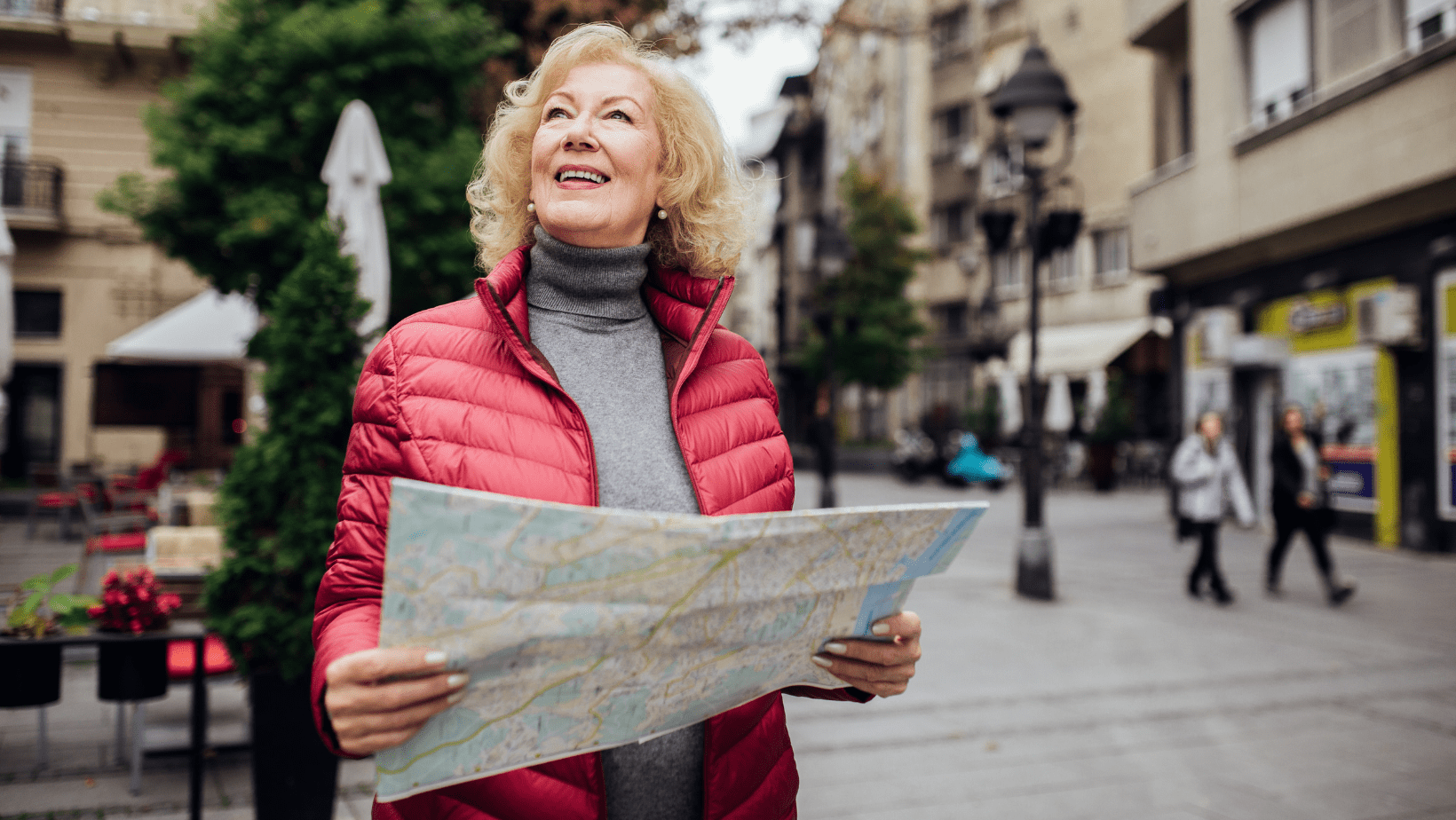

Adventure has always been one of travel’s most powerful promises. The word itself conjures images of uncertainty, discovery, wrong turns that lead to unforgettable stories, and moments when the world feels larger because we have stepped outside what we already know. At the same time, modern travelers are surrounded by an ever-expanding universe of travel planning guides: glossy guidebooks, algorithm-driven itineraries, ranking lists, step-by-step blogs, and hyper-detailed maps that claim to optimize every hour of a journey. With such tools at hand, a pressing question emerges: do travel planning guides kill the sense of adventure, or do they simply reshape it?
This question matters because it goes to the heart of why people travel at all. Are we seeking efficiency, safety, and predictability, or are we seeking uncertainty, surprise, and personal transformation? The tension between planning and adventure is not new, but the scale and precision of today’s travel guidance are unprecedented. Never before has it been so easy to know exactly where to go, what to eat, how long to stay, and what photograph to take—sometimes even before leaving home.
This essay explores whether travel planning guides diminish adventure or redefine it. By examining the psychology of adventure, the historical role of guidebooks, the benefits and drawbacks of detailed planning, and the evolving nature of exploration in the digital age, we can reach a more nuanced conclusion: travel guides do not inherently kill adventure, but they can either suffocate or strengthen it depending on how they are used.
1. What Do We Mean by “Adventure”?
Before judging the impact of travel planning guides, we must clarify what “adventure” actually means. Adventure is often misunderstood as synonymous with danger or extreme experiences, but at its core, adventure is about uncertainty combined with engagement.
From a psychological perspective, adventure arises when three conditions are present:
- The unknown – a lack of complete information about what will happen.
- Personal agency – the traveler makes choices that influence outcomes.
- Emotional investment – curiosity, excitement, or even mild anxiety.
Adventure does not require risk to life or limb. Getting lost in a foreign neighborhood, attempting to order food in a language you barely speak, or following a local recommendation to a place not listed in any guide can all qualify as adventures. What matters is the feeling that something is unfolding beyond a script.
Travel planning guides, by design, reduce uncertainty. They aim to replace the unknown with the known. This function alone makes them seem suspicious to anyone who equates adventure with unpredictability. But reducing uncertainty is not the same as eliminating adventure—sometimes it simply shifts where adventure happens.
2. A Brief History of Travel Guides
Travel planning guides did not appear suddenly in the digital age. They have evolved alongside travel itself.
Early Travel and Oral Knowledge
For most of human history, travel knowledge was passed orally. Merchants, pilgrims, and explorers relied on stories from those who had gone before. These stories were often incomplete, exaggerated, or outdated. Adventure was unavoidable because information was scarce and unreliable.
The Birth of the Printed Guidebook
The 19th century saw the rise of printed guidebooks, such as those by Karl Baedeker. These books standardized travel information: routes, lodging, customs, and landmarks. For the first time, travelers could carry structured knowledge with them. Critics at the time already complained that such guides “tamed” travel and turned it into a checklist rather than an experience.

The Digital Explosion
Today’s guides are not static books but dynamic systems. They update in real time, integrate GPS navigation, crowd-sourced reviews, and even predictive algorithms. A traveler can know not only where to go, but when to go to avoid crowds, how much it should cost, and which angle produces the best photograph.
Each stage in this evolution reduced uncertainty and increased accessibility. The question has never been whether guides change travel—they always have—but whether they reduce it to something mechanical and unadventurous.
3. The Case Against Travel Planning Guides
Critics argue that modern travel guides undermine adventure in several key ways.
3.1 Over-Scripting the Experience
One of the strongest arguments against travel planning guides is that they turn journeys into scripts. When travelers follow a predefined itinerary hour by hour, their role shifts from explorer to executor. There is little room for improvisation, curiosity, or deviation.
Instead of asking, “What happens if I turn left instead of right?” travelers ask, “Am I on schedule?”
This mindset transforms travel into consumption rather than exploration. Destinations become products, experiences become items, and the journey becomes a sequence of boxes to be checked.
3.2 Homogenization of Travel
Another criticism is that guides lead everyone to the same places. “Must-see” lists funnel millions of travelers into identical routes, cafes, viewpoints, and photo spots. As a result, destinations begin to feel staged rather than lived-in.
Adventure thrives on uniqueness, but when everyone follows the same guide, experiences converge. The sense of discovery diminishes when you realize that your “hidden gem” has been recommended to millions of others.
3.3 Reduced Serendipity
Some of the most memorable travel moments are accidental: a missed train leading to an unexpected town, a wrong turn revealing a quiet square, or a spontaneous conversation sparked by confusion.
Highly detailed guides reduce the likelihood of such accidents. GPS navigation prevents getting lost. Reviews discourage trying places without social proof. Optimization discourages “wasting time” on the unknown.
In this sense, guides can sterilize travel by eliminating the very mistakes that often become stories.
3.4 Psychological Dependence
Excessive reliance on guides can also erode confidence. Travelers may feel incapable of making decisions without external validation. This dependence reduces personal agency, a key ingredient of adventure.
When every choice is outsourced to ratings and rankings, travelers stop asking what they want and start asking what is recommended.
4. The Case for Travel Planning Guides
Despite these criticisms, dismissing travel planning guides entirely would be both unfair and unrealistic. Guides offer substantial benefits, and in many cases, they enable adventure rather than destroy it.
4.1 Lowering Barriers to Entry
For many people, especially first-time travelers, the unknown can be intimidating rather than exciting. Fear of language barriers, cultural misunderstandings, safety concerns, or logistical failure can prevent people from traveling at all.
Guides reduce these fears by providing structure. They transform the overwhelming into the manageable. Without guides, many travelers would never leave their comfort zones in the first place. In this sense, guides expand the population of potential adventurers.
4.2 Safety as a Foundation for Adventure
Adventure does not require recklessness. In fact, a baseline level of safety often makes deeper exploration possible.
Knowing where to sleep, how to get around, and which areas to avoid allows travelers to focus their energy on meaningful engagement rather than survival logistics. When basic needs are handled, mental space opens up for curiosity and experimentation.
Guides can act as a safety net, allowing travelers to take calculated risks rather than avoiding risk altogether.
4.3 Enabling Deeper Exploration
Paradoxically, guides can help travelers go deeper rather than wider. By handling logistics efficiently, guides free up time and energy for immersion.
A well-planned itinerary might allow a traveler to spend days in one neighborhood instead of rushing between cities. Knowing the basics can make it easier to explore subtleties: local habits, rhythms, and stories that casual visitors often miss.
Adventure does not always come from ignorance; sometimes it comes from informed curiosity.
4.4 Democratizing Knowledge
Historically, deep travel knowledge was a privilege of elites, explorers, or locals. Modern guides democratize access to information. They reduce power imbalances between locals and visitors and make travel more inclusive.
While this democratization can contribute to overcrowding, it also allows a broader range of people to experience the world beyond their immediate environment. From this perspective, guides do not kill adventure—they distribute it.
5. The Psychology of Control and Uncertainty
To truly understand the tension between guides and adventure, we must examine the psychology of control.
Humans are paradoxical creatures. We crave novelty but fear chaos. We seek surprise but resist uncertainty. Travel planning guides appeal to our desire for control, while adventure appeals to our desire for novelty.
The problem arises when control becomes absolute. When everything is planned, predicted, and reviewed, uncertainty disappears—and with it, the emotional intensity that makes experiences memorable.
However, the solution is not to abandon control entirely, but to calibrate it.
Adventure thrives in the space between structure and freedom. Too little structure leads to stress and exhaustion. Too much structure leads to boredom and disengagement. The art of travel lies in finding the balance point where uncertainty feels exciting rather than overwhelming.
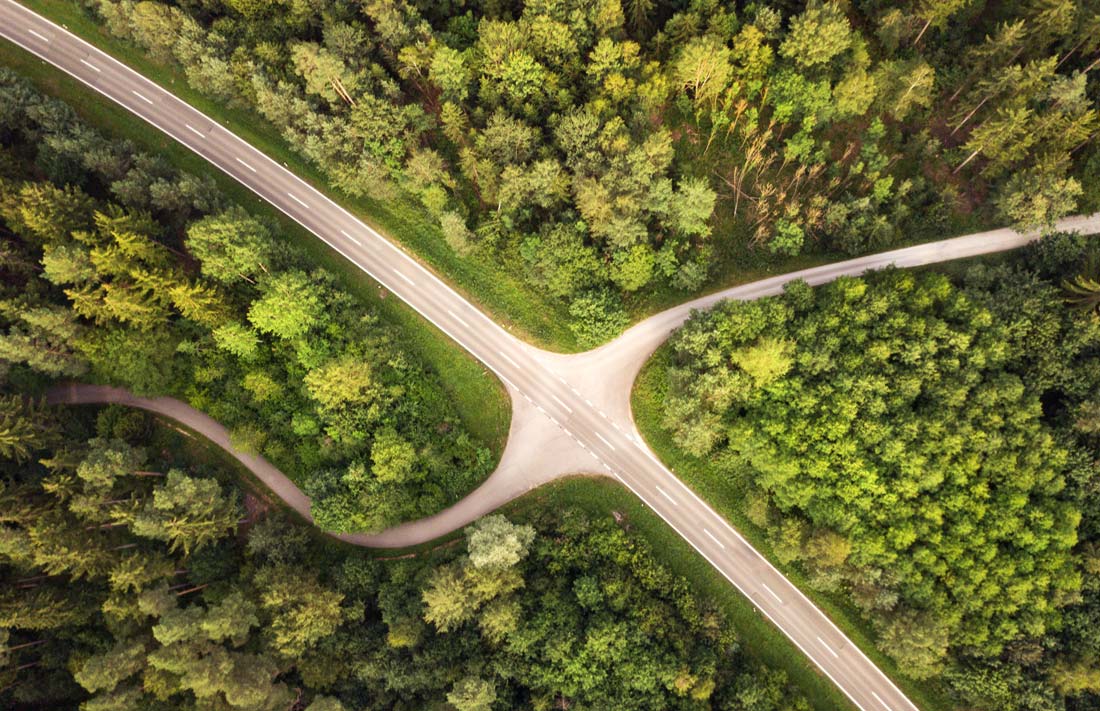
6. Planned Adventure: A False Contradiction?
At first glance, the phrase “planned adventure” sounds contradictory. How can something be both planned and adventurous?
Yet many forms of adventure rely on planning. Mountaineers plan meticulously before climbing. Divers study conditions before exploring reefs. Even explorers of the past prepared extensively, gathering maps and supplies before setting out.
What distinguishes adventurous planning from restrictive planning is intent.
- Restrictive planning aims to eliminate uncertainty.
- Adventurous planning aims to manage risk while preserving openness.
A traveler who plans transportation and accommodation but leaves days unstructured is planning for adventure. A traveler who plans every meal and photo angle is planning for control.
Guides are tools. They reflect the intent of the user more than they impose a single mode of travel.
7. The Role of Choice in Modern Travel
Modern travelers are not passive consumers of guides. They actively choose how to use them.
Some travelers follow guides rigidly. Others treat them as rough suggestions. Still others use them selectively, consulting guides only when needed.
The problem is not the existence of guides, but the loss of intentional choice. When travelers default to guides without reflection, adventure fades. When travelers consciously decide when to rely on guidance and when to ignore it, adventure remains alive.
In this sense, adventure today is less about geographical unknowns and more about behavioral decisions.
8. Technology, Algorithms, and the Illusion of Optimization
One of the most significant changes in travel planning is the rise of algorithmic recommendations. These systems promise optimization: the best route, the best restaurant, the best time.
Optimization, however, carries hidden assumptions. It assumes that “best” is universal and measurable. Adventure challenges this assumption. What is best for one traveler may be boring for another.
When travelers surrender decisions to algorithms, they risk outsourcing their curiosity. The journey becomes smoother, but also flatter.
Yet algorithms can also reveal possibilities travelers might never have found on their own. The key difference lies in whether recommendations are treated as answers or starting points.
9. Redefining Adventure in a Mapped World
The world is now thoroughly mapped. Satellites have photographed nearly every corner of the planet. Information is abundant. Traditional geographical discovery is largely over.
Does this mean adventure is obsolete?
Not at all. Adventure has simply migrated from the external world to the internal one.
Modern adventure is less about finding unknown places and more about:
- Engaging deeply rather than superficially
- Challenging assumptions rather than conquering terrain
- Connecting with people rather than collecting sights
In this context, guides are not enemies of adventure, but neutral infrastructures. They handle the predictable so that travelers can focus on the unpredictable: human interaction, cultural nuance, personal growth.
10. Practical Ways to Preserve Adventure While Using Guides
Rather than choosing between guides and adventure, travelers can design experiences that incorporate both.
10.1 Use Guides for Structure, Not Scripts
Plan transportation and accommodation, but leave large blocks of time unplanned. Treat guides as maps, not instructions.
10.2 Limit Pre-Trip Research
Over-research can pre-experience a place to the point of emotional exhaustion. Leaving some aspects unknown preserves curiosity.
10.3 Follow Curiosity Over Ratings
When on the ground, prioritize instinct and interest over rankings. A place with no reviews can still be meaningful.
10.4 Build in “Wrong Turns”
Intentionally wander without a destination. Turn off navigation occasionally. Allow space for the unexpected.
10.5 Reflect Instead of Documenting Constantly
Constant documentation can turn travel into performance. Reflection keeps the experience personal and alive.
11. Do Guides Kill Adventure—or Reveal Our Priorities?
Ultimately, the question “Do travel planning guides kill the sense of adventure?” may be misdirected. Guides do not act independently. They reflect how we choose to engage with the world.
If we seek certainty, validation, and efficiency above all else, guides will deliver exactly that—and adventure will fade. If we seek engagement, curiosity, and growth, guides can support rather than sabotage those goals.
Adventure has never been guaranteed by ignorance alone. It arises from attention, openness, and courage. No guide can supply those qualities, and no guide can eliminate them unless we allow it to.
12. Conclusion: The Future of Adventure Travel
Travel planning guides are not the villains of modern travel. Nor are they heroes. They are tools—powerful, pervasive, and morally neutral.
The real threat to adventure is not planning, but passivity. When travelers stop making choices, stop questioning recommendations, and stop listening to their own curiosity, adventure disappears.
In a world where information is abundant, adventure becomes a deliberate act. It requires choosing uncertainty over optimization, experience over efficiency, and presence over prediction.
So do travel planning guides kill the sense of adventure?
Only if we let them.
Used thoughtfully, they can do the opposite: they can clear the path so that adventure—redefined, refined, and deeply personal—can still flourish in a thoroughly mapped world.