





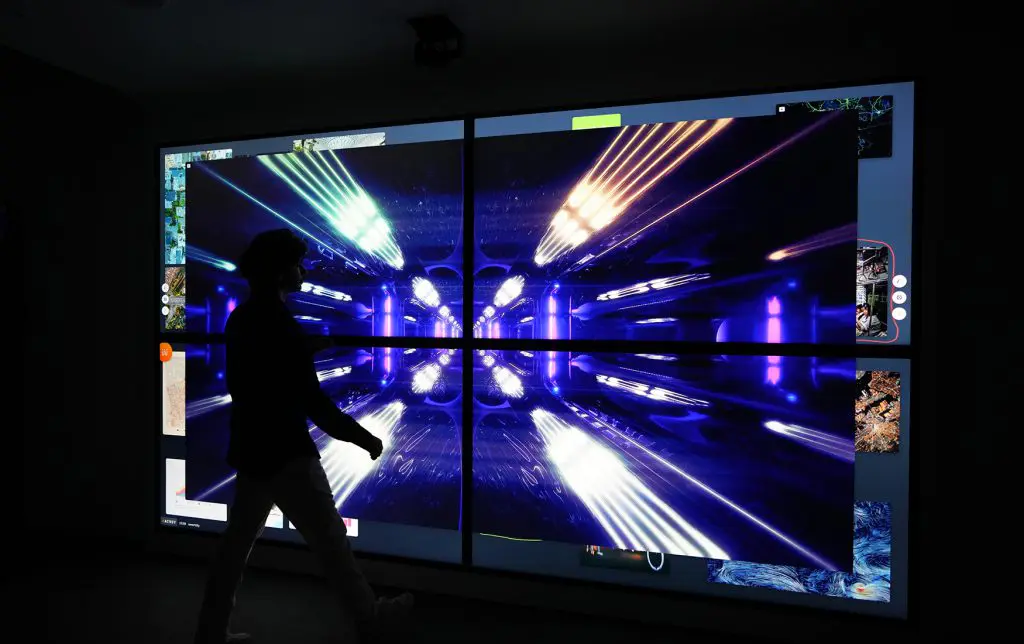

A Question That Refuses to Sit Still
Few technology concepts have experienced such a dramatic swing in public perception as the Metaverse. One moment it was hailed as the inevitable successor to the mobile internet; the next, it was dismissed as an expensive distraction weighed down by awkward avatars and bulky headsets. Headlines rose and fell, stock prices followed suit, and many observers declared the idea either revolutionary or ridiculous—sometimes within the same paragraph.
Yet the real question is not whether the Metaverse lived up to early hype. Hype, by definition, is a temporary distortion. The more meaningful inquiry is whether the underlying idea has exhausted itself or is quietly entering a more mature phase. Is the Metaverse already past its peak, or has it barely begun?
To answer that, we need to step back from marketing slogans and examine what the Metaverse actually is, what it was promised to be, and how technological ecosystems tend to evolve once the spotlight moves on. This article takes a clear-eyed, professional look at the Metaverse—not as a buzzword, but as an emerging digital layer that may still be forming its foundations.
What We Really Mean by “The Metaverse”
Before deciding whether something is overhyped, we must define it precisely. The Metaverse is often treated as a single product or platform, but in reality it is a concept—an umbrella term for a set of technologies and experiences.
At its core, the Metaverse refers to persistent, shared digital environments where people can interact with each other, digital objects, and algorithmic systems in real time. These environments may be immersive or lightweight, visual or text-based, playful or professional.
Key characteristics commonly associated with the Metaverse include:
- Persistence: The world continues to exist even when individual users log off.
- Social presence: Other people are not just usernames but embodied participants.
- Interactivity: Users can affect the environment and each other.
- Digital economies: Virtual goods, services, and identities hold value.
- Interoperability (aspirational): Assets and identities can move across platforms.
Notably, virtual reality is not mandatory. A Metaverse experience can occur on a smartphone, a laptop, or a mixed-reality headset. The fixation on VR hardware has obscured the broader point: the Metaverse is about shared digital space, not a single display technology.
The Rise of the Hype Wave
The Metaverse did not appear suddenly. Its roots stretch back decades—to early online games, virtual worlds, and science fiction visions of cyberspace. However, the most recent hype cycle surged when several factors aligned:
- Maturing game engines capable of rendering large, interactive worlds
- Advances in real-time networking and cloud infrastructure
- Pandemic-driven remote interaction, which normalized digital social spaces
- Corporate rebranding and investment, especially from major tech firms
The result was a flood of ambitious promises. The Metaverse was portrayed as:
- The future of work
- The next social media revolution
- A trillion-dollar digital economy
- A replacement for physical presence
- A new canvas for identity and creativity
These narratives were not entirely fictional, but they were prematurely bundled together. Multiple timelines were compressed into a single marketing moment, creating expectations no technology could meet overnight.
When early consumer experiences failed to match cinematic visions, disappointment followed swiftly.
Why the Backlash Was Inevitable
Every transformative technology goes through a predictable pattern: discovery, inflation, disillusionment, and consolidation. The Metaverse followed this arc with textbook precision.
The Usability Gap
Early Metaverse experiences were often:
- Visually underwhelming
- Technically unstable
- Socially awkward
- Physically uncomfortable in VR
The gap between expectation and reality was wide. Users were promised seamless digital worlds but encountered lag, limited interaction, and cartoonish graphics. This mismatch fueled skepticism.
The Hardware Bottleneck
High-quality immersive experiences remain constrained by hardware:
- Headsets are improving but still bulky
- Battery life limits session length
- Motion sickness remains a concern
- Cost restricts mass adoption
Expecting a global Metaverse before hardware friction is resolved was optimistic at best.
Over-Monetization Too Soon
Some early projects focused aggressively on speculative assets and digital real estate. When financial narratives overshadowed user value, trust eroded. People sensed they were being sold futures before being offered fun, utility, or meaning.
The backlash, then, was not a rejection of the Metaverse idea—it was a rejection of timing and execution.
Why Declaring the Metaverse “Dead” Is Shortsighted
Technologies rarely disappear after a hype collapse. More often, they become quieter—and more serious.
When media attention fades, three important things tend to happen:
- Speculators leave
- Builders stay
- Use cases become specific instead of universal
This is where the Metaverse finds itself today. Instead of grand visions of “living online,” we see targeted, practical implementations gaining traction.

The Metaverse Is Fragmenting—and That’s a Good Thing
One of the biggest misconceptions is that the Metaverse must be a single unified world. In practice, it is evolving as a network of specialized environments, each optimized for a purpose.
Gaming Worlds
Games remain the most mature Metaverse-like spaces:
- Persistent identities
- Social interaction
- Virtual economies
- Emotional investment
For many younger users, online games already function as social metaverses, even without the label.
Professional and Industrial Spaces
Companies are adopting immersive environments for:
- Training simulations
- Digital twins of factories
- Remote collaboration on complex models
- Safety drills and scenario planning
These use cases do not require mass adoption—only measurable value.
Education and Skill Development
Immersive environments allow:
- Experiential learning
- Visualization of abstract concepts
- Practice without real-world risk
Here, realism matters more than visual flair.
Cultural and Creative Spaces
Artists, designers, and performers are experimenting with:
- Virtual exhibitions
- Interactive storytelling
- Hybrid physical-digital events
Creativity often thrives before commercialization catches up.
Fragmentation reduces hype but increases resilience. The Metaverse does not need to be everywhere to matter—it needs to be useful somewhere.
Identity: The Quiet Revolution Underway
Perhaps the most underestimated aspect of the Metaverse is how it reshapes digital identity.
In traditional social platforms, identity is flattened into profiles and feeds. In shared virtual spaces, identity becomes embodied and situational. How you move, where you stand, and what you interact with all communicate meaning.
This has profound implications:
- Identity becomes more expressive
- Social norms shift from posting to presence
- Reputation may become spatial and contextual
These changes are subtle and slow, but they point to a deeper transformation than flashy visuals ever could.
The Economics Beneath the Surface
Much attention has been given to speculative digital assets, but the real economic foundation of the Metaverse is more mundane—and more sustainable.

Value Creation Over Speculation
Long-term value comes from:
- Tools that improve productivity
- Experiences that foster community
- Services that save time or reduce risk
As platforms mature, monetization shifts from novelty to utility.
Labor in Virtual Spaces
Designers, moderators, educators, and facilitators are already working inside digital environments. These roles suggest that the Metaverse is not just a place to consume, but a place to work and create.
Ownership Models Are Still Evolving
Questions around digital ownership, portability, and governance remain unresolved. Rather than being failures, these are signs of a system still negotiating its rules.
Interoperability: Dream or Destination?
One of the most ambitious promises of the Metaverse is seamless interoperability—the ability to move identities and assets across worlds. Critics argue this is unrealistic, and they are partially right.
Complete interoperability faces obstacles:
- Competing business incentives
- Technical standardization challenges
- Cultural differences between platforms
However, partial interoperability is already emerging. Shared standards, exportable assets, and cross-platform identities are developing incrementally.
History suggests that interoperability arrives slowly, then suddenly. The early internet was fragmented too—until it wasn’t.
Why the Metaverse Feels “Early” Again
Ironically, the collapse of hype has reset expectations to a healthier baseline. Instead of asking, “Why isn’t the Metaverse replacing reality?” the better question is, “Where does this make sense right now?”
This shift has several benefits:
- Teams focus on solving real problems
- User experience takes priority over spectacle
- Long-term infrastructure receives investment
In other words, the Metaverse has entered its boring phase—and boring is where durable technology is built.
Cultural Resistance and Human Factors
Technology does not succeed on capability alone. It must align with human behavior.
Some resistance to the Metaverse stems from legitimate concerns:
- Digital fatigue
- Desire for physical presence
- Privacy and surveillance fears
These are not obstacles to be overcome, but signals to be respected. The Metaverse will not replace reality; it will compete for attention alongside other media. Its success depends on knowing when not to be immersive.
The Role of Artificial Intelligence
Artificial intelligence is quietly becoming the Metaverse’s most important accelerant.
AI enables:
- More responsive virtual characters
- Dynamic world generation
- Personalized environments
- Natural language interaction
As AI reduces the cost of content creation and moderation, digital worlds become easier to build and maintain. This shifts the Metaverse from a handcrafted novelty to a scalable system.
The convergence of AI and immersive environments may ultimately matter more than headsets themselves.
Lessons from Past Technologies
History offers useful parallels:
- The internet was once dismissed after the dot-com crash
- Smartphones were initially seen as niche devices
- Social media took years to define its role
In each case, early hype distorted perception, but the underlying transformation unfolded gradually. The Metaverse shows similar patterns—overpromised, misunderstood, but not abandoned.
So, Is the Metaverse Overhyped or Just Beginning?
The most accurate answer is: both, but at different layers.
- The grand, all-encompassing Metaverse narrative was overhyped.
- The practical, plural, evolving Metaverse is just beginning.
The hype imagined a destination. Reality is delivering a process.
Instead of one world, we get many. Instead of instant revolution, we get incremental integration. Instead of spectacle, we get infrastructure.
This may be less exciting than early trailers suggested—but it is far more likely to last.
What to Watch Going Forward
If you want to understand where the Metaverse is headed, watch for:
- Improvements in lightweight immersion
- AI-driven content creation tools
- Professional and educational adoption
- Cultural norms forming inside virtual spaces
- Standards quietly emerging behind the scenes
Progress will not always be visible, but it will be cumulative.
A Final Thought: The Metaverse as a Mirror
The Metaverse is not just a technology; it is a reflection of how we imagine digital life. When we expect escape, we are disappointed. When we seek augmentation, we are surprised.
It is neither a failed dream nor a finished product. It is an unfinished language, still learning how to speak human.
And languages, once learned, tend to endure.