







Introduction
Throughout human history, myths have fascinated, frightened, and inspired generations. They are stories that seem at first glance purely imaginative: gods walking among mortals, heroes embarking on impossible quests, and cosmic battles that shape the universe. Yet beneath their fantastical surface, myths often carry echoes of real events, social anxieties, and cultural transformations. Could it be that myths are, in fact, forgotten histories cleverly disguised as tales? This question invites us to explore the blurred boundary between imagination and reality, memory and storytelling, legend and recorded history.
Myths serve as both mirrors and maps. They reflect the societies that created them, revealing values, fears, and aspirations, while mapping human attempts to make sense of the unknown. In examining myths, one discovers patterns of human thought that transcend time and geography. Whether it is the flood myth that appears in Mesopotamian, Indian, and Mesoamerican traditions or the hero’s journey that recurs in cultures worldwide, myths seem to encode a collective memory of human experience that goes far beyond mere invention.
In this exploration, we will examine myths through multiple lenses: archaeology, anthropology, psychology, and literary studies. We will trace how historical events become mythologized, how myths serve as cultural memory, and how they survive across generations, often reshaped but never entirely erased.
1. Myths and Memory: How Stories Preserve the Past
Human memory is fragile, yet storytelling allows cultures to preserve crucial information long after the events themselves have faded. Oral traditions, which predate written records, were the primary vehicles for transmitting knowledge. Anthropologists have found that oral cultures often encode historical events in symbolic narratives.
Consider, for instance, the Epic of Gilgamesh, one of the oldest surviving texts in human history. While it narrates fantastical encounters with gods and monsters, scholars have argued that it may contain references to historical floods, city-states, and kings. The mythic elements—such as Gilgamesh’s quest for immortality—serve as narrative scaffolding that preserves the memory of societal challenges, environmental disasters, and human ambitions.
Similarly, the Greek myths of the Trojan War, long dismissed as purely imaginative, were partially corroborated by archaeological excavations in the 19th and 20th centuries at Hisarlik (modern-day Turkey). Evidence of violent destruction layers suggests that a real conflict may have inspired these epic narratives, though the embellishments—heroes of superhuman prowess, divine interventions—transformed history into myth.
This pattern is repeated globally. Myths act as mnemonic devices, encoding historical facts in memorable, emotionally charged stories. They simplify complex realities into narratives that are easier to transmit across generations, often highlighting moral or cultural lessons.
2. The Archeology of Myth
Archaeology has played a crucial role in revealing the historical kernels within mythic narratives. Excavations have repeatedly confirmed that stories once thought purely fantastical often have roots in actual events.
Take the myth of Atlantis, for instance. Plato described an advanced civilization that vanished beneath the waves in a single day and night. While Atlantis as Plato imagined it may never have existed, researchers suggest that it could have been inspired by the catastrophic Thera eruption (modern-day Santorini) around 1600 BCE. The volcanic eruption devastated Minoan settlements and created lasting social upheaval. Over time, such traumatic events may have been encoded into mythic frameworks, transforming them into allegorical or symbolic narratives.
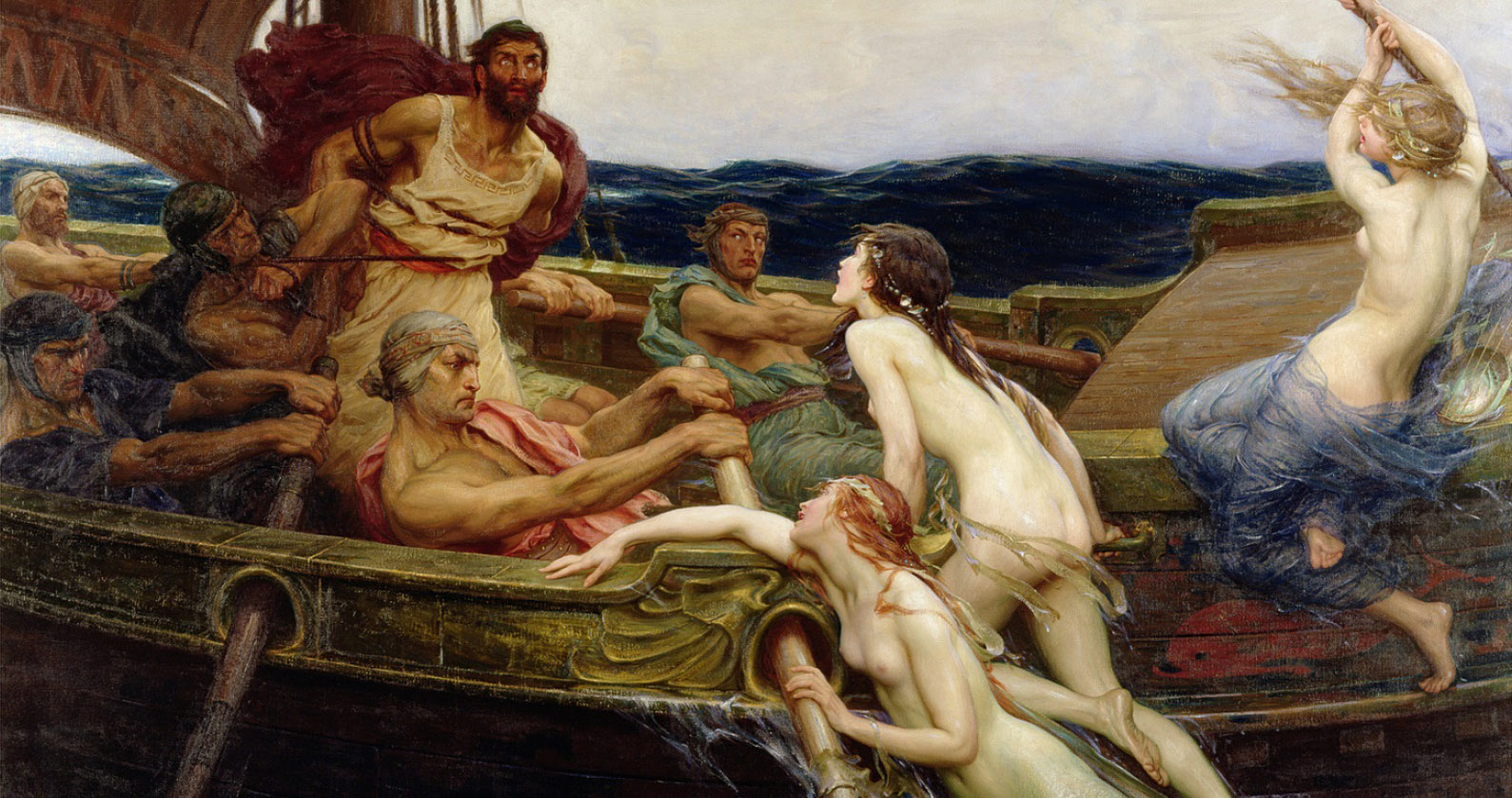
Similarly, Norse mythology, with its tales of Ragnarok and apocalyptic battles, could reflect the historical memory of extreme climate events and social collapse in early medieval Scandinavia. Archaeological findings of burned settlements, famine pits, and skeletal trauma correspond to periods of societal stress, suggesting that mythic storytelling often preserves encoded historical memory in symbolic form.
3. Myth as Cultural Encoding
Beyond recording discrete historical events, myths encode broader cultural and psychological truths. Anthropologists argue that myths serve as a form of social software, transmitting behavioral norms, cosmological understanding, and moral codes. In this sense, they function not merely as entertainment but as repositories of collective wisdom.
The Egyptian myth of Osiris, who is killed, dismembered, and resurrected, illustrates this vividly. Beyond its supernatural narrative, the story encodes values related to kingship, succession, fertility, and the cycle of life and death. Similarly, the Japanese myth of Amaterasu, the sun goddess who retreats into a cave, reflects social principles concerning harmony, authority, and human-nature interaction.
Through this lens, myths are less “false stories” and more sophisticated forms of knowledge transmission. They are symbolic languages in which societies record, teach, and negotiate their realities. Forgotten historical details—wars, migrations, environmental disasters—often survive in mythic form, sometimes abstracted or dramatized, but never entirely lost.
4. Psychology and the Mythic Mind
Psychologists, particularly Carl Jung and Joseph Campbell, have explored myths as expressions of universal human archetypes. Archetypes such as the Hero, the Trickster, and the Great Mother recur across cultures and epochs, suggesting that myths tap into shared cognitive structures.
From this perspective, myths may not always correspond directly to historical events but often reveal the psychological landscapes of those who created them. However, this does not preclude the existence of historical truths within myths. Indeed, the universality of certain archetypes may reflect common responses to real-world challenges: natural disasters, social hierarchies, mortality, and existential uncertainty.
In some cases, mythic embellishments act as interpretive filters for historical events. For instance, a particularly brutal war may be transformed in collective memory into a tale of divine punishment or cosmic struggle. By translating events into symbolic frameworks, communities can process trauma, justify social norms, and maintain continuity in collective memory.

5. Mythic Patterns Across Time and Space
Comparative mythology reveals striking similarities in myths across cultures separated by continents and millennia. Flood myths, creation myths, and hero quests appear in cultures as diverse as Mesopotamia, Mesoamerica, India, and Polynesia. These recurring motifs suggest that myths may encode responses to universal human experiences—floods, natural disasters, invasions, social upheavals—alongside local historical events.
The recurring motif of the flood, for instance, may reflect both historical floods and human attempts to explain environmental catastrophe in narrative form. The hero’s journey, codified by Campbell, similarly reflects the universal need to confront danger, undergo transformation, and reintegrate knowledge—a narrative pattern that resonates with countless historical experiences.
By identifying patterns across myths, scholars can distinguish between purely imaginative elements and those likely rooted in collective memory. This comparative approach highlights how human societies construct stories that are simultaneously entertaining, educational, and preservational.
6. Myth and Modern Memory
Even in the modern era, myths continue to shape our understanding of history. National myths, legends, and foundational narratives inform collective identity, often blending fact and fiction. The story of George Washington and the cherry tree, for example, is historically dubious but encodes societal ideals of honesty and virtue. Similarly, myths of technological progress, exploration, and scientific heroism often dramatize real achievements to create compelling cultural narratives.
Modern media has amplified the myth-making process, transforming historical events into iconic stories with global reach. Films, novels, and digital media reinterpret history, blending fact with legend. In doing so, contemporary myths continue the ancient function of encoding historical memory in emotionally resonant narratives.
7. When Myth Becomes History
The process by which myth transforms into recognized history is complex and fascinating. Often, myths persist because they contain enough historical truth to be plausible, while narrative exaggeration ensures their memorability. Over time, new evidence, reinterpretation, or scholarly research can shift the status of a story from legend to documented history.
The line between myth and history is thus not absolute but porous. Myths are rarely purely fictional or purely factual; they occupy an intermediate space, preserving historical memory while allowing imaginative exploration. By reading myths critically, historians and scholars can uncover insights about the past that conventional records may have missed, lost, or deliberately obscured.
Conclusion
Are myths forgotten histories disguised as tales? The evidence strongly suggests that they are. Myths preserve echoes of real events, societal transformations, and psychological truths, encoded in narrative frameworks that survive long after the original occurrences have faded. They are not mere entertainment or fiction; they are repositories of collective memory, cultural identity, and human experience.
By examining myths through the lenses of archaeology, anthropology, psychology, and literary studies, we can begin to decode the historical truths hidden beneath fantastical storytelling. In doing so, we gain a deeper appreciation for the ingenuity of our ancestors, who transformed memory into narrative, and tragedy into enduring tale. Far from being irrelevant relics, myths continue to illuminate the complex interplay between history, imagination, and human consciousness.
In essence, myths are neither entirely false nor fully factual. They are human attempts to remember, interpret, and give meaning to the world. Forgotten histories, dramatized, symbolized, and immortalized as tales, myths remain one of our richest sources of insight into the human past—and, perhaps, the human soul.