





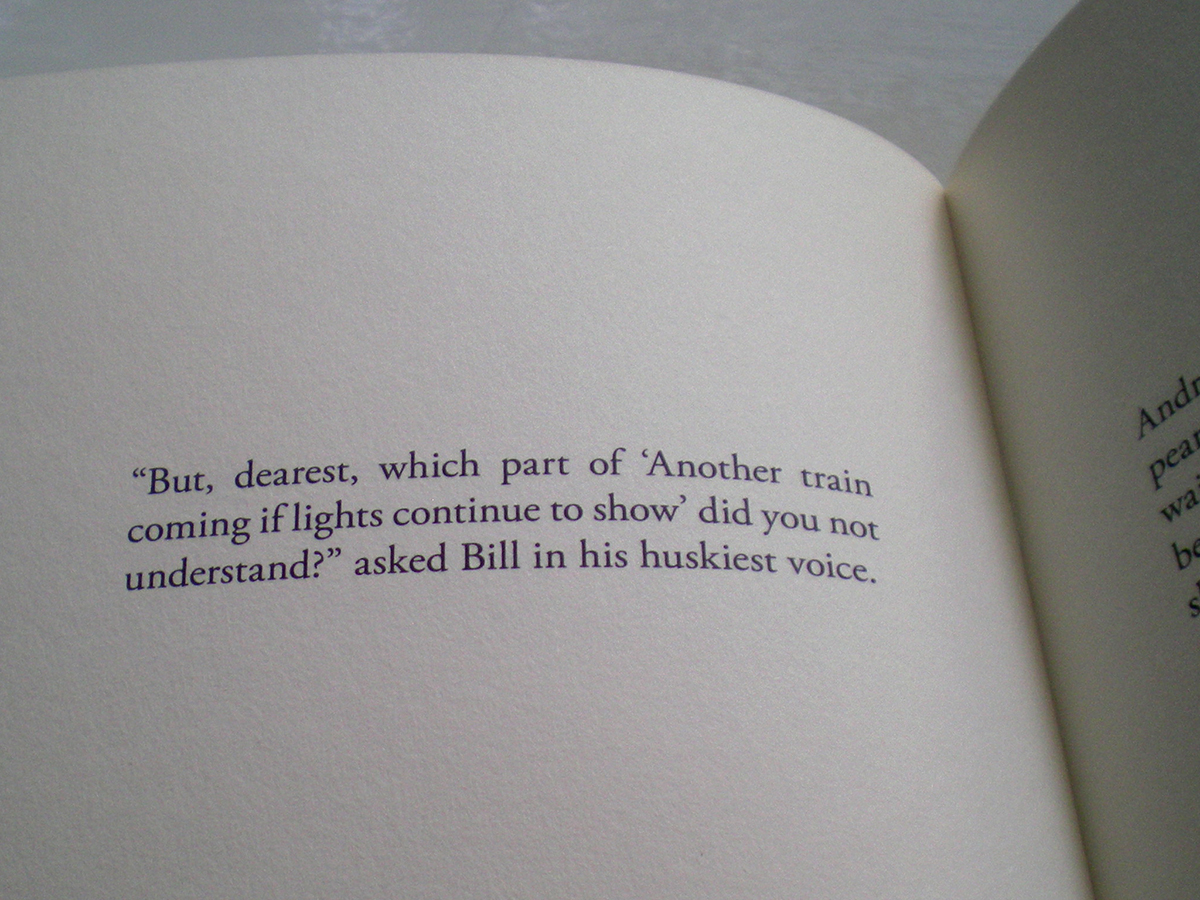

The idea is almost absurd: that a single sentence—no matter how elegantly crafted—could encapsulate the rise and fall of a character, the arc of tension, and the resolution of conflict. Yet, in literature, philosophy, and even in modern communication, the possibility of conveying a complete story in a single sentence has fascinated writers and thinkers alike. It is not just a linguistic curiosity; it is a challenge to our understanding of narrative, perception, and the very essence of what we call storytelling.
At first glance, stories appear to demand space. A novel is a house with rooms; a short story, a compact apartment; even flash fiction—those “tiny tales” of a few hundred words—requires a careful balance between detail and economy. How, then, can a mere sentence—a line of text punctuated by a single period—achieve what most narratives require paragraphs, chapters, or volumes to accomplish?
The answer begins in the interplay of compression and implication. A sentence that contains a full story relies on the reader’s imagination to fill in gaps, to infer motivations, to sense tension that is not explicitly spelled out. It is storytelling through suggestion rather than exposition, a literary sleight of hand in which economy does not equal emptiness. Every word carries weight, every clause contributes to a larger narrative arc, and punctuation is not just functional but narrative: commas breathe suspense, colons hint at causality, dashes interrupt expectation, and ellipses whisper unresolved tension.
Consider this: “He left the house for the last time, locking the door behind him as if sealing a life he would never return to, unaware that in the kitchen, the letter he had avoided reading for months finally slipped from the shelf and fluttered to the floor.” In one sentence, we see departure, finality, suspense, and the suggestion of regret or revelation. We, as readers, supply context—why did he leave? What does the letter contain? What will happen next? The sentence is a spark; the story ignites in the reader’s mind.
This mechanism is more than literary cleverness; it taps into cognitive patterns. Human brains are wired to seek narrative coherence. Even minimal cues can trigger elaborate mental reconstructions of time, cause, and effect. Neuroscientific studies of narrative processing show that when we read or hear a story, our brains simulate events, emotions, and motivations. A sentence that is carefully constructed to hint at cause, effect, and emotional stakes can therefore evoke an entire story experience without additional exposition. The story exists as much in the reader’s mind as in the text itself.
Historically, authors have explored the power of the “sentence story” long before the age of the internet, where tweets and status updates condense narrative into atomic form. In the 19th century, literary experiments with aphorism and epigram, particularly in French and German literature, hinted at narrative compression. Writers like Edgar Allan Poe and Nathaniel Hawthorne flirted with sentences that encapsulated fate or irony in their tightest forms. In the 20th century, modernist writers such as James Joyce and Virginia Woolf pushed boundaries further, producing sentences that looped in time, layered consciousness, and contained microcosms of plot and character.
This approach is not just a technical exercise; it also transforms the way stories are experienced. In traditional prose, the narrative is explicit, linear, and often reassuringly complete. Sentence stories, by contrast, create a tension between completeness and incompleteness. The reader experiences both satisfaction and curiosity simultaneously. A story can feel both “whole” and tantalizingly unresolved. It is this duality that gives the single-sentence story its literary power.
Another factor contributing to the efficacy of single-sentence storytelling is rhythm. Long, flowing sentences with periodic punctuation can mirror the temporal experience of events, almost like a cinematic tracking shot. Short, staccato sentences can convey urgency, surprise, or abruptness, as if the narrative is compressed into a single heartbeat. In both cases, sentence structure becomes narrative architecture. The physical act of reading—the rise and fall of breath, the pausing and gliding—contributes to the storytelling, transforming typography into temporal experience.
The digital age has amplified interest in this form. Social media, with its strict character limits, has forced writers to condense thought, emotion, and narrative into fragments that resemble micro-stories. A single sentence posted online can evoke universal themes: love, loss, triumph, and betrayal. Unlike traditional literature, where the reader expects exposition and background, micro-narratives rely entirely on shared cultural understanding, inference, and cognitive fill-ins. In some ways, the digital sentence story is closer to oral storytelling, relying on communal imagination rather than written elaboration.
There are also practical applications beyond art. Journalists, marketers, and educators use compressed storytelling to convey essential information with maximum impact. A single, well-crafted sentence can encapsulate the essence of a news event, a product, or a lesson. The techniques of sentence storytelling—compression, implication, rhythmic control, and tension—become tools for communication, persuasion, and engagement. The story is no longer a literary ornament but a cognitive instrument.
Yet, the constraints of single-sentence storytelling pose challenges. Economy of words can lead to ambiguity that is unintended, while excessive compression risks sterility or opacity. Writers must balance clarity with suggestion, rhythm with readability, and narrative completeness with interpretive openness. Some of the most successful sentence stories leverage universal archetypes—love, death, conflict, reconciliation—so that even minimal cues evoke expansive narrative contexts. Archetypes act as narrative scaffolding, supporting the compressed architecture of the story.
Consider another example: “By the time she returned to the empty playground, the swings swaying in the wind, she realized that childhood itself had quietly vanished, leaving only echoes she could almost hear but never touch.” In this single sentence, themes of nostalgia, loss, and time’s passage unfold. The sentence’s imagery, emotional weight, and implied temporal arc allow the reader to construct a mini-narrative universe. We see a character, a setting, a conflict (the loss of childhood), and an emotional resolution. The sentence does not need additional paragraphs; it is both lens and landscape, vehicle and destination.
This raises a deeper philosophical question: what constitutes a “story”? If narrative is defined by character, conflict, and resolution, then single-sentence stories challenge conventional thresholds. They suggest that a story is not merely a sequence of events but a network of ideas, images, and emotions that the reader assembles. A single sentence, therefore, functions as both code and key. It is compressed potential energy; the reader’s mind is the kinetic force that animates it.
Linguistically, single-sentence storytelling also highlights the versatility of language. Languages with flexible word order, rich tense systems, or compound-complex sentence structures are particularly suited to this form. English, with its relative syntactic flexibility and extensive vocabulary, allows for multiple layers of meaning in a single line. Metaphor, juxtaposition, and syntactic parallelism become essential tools, allowing writers to hint at causality, time, and emotion in compressed form. Punctuation is not merely decorative—it is semantically active, shaping the narrative flow and temporal perception.
The craft extends beyond individual sentences. Writers often draft multiple candidate sentences, each a mini-narrative experiment. Editing is surgical: extraneous words are removed, connotations tightened, cadence adjusted. The result is a sentence that is taut yet expansive, precise yet resonant. It is the literary equivalent of a haiku in motion—a single breath containing a world of experience.

Interestingly, the single-sentence story also mirrors aspects of other art forms. In music, a brief motif can suggest an entire movement; in painting, a single brushstroke can imply depth, perspective, and emotion. Similarly, a sentence can encode narrative dynamics, leaving the rest to the interpretive faculties of the audience. The story exists not just in the words but in their interaction with perception, memory, and imagination.
Psychologically, this approach also satisfies a human craving for narrative closure while challenging cognitive creativity. Readers are invited to become co-authors, filling gaps, interpreting motivations, and projecting outcomes. The sentence thus becomes an interactive narrative device, a cognitive playground where imagination and linguistic form converge. It is storytelling that is simultaneously minimalist and maximalist: minimalist in words, maximalist in interpretive potential.
The literary history of single-sentence storytelling demonstrates its adaptability. Flash fiction competitions, modernist prose, and even tweet-length narratives all explore this terrain. Each context emphasizes different strengths: poetry-like resonance, temporal compression, or immediate cultural relevance. Across contexts, the guiding principle remains the same: a sentence can be a universe if it is designed with narrative architecture, linguistic precision, and imaginative suggestion.
Moreover, single-sentence stories can explore temporality in ways multi-sentence narratives cannot. With clever structuring, a sentence can suggest simultaneity, non-linear time, or the compression of months into moments. This temporal fluidity allows for stories that feel larger than their physical text, where a single line can contain entire lifetimes or transformational arcs. Such sentences often rely on cumulative clauses, parallel structures, or carefully chosen verbs to evoke the passage of time, emotional depth, and narrative progression simultaneously.
From a creative standpoint, single-sentence storytelling encourages risk-taking. Writers can play with ambiguity, irony, and paradox, trusting the reader to assemble meaning. In conventional narratives, ambiguity is often a luxury; in single-sentence stories, it is a necessity. The sentence’s brevity magnifies every word, so precision and imagination must coexist. Each word is both carrier and catalyst, shaping what is seen, felt, and inferred.
Finally, single-sentence storytelling invites reflection on the future of narrative itself. In a world of information overload and fleeting attention spans, the ability to communicate complex, emotionally resonant stories in a compressed form is increasingly valuable. It demonstrates that narrative is not defined by length but by depth, connection, and the human capacity for interpretation. A sentence may be small, but it can be immense in effect.
In conclusion, yes—a single sentence can contain an entire story. Not all sentences can, and not all readers will experience the same story, but with the right combination of linguistic craft, narrative implication, rhythmic structure, and cognitive engagement, a sentence can evoke beginnings, middles, and ends; tension, climax, and resolution; character, setting, and emotion. The story resides in the interplay between words and imagination, a co-creation of writer and reader. In an era dominated by brevity, distraction, and constant information flow, the single-sentence story demonstrates a timeless truth: narrative is not about quantity, but quality, resonance, and the space it leaves for the mind to wander, imagine, and remember. It is both a challenge and a revelation, a literary microcosm in which an entire world can live, breathe, and conclude—all in one breath.