






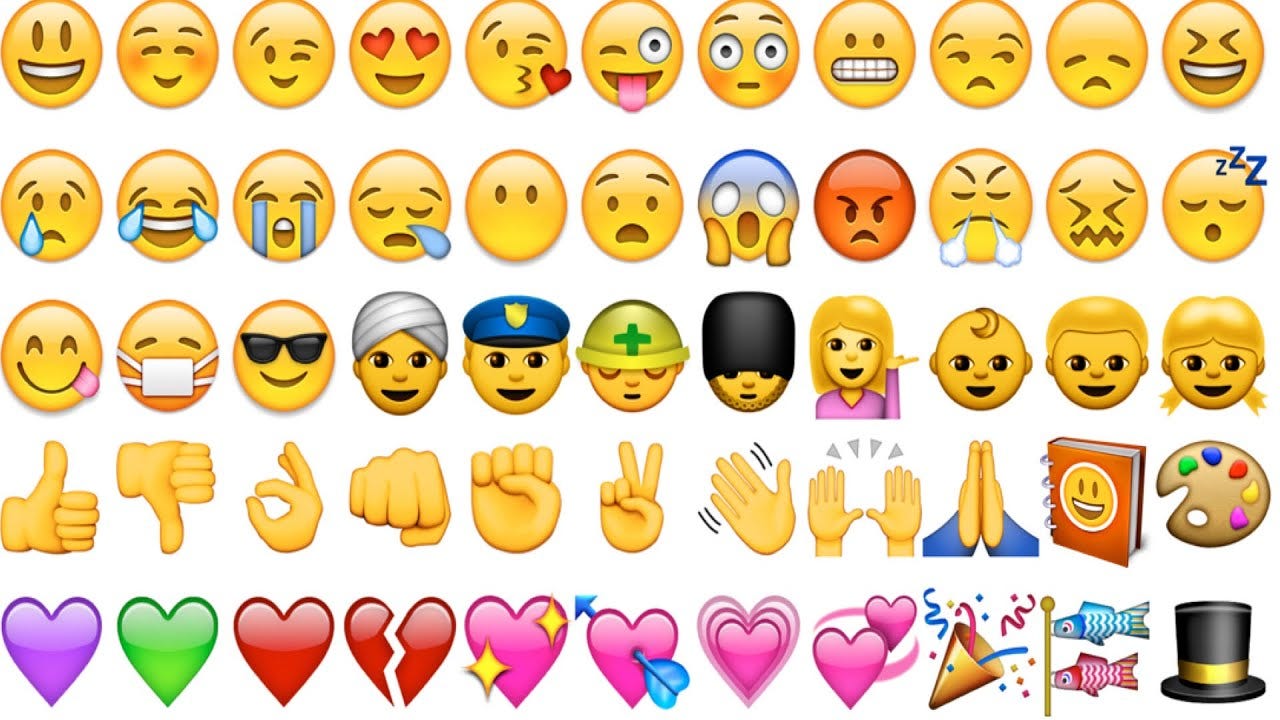
In the age of digital communication, where brevity often triumphs over verbosity, emojis have emerged as a universal language, bridging cultures, ages, and even languages. They are no longer just playful icons sprinkled in text messages; they have evolved into a powerful narrative tool. But the question remains: can emojis tell a story deeper than words? The answer, surprisingly, may be yes.
The Evolution of Visual Language
Human communication has always relied on more than just words. From prehistoric cave paintings to hieroglyphs and symbolic art, we have expressed complex ideas visually long before alphabets existed. Emojis are the modern extension of this ancient tradition. Unlike text, which depends on grammar, syntax, and cultural context, emojis offer an immediate, visceral understanding.
Consider the sequence: 🏃♂️💨🌧️😰. Without a single word, it tells the story of someone running fast in the rain, feeling stressed or anxious. The brevity doesn’t dilute meaning—it enhances it. Emojis condense multi-layered experiences into a few visual cues, activating our brains in ways similar to reading a graphic novel.
Cognitive Impact: How We Process Emojis
Psychologists and neuroscientists have begun exploring how emojis affect cognition and emotion. Visual symbols are processed in the brain’s right hemisphere, which handles imagery, pattern recognition, and emotional nuance. Words, by contrast, primarily engage the left hemisphere, responsible for logic, syntax, and analytical thinking. This split suggests that emojis can evoke emotion faster and more directly than words.
Studies show that reading an emoji alongside text can amplify the emotional tone of the message. For instance, the phrase “I’m fine” paired with 😢 communicates despair, whereas with 😎 it conveys confidence or casual indifference. Words alone are often ambiguous; emojis reduce this ambiguity by providing a visual emotional context.
Emotional Depth and Subtlety
Emojis can express subtle emotions that words sometimes fail to capture. Take the “smiling face with sweat” (😅). It conveys relief, embarrassment, or nervousness simultaneously—nuances that might require a full sentence to articulate. Similarly, sequences of emojis can illustrate complex narratives or emotional arcs. A story of love, heartbreak, and reconciliation could be summarized as: 💌❤️🔥😭💔🤝🌈.
This economy of expression can be more impactful than verbose storytelling. The human brain often reacts more intensely to visual shorthand, connecting emotionally without overthinking the logic of language. In this sense, emojis tell stories not by replacing words, but by transcending them.
Cultural Universality and Variability
Emojis are inherently global, but their interpretation can vary based on cultural context. A gesture like 🙏 might be seen as “thank you” in one culture and “praying” in another. Despite these nuances, the core advantage remains: they communicate emotion quickly, sometimes faster than words can travel through translation.
This universality makes emojis particularly powerful in cross-cultural storytelling. Imagine an international social media campaign using only emojis to convey a message of environmental conservation: 🌲🔥🌧️🐾🌍. The narrative is instantly recognizable worldwide, even without linguistic translation.
Storytelling Beyond Text
Emojis excel in narrative compression. In literature or film, we rely on exposition, dialogue, and pacing to convey emotion. Emojis allow a micro-storytelling approach—each symbol acting as a scene, a character, or a mood. They can construct layered meanings in mere seconds.
Consider the emoji sequence: 🏙️🚶♀️🌇🍷💭. This evokes an evening walk in the city, reflective contemplation, perhaps even longing or nostalgia. Words could describe this scene in fifty sentences, but emojis evoke the same imagery in a blink. Their interpretive openness invites readers to fill in gaps with personal experience, making each story deeply individualized.
Limitations and Misinterpretations
However, the narrative power of emojis is not without limitations. Their simplicity, while advantageous, can also be restrictive. Emojis are abstract, and their meanings rely heavily on shared conventions. Misinterpretation is common: a simple gesture like 🙃 can be read as sarcasm, irony, humor, or frustration, depending on context.
Additionally, emojis cannot capture complex technical or philosophical ideas with precision. They thrive in the realm of emotion, mood, and immediate human experience, but fall short for analytical, logical, or highly detailed narratives. They complement words rather than fully replace them.
The Rise of Emoji Literature

Interestingly, some writers and creators are experimenting with “emoji literature,” using sequences of emojis to tell complete stories or poems. These works invite readers to engage in visual decoding, transforming reading into an active, interpretive experience. Emoji novels, online comics, and social media micro-stories show that narratives can be compelling even without traditional language.
This trend highlights a key point: storytelling is evolving. Just as silent films once relied on gestures and expressions to convey emotion without dialogue, modern digital storytelling increasingly leverages emojis to bypass linguistic barriers.
Emojis and the Brain’s Narrative Wiring
Neuroscientists suggest that humans are hardwired for stories. We seek patterns, causal chains, and emotional resonance. Emojis tap into this wiring efficiently. A well-constructed emoji sequence can simulate the rhythm of a story: setup, conflict, climax, and resolution.
Example: 🏡🕰️🗝️🚪👻💡😱🎉. A mini ghost story unfolds—home, time, a mysterious key, a door, a ghost, a sudden realization, fear, and finally relief or celebration. Each emoji represents a beat, and our minds fill in the connective tissue, making the story emotionally satisfying.
The Intersection of Art and Communication
Emojis are both linguistic tools and miniature artworks. Designers craft each symbol to convey universal human expressions in stylized, culturally neutral forms. The aesthetics matter: color, shape, and expression amplify emotional impact. Emojis are small icons, but they carry the weight of performance, akin to theater, dance, or painting condensed into a digital form.
Practical Implications
The rise of emojis has practical implications in marketing, education, therapy, and social media. Brands use emoji narratives to create engaging campaigns. Educators employ them to simplify complex topics for younger audiences. Therapists and psychologists sometimes leverage emojis to help clients express feelings they cannot articulate verbally.
In all these domains, the underlying principle remains: emojis are not a gimmick; they are a tool to enhance human connection, enabling stories to be felt rather than merely read.
Future Directions
The future of storytelling may be increasingly visual. As augmented reality, virtual reality, and immersive digital spaces expand, emojis and emoji-like icons could become central to narrative design. Imagine interactive stories where users manipulate emoji sequences to explore different plotlines, or AI-generated narratives told entirely through visual symbols.
Emojis may evolve beyond static images into dynamic, animated, and context-sensitive forms, further blurring the line between visual art and written language. The potential for emotionally rich, culturally inclusive storytelling is enormous.
Conclusion
So, can emojis tell a story deeper than words? Absolutely—but with nuance. They excel at conveying emotion, compressing narrative, and transcending linguistic barriers. They invite readers to participate actively, filling gaps with personal experience. While they cannot entirely replace the precision of words, they complement them in profound ways, creating stories that are felt, seen, and interpreted rather than simply read.
In the end, emojis are not just decoration; they are an evolution in the art of storytelling, a return to humanity’s visual roots, and a testament to our brain’s insatiable appetite for emotion, connection, and narrative. The next time you string together a sequence of 🌌🌠🛸👽🤯, remember: you are not just sending icons—you are telling a story that could resonate more deeply than any paragraph of text.