





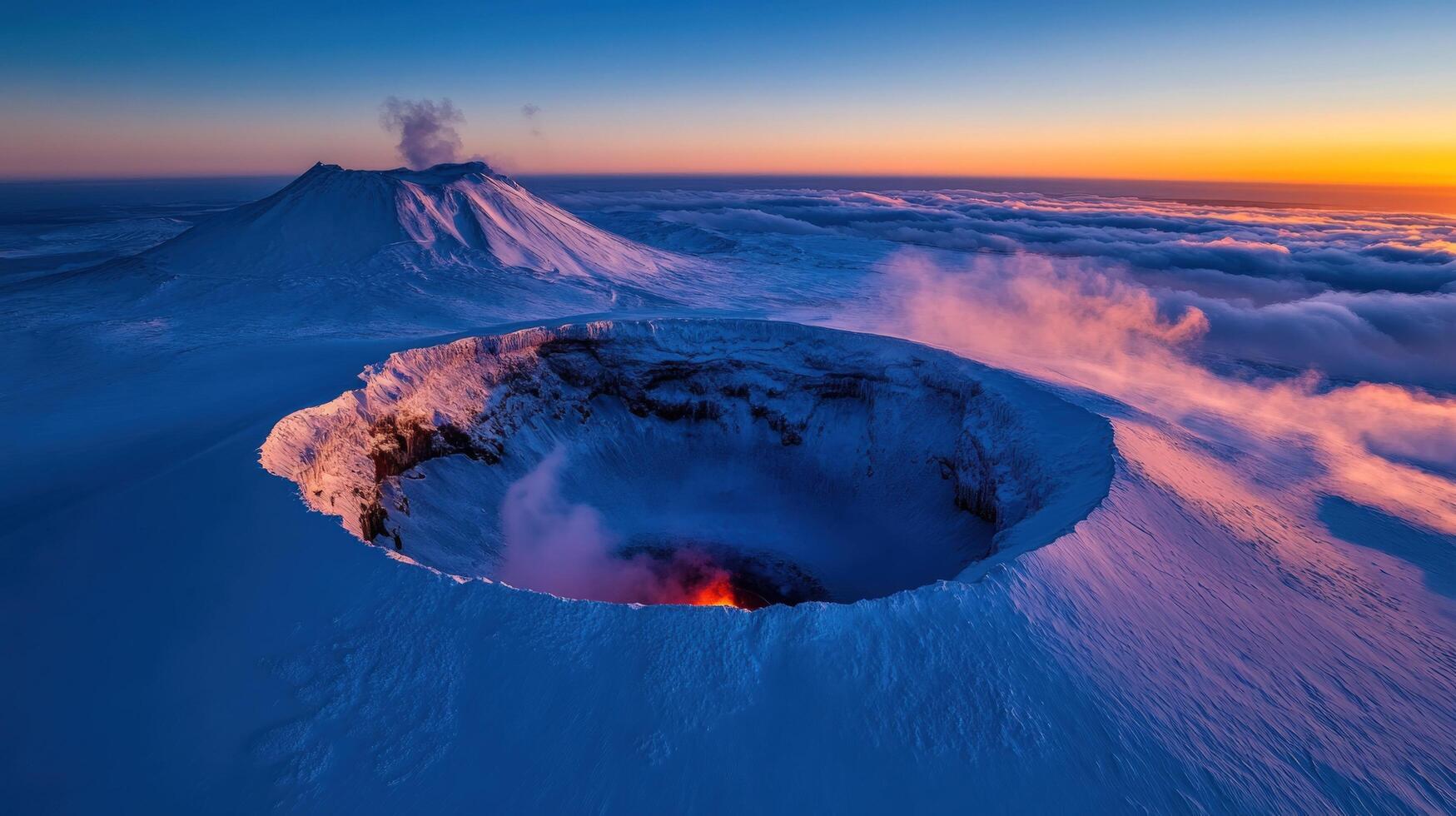

Sunrise has always been humanity’s quiet ceremony with the cosmos. Long before clocks and calendars, before cities and skylines, people climbed hills, stood on shores, or simply looked east to mark the rebirth of light. Among all the places where dawn can unfold, few are as counterintuitive—or as compelling—as the crater of a volcano. A landscape shaped by fire, destruction, and immense geological force seems an unlikely candidate for serenity. And yet, when the sun rises over a volcanic crater, something extraordinary happens: violence gives way to stillness, chaos to geometry, and deep time to a fleeting moment of light.
This article explores whether a volcano crater could truly be the perfect sunrise spot. We will examine the science behind volcanoes, the optics of sunrise, the psychology of dramatic landscapes, and the practical realities of standing at the rim—or within the bowl—of one of Earth’s most powerful natural structures. Along the way, we will see how geology and light collaborate, how danger sharpens perception, and how ancient landforms can offer one of the most profound visual experiences available to a human observer.
The Nature of a Crater: A Bowl Carved by the Planet
To understand why a volcano crater might be an exceptional sunrise location, we must first understand what a crater actually is. A volcanic crater is not merely a hole in the ground. It is the visible outcome of processes that operate far below the Earth’s surface, involving molten rock, gas pressure, tectonic stress, and time scales that dwarf human history.
A crater typically forms at the summit or flank of a volcano, marking the point where magma, ash, and gas have erupted. Over time, eruptions, collapses, and erosion shape the crater into a bowl-like depression. Some craters are small and sharply defined, while others are vast calderas stretching for kilometers, formed when a volcano’s magma chamber empties and the ground above collapses.
From a visual perspective, this bowl geometry is critical. A crater naturally frames the sky. Unlike flat plains or open hills, a crater provides a circular or elliptical boundary that directs the eye upward and inward. When the sun rises, light does not simply appear; it spills, creeps, and pools within the curved space. Shadows linger longer, and contrasts are intensified. The crater becomes a natural amphitheater for light.
Sunrise as a Physical Event, Not Just a View
Sunrise is often treated as a romantic abstraction, but it is a precise physical phenomenon. The sun does not “rise” so much as the Earth rotates, bringing a new region into the star’s line of sight. The quality of a sunrise depends on atmospheric composition, topography, and the observer’s position relative to the horizon.
Volcanic landscapes offer a unique combination of these factors:
- Elevation: Many volcanoes rise well above surrounding terrain, providing an unobstructed horizon.
- Atmospheric Particles: Volcanic regions often contain fine mineral dust that scatters light, enhancing reds, oranges, and purples.
- Topographic Contrast: Sharp ridges, deep shadows, and textured rock surfaces amplify the visual drama of low-angle light.
In a crater, sunrise becomes a three-dimensional event. Light does not simply arrive from the east; it interacts with walls, slopes, and mineral surfaces. Different parts of the crater ignite at different times. A rim might glow while the interior remains dark, creating a gradient of illumination that feels almost choreographed.
The Optics of Dawn Inside a Crater
Light behaves differently at sunrise than at any other time of day. Because the sun is low on the horizon, its rays travel through more of Earth’s atmosphere. Shorter wavelengths scatter away, leaving behind warmer hues. This is why sunrise light feels soft, golden, and emotionally resonant.
Inside a volcanic crater, these optical effects are magnified:
- Shadow Retention: The crater walls block direct sunlight, allowing shadows to persist long after sunrise has technically occurred.
- Reflective Surfaces: Basalt, obsidian, pumice, and ash each reflect and absorb light differently, creating subtle variations in color.
- Directional Light: As sunlight enters the crater at a low angle, it traces lines across the terrain, revealing textures that are invisible at midday.
The result is a dynamic scene. The crater floor may appear cold and blue at first, then slowly warm as reflected light bounces inward. Steam vents, if present, can catch the light and turn into glowing ribbons. Even silence feels illuminated.
Geological Time Meets Human Time
One reason volcano craters are so powerful as sunrise locations lies in the contrast between time scales. Volcanoes are monuments to deep time. Their formation involves processes that unfold over tens of thousands or even millions of years. Sunrise, by contrast, is fleeting. The most dramatic moments may last only minutes.

When you watch sunrise from a crater, you are standing at the intersection of these time scales. The rock beneath your feet may be older than recorded history. The light on your face is eight minutes old, having traveled from the sun across space. The moment itself will never repeat in exactly the same way.
This collision of durations has a psychological effect. It compresses perspective. Problems feel smaller. Attention sharpens. The mind becomes aware, perhaps unconsciously, that it is witnessing something both transient and ancient.
The Emotional Geometry of Enclosure
Most classic sunrise viewpoints emphasize openness: beaches, plains, mountaintops. Volcano craters offer something different—enclosure. The circular or semi-circular shape creates a sense of being held by the landscape.
Psychologically, enclosure can heighten focus. With fewer visual distractions, the observer’s attention is drawn to the sky and the changing light. The crater becomes a frame, and the sunrise becomes the artwork.
This framing effect also enhances intimacy. A sunrise seen from a crater often feels personal, even private, despite the scale of the landscape. The walls muffle wind and sound. The world outside the crater seems distant. For a brief time, it feels as though the sun is rising just for you.
Volcanic Materials and the Color of Morning
The mineral composition of volcanic terrain plays a surprisingly important role in the sunrise experience. Lava flows and pyroclastic deposits contain minerals that interact vividly with light.
- Basalt absorbs light, creating deep shadows and high contrast.
- Obsidian reflects light sharply, sometimes producing subtle glints.
- Sulfur deposits can glow yellow or gold in early sunlight.
- Iron-rich rocks intensify reds and browns.
As the sun rises, these materials shift in appearance. A slope that looks dull and monochrome before dawn may suddenly burst into color. The crater floor can resemble a living canvas, changing minute by minute.
The Role of Steam, Mist, and Gas
Many volcanic craters are not entirely inert. Even dormant volcanoes may release steam or gas through fumaroles. At sunrise, these emissions can transform the scene.
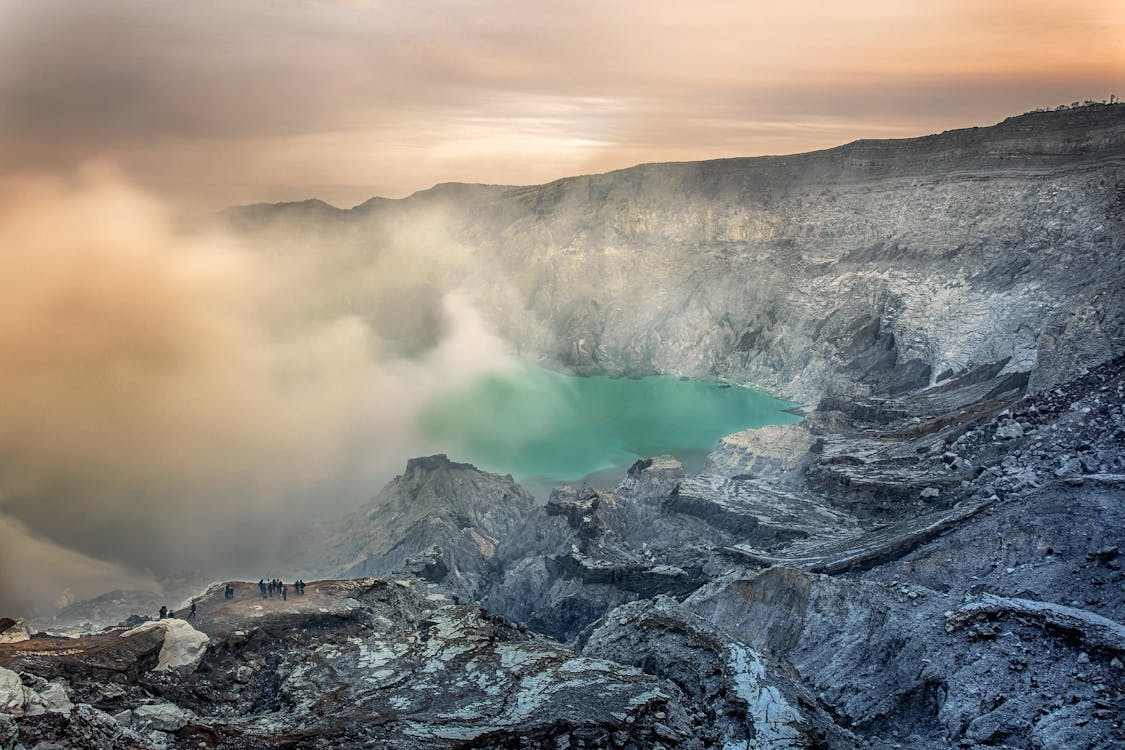
Low-angle sunlight interacting with steam creates shafts of light, halos, and glowing clouds. The effect is both scientific and surreal. It is the visible expression of temperature differences, moisture, and airflow—but it feels almost theatrical.
Mist and gas also soften the landscape. Hard edges blur. Depth increases. The crater becomes layered, with foreground, middle ground, and background subtly separated by translucence. This adds a sense of depth that is particularly striking in the quiet of early morning.
Silence, Sound, and the Acoustics of a Crater
Sound behaves differently in a crater. The bowl-like shape can dampen wind or, in some cases, amplify subtle noises. At sunrise, when human activity is minimal, this acoustic environment becomes part of the experience.
You may hear:
- The crunch of gravel underfoot, louder than expected.
- Distant bird calls echoing off rock walls.
- Low, almost imperceptible rumblings from the Earth itself.
This auditory minimalism complements the visual spectacle. Sunrise in a crater is not just something you see; it is something you inhabit.
Risk, Respect, and Awareness
Any discussion of volcanoes must acknowledge risk. Volcano craters are not theme parks. They are dynamic geological features that demand respect. Gas emissions, unstable ground, sudden weather changes, and residual heat are real considerations.
Paradoxically, this awareness of risk can enhance the sunrise experience. Knowing that you are in a place shaped by immense forces heightens alertness. Every sensation feels sharper. The sunrise becomes not just beautiful, but meaningful.
This does not mean recklessness. The most profound experiences come from informed observation—understanding the environment, respecting boundaries, and approaching the crater as a guest rather than a conqueror.
The Cultural and Symbolic Dimension
Across cultures, volcanoes have been seen as sacred, dangerous, or divine. They appear in myths as homes of gods, gateways to the underworld, or symbols of creation and destruction. Sunrise, too, carries deep symbolism: rebirth, hope, continuity.
When these two symbols intersect—sunrise within a volcano crater—the result is rich with meaning. It is a visual metaphor for renewal emerging from destruction, light rising from darkness, order appearing within chaos.
Even without consciously thinking about mythology, many observers feel this symbolism intuitively. The setting resonates on a level that is difficult to articulate but easy to feel.
Comparing Crater Sunrises to Other Iconic Locations
Is a volcano crater truly the “perfect” sunrise spot? Perfection is subjective, but comparison helps clarify what makes crater sunrises unique.
- Beaches offer openness and reflection, but little enclosure.
- Mountaintops provide elevation, but often lack framing.
- Urban viewpoints add human context, but introduce noise and artificial light.
- Deserts deliver vastness, but minimal vertical structure.
Volcano craters combine several advantages: elevation, framing, texture, color, and a sense of primal energy. They do not replace other sunrise locations, but they offer a distinctive blend that few landscapes can match.
The Practical Experience of Watching Sunrise in a Crater
From a practical standpoint, watching sunrise in a volcano crater requires effort. Early starts, hiking in low light, and variable weather are common. Yet these challenges contribute to the reward.
Arriving before dawn allows the eyes to adjust. Shapes emerge slowly. The crater reveals itself in stages. When the first light appears, it feels earned.
As the sun rises, temperature changes are often noticeable. Cool night air warms gradually. The body responds. Breathing deepens. The experience becomes physical as well as visual.
Photography Versus Presence
Volcano craters are popular with photographers, and for good reason. The geometry, textures, and light are extraordinary. However, photography can also distract from direct experience.
Sunrise in a crater unfolds quickly. Focusing too much on equipment risks missing subtle transitions. Many seasoned observers choose to watch the first part of sunrise without a camera, letting the moment register fully before attempting to capture it.
This balance between documentation and presence is particularly important in such a powerful setting. The crater rewards attention more than extraction.
Scientific Curiosity and Aesthetic Pleasure
For geologists, volcanologists, and earth scientists, a crater sunrise is not just beautiful—it is informative. Light reveals layers, faults, and flow patterns. Shadows emphasize relief. Color variations hint at mineral composition.
For artists, writers, and travelers, the same scene offers inspiration rather than data. These perspectives are not mutually exclusive. In fact, the crater at sunrise is one of the rare places where scientific curiosity and aesthetic pleasure coexist effortlessly.
Weather as a Co-Creator
Weather plays a decisive role in any sunrise, but in a crater, its influence is magnified. Clouds can hover at rim level, creating the illusion of an island of rock floating in sky. Wind can push steam into sculptural forms. A thin veil of cloud can turn the sun into a soft, glowing disc.
Even unfavorable weather can enhance the experience. A partially obscured sunrise often feels more mysterious than a clear one. The crater adapts, revealing new moods under different conditions.
Why the Idea Endures
The notion of watching sunrise from a volcano crater persists because it speaks to something fundamental. Humans are drawn to edges: the edge of night and day, the edge of stability and change, the edge of safety and danger.
A volcano crater embodies these edges. Sunrise activates them. Together, they create an experience that is both grounding and elevating.
It is not about thrill-seeking or conquest. It is about witnessing a dialogue between Earth and sky in one of the planet’s most expressive settings.
Is It Truly the Perfect Sunrise Spot?
Perfection depends on what one seeks. If perfection means comfort, accessibility, and predictability, then perhaps not. Volcano craters can be cold, remote, and unpredictable.
If perfection means depth, intensity, and resonance—if it means a sunrise that engages the senses, the intellect, and the emotions simultaneously—then a volcano crater comes remarkably close.
The crater does not simply host the sunrise. It collaborates with it. The land shapes the light, and the light reveals the land. In that partnership, something rare emerges: a sunrise that feels complete.
Conclusion: Where Fire Meets First Light
Standing in a volcano crater at sunrise is an encounter with extremes. Fire-sculpted rock meets gentle light. Deep time meets a fleeting moment. Risk meets calm.
Whether or not it is “the perfect” sunrise spot, it is undeniably one of the most profound. It reminds us that beauty does not always arise from softness or safety. Sometimes it emerges from places shaped by upheaval, waiting quietly for the right light to reveal their grace.
When the sun finally clears the rim and floods the crater with warmth, the question almost answers itself—not with words, but with a feeling that lingers long after the light has changed.