





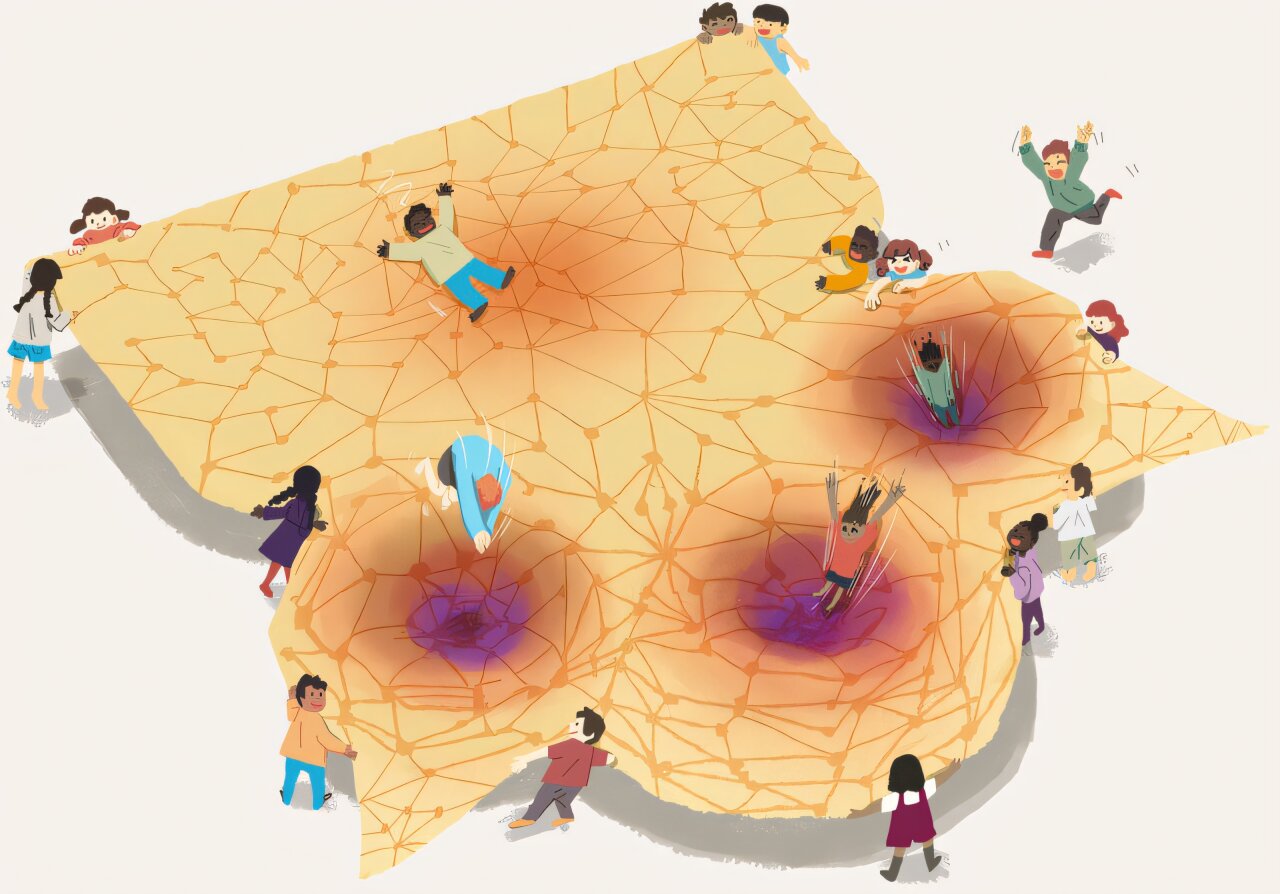

The concept of a story that lives solely within the mind is both tantalizing and elusive. Stories are typically seen as objects we share—books, films, oral narratives, or digital media—but can the essence of a story exist if it is confined to the folds of a human memory? This question touches on philosophy, neuroscience, literature, and even quantum cognition. It challenges the conventional notion of narrative as a communicable object, instead proposing that stories might have a form independent of expression.
Memory as a Story Repository
Human memory is an intricate network of synapses, patterns, and chemical interactions that encode experiences in ways we are only beginning to understand. Neuroscientists describe memory not as a static recording but as a reconstructive process. Each recollection reshapes the original experience, altering its texture, details, and emotional resonance.
If a story lives solely in memory, it becomes a dynamic entity. Unlike printed text or recorded audio, it is mutable—every recollection is a reinterpretation, not a reproduction. In this sense, a story in memory is alive. It is not merely a shadow of events; it is a living narrative, evolving as the mind interacts with it, influenced by mood, context, and subsequent experiences.
The Philosophical Dimension
Philosophers have long debated the ontology of non-material objects. Plato would call it an idea—a story existing as a perfect form, glimpsed only through human cognition. Meanwhile, existentialists might argue that a story is real only inasmuch as it affects consciousness. If no one else ever hears it, does it matter?
Memory-bound stories challenge the philosophy of language. Ludwig Wittgenstein posited that meaning is use. In this view, a story has significance only when communicated. Yet, consider a story that shapes decisions, emotions, or dreams within a solitary mind. Its impact is real, yet it escapes conventional documentation. This tension between private existence and social validation is at the heart of understanding stories in memory.
The Neuroscience of Private Stories
From a scientific perspective, memory relies on distributed neural circuits, primarily in the hippocampus, prefrontal cortex, and associated networks. Episodic memories—our personal stories—are encoded with sensory, emotional, and temporal dimensions. Neuroimaging studies show that when people recall complex narratives, their brain activates in patterns similar to those observed when they originally experienced the events.
This neurological mirroring suggests that even without sharing, the story retains structural integrity. But every retrieval slightly rewrites it. Unlike a printed page, which is fixed, the mental story is a living manuscript. In this sense, a memory-bound story is both fragile and resilient: fragile because it can be forgotten, reshaped, or conflated with other memories; resilient because it can persist over decades, subtly influencing behavior, thought patterns, and creativity.
Cognitive Psychology and the Inner Audience
Cognitive psychologists study the “inner narrative”—the continuous story we tell ourselves to make sense of the world. These private narratives often include imagined dialogues, alternative outcomes, and dramatized sequences. The mind acts as both author and audience.
Stories confined to memory may thrive in this inner theater. They can be as vivid as any external narrative, enriched by imagination, emotion, and sensory reconstruction. A person recalling a childhood adventure might experience it with cinematic clarity, despite no one else ever witnessing it. In this sense, a story can be profoundly real without leaving any external trace.
Memory vs. Written Record
Comparing memory-bound stories with written stories illuminates their unique properties. Written narratives are permanent, shareable, and objective to an extent. Memory-based narratives are ephemeral, subjective, and relational to the individual mind.

Interestingly, memory-only stories can sometimes be richer than their documented counterparts. A personal memory may encode nuances—a fleeting emotion, a subtle sound, a specific scent—that a book or film cannot fully capture. This is the intimate power of stories that exist solely in memory: they are fully personalized, a private lens onto experience that defies replication.
Case Studies: Literature and History
There are historical examples of stories known only to one individual. Consider oral histories never recorded, passed down in whispers, or confined to the thoughts of a single narrator. Many ancient myths may have lived first in solitary minds before reaching wider audiences. Similarly, unpublished personal diaries, sketches, or memories contain narratives that may never enter public consciousness but nonetheless shape the inner life of the author.
In literature, some writers explore characters whose stories exist in isolation. These metafictional narratives often probe the boundary between memory and narrative reality, illustrating how memory alone can sustain a story.
Memory, Imagination, and Reality
Memory-bound stories are not limited to past experiences; they often mix fact with imagination. Our minds reconstruct reality using incomplete fragments, filling gaps with invented details. A story confined to memory may thus straddle the line between real and imagined. This hybridization challenges the traditional definition of “story,” blurring distinctions between autobiography, fiction, and fantasy.
Neurologically, the brain does not always distinguish sharply between real and imagined events. Memories and fantasies share overlapping circuits, meaning that a story existing only in memory can feel as real and consequential as one documented in any medium.
Ephemeral Narratives and Identity
A story in memory can play a profound role in shaping identity. Personal narratives help individuals organize experience, assign meaning to events, and define self-concept. These private stories, though invisible to others, guide decisions, influence emotional responses, and inform moral reasoning.
In this sense, a story does not need public recognition to exist meaningfully. Its primary audience may be the self, yet its impact on behavior and worldview is substantial. One might argue that some of the most powerful narratives are those never shared—a secret that molds character, a remembered triumph, a hidden trauma.

Memory as a Narrative Medium
If we accept that a story can exist only in memory, then memory itself becomes a medium. Unlike paper, pixels, or film, it is living, adaptive, and uniquely tied to consciousness. The medium shapes the story: it is interactive, emotional, and fleeting.
This perspective has implications for artificial intelligence, cognitive science, and digital preservation. Could we someday map or replicate memory-bound stories? Would their essence survive outside the individual mind? These questions lie at the frontier of neurotechnology and philosophy.
The Paradox of Private Stories
There is a paradox inherent in stories confined to memory: their very privacy makes them invisible, yet their invisibility can amplify their significance. A story never told can influence decisions, inspire creativity, and color perception with unmatched intimacy.
However, this also renders them vulnerable. Forgotten memories are lost narratives; unwritten ideas may vanish with the mind. Unlike shared stories that achieve a kind of immortality, memory-bound stories rely entirely on neural persistence—a fragile, flickering existence.
Story, Memory, and Consciousness
At its deepest level, a story in memory is inseparable from consciousness itself. Consciousness is both the stage and audience of private stories. A memory-bound narrative is thus a cognitive artifact: it exists because the mind exists, and it persists as long as the mind maintains the memory.
Philosophically, this raises questions about reality. Can something be “real” if it is known to only one mind? Can stories exist independently of their observers, or do they require cognition to animate them? In the case of memory-bound stories, cognition is not just necessary—it is constitutive. Without memory, the story cannot exist.
Conclusion: The Reality of Unseen Narratives
Stories do not require an audience beyond the self to exist. The stories living solely in memory are a testament to human imagination, cognition, and emotional depth. They challenge conventional definitions of narrative, blurring boundaries between memory, imagination, and reality.
These stories are mutable, ephemeral, yet profoundly influential. They shape identity, inform choices, and sustain emotional life. They are the private cinema of the mind, as vivid as any shared tale, and sometimes more potent precisely because they are unseen.
In the end, the story that exists only in memory is no less a story. Its existence is internal, intimate, and impermanent, yet it is real in ways that printed words or recorded films can never fully capture. Memory is not just a storage system; it is a storytelling medium, alive and evolving, holding within it the universe of experiences, emotions, and imaginings of the human mind.
Stories in memory remind us that not all narratives seek an audience. Some exist solely to be lived, felt, and remembered—a private universe of meaning contained within the folds of the mind.