





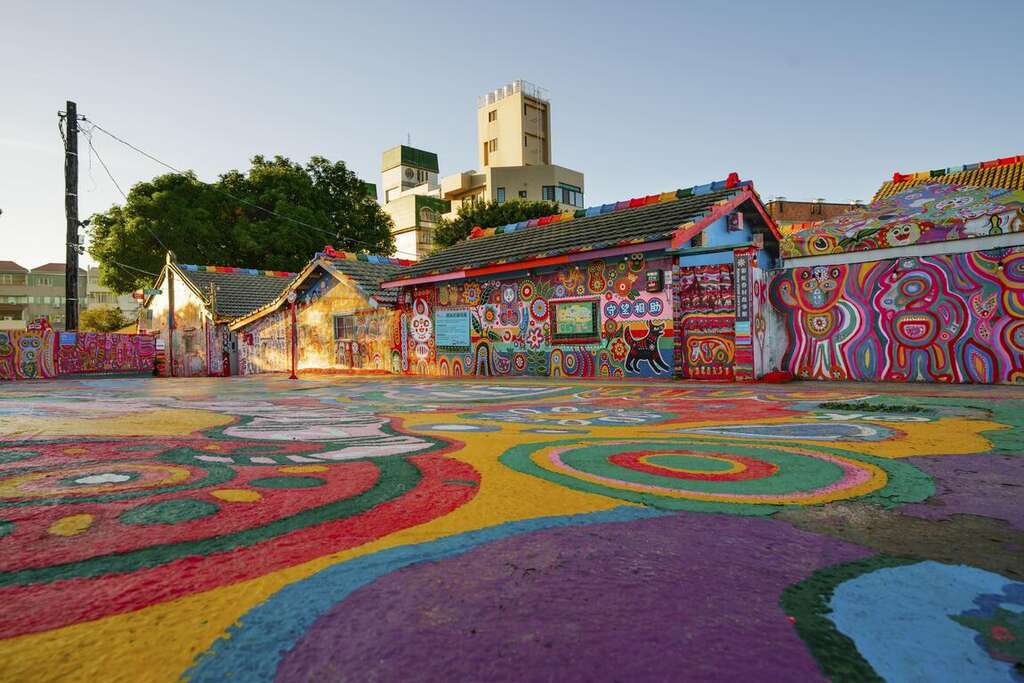

Rainbows feel like visitors from a better mood of the universe. They appear briefly, ask for nothing, and leave us staring at the sky as if it just winked. Many of us have had the same passing thought: what if there were a place where rainbows show up all the time? Not just often, but daily. A town where seeing a rainbow is not a lucky accident but a routine part of life, like morning coffee or evening streetlights.
This question is not poetic fluff. It is a serious scientific, geographic, and meteorological puzzle. To answer it properly, we need to understand how rainbows work, what environmental conditions favor them, how local geography shapes weather, and whether “every day” is physically realistic or merely a romantic exaggeration.
So let’s ask the question carefully, honestly, and with curiosity:
Is it possible to find a rainbow every day in one town?
1. What a Rainbow Really Is (and Is Not)
A rainbow is not an object in the sky. It is not “over there,” waiting to be reached. It is an optical phenomenon created by a precise interaction between light, water, and perspective.
The Three Essential Ingredients
To see a rainbow, three conditions must occur at the same time:
- A light source
Usually the Sun, bright enough and positioned behind the observer. - Airborne water droplets
Rain, mist, spray, or fog composed of tiny spherical droplets. - Correct geometry
The Sun must be low enough in the sky (typically below about 42 degrees), and the observer must stand with their back to it.
When sunlight enters a water droplet, it slows down, bends (refraction), reflects off the back of the droplet, and bends again as it exits. Different wavelengths bend at different angles, spreading white light into a spectrum. The result is the familiar arc of color.
Why You Can’t Walk to the End of a Rainbow
The rainbow is centered on the antisolar point, an imaginary point directly opposite the Sun from the observer. Move, and the rainbow moves with you. This means:
- No two people see exactly the same rainbow.
- The rainbow has no fixed physical location.
- Its existence depends on your position as much as the weather.
This matters, because it means rainbows are easier to produce than many people think—but harder to guarantee.
2. What “Every Day” Really Means
Before deciding whether daily rainbows are possible, we must define what counts.
Does “every day” mean:
- Every calendar day of the year?
- At least one rainbow visible somewhere in town?
- Visible to at least one observer, not necessarily everyone?
- A full arc, or even just a partial one?
These details matter. Nature does not care about human schedules. It deals in probabilities, not promises.
For the sake of scientific fairness, let’s define “a rainbow every day” as:
At least one naturally visible rainbow, on most days of the year, observable somewhere in town by someone paying attention.
This definition lowers the bar just enough to be realistic without becoming meaningless.
3. Why Rainbows Feel Rare (But Actually Aren’t)
Many people believe rainbows are rare. In reality, they are under-observed, not uncommon.
The Attention Problem
Rainbows require:
- You to be outside
- At the right time of day
- Facing the right direction
- During or after precipitation
- With sunlight present
Miss any one of these, and the rainbow “doesn’t exist” for you, even if it’s blazing across the sky behind your head.
Modern life makes this worse:
- We spend most of our time indoors
- We look at phones more than horizons
- Weather happens while we’re commuting or working
Rainbows haven’t become rarer. We’ve become worse at noticing them.
4. The Meteorological Recipe for Frequent Rainbows
To increase rainbow frequency, a town needs weather that regularly satisfies the rainbow conditions. That means a very specific type of climate.
Ideal Weather Characteristics
A rainbow-friendly town would have:
- Frequent light rain or mist, not constant heavy storms
- Rapidly changing weather, where sun and rain overlap
- Clear air, with minimal pollution
- Consistent sunlight, even during rainy periods
Paradoxically, places with nonstop rain are bad for rainbows, because they often lack direct sunlight. Places with nonstop sun are also bad, because there’s no water in the air.
Rainbows thrive in transitions.
5. The Geography That Makes Rainbows Repeat Visitors
Geography matters as much as climate. Certain landforms naturally create the conditions rainbows love.
Mountains: The Weather Engines

Mountains force moist air upward, cooling it and causing precipitation. This leads to:
- Localized rain showers
- Sharp weather contrasts over short distances
- Sunlight breaking through clouds unevenly
This combination is nearly perfect for rainbow formation.
Coastlines: Where Sun Meets Spray
Coastal towns have an extra advantage:
- Ocean spray
- Sea mist
- Fast-moving weather systems
Add sunlight reflecting off water and you get frequent, vivid rainbows—sometimes even multiple ones in a single day.
Waterfalls and Rivers
A waterfall is a rainbow factory. As long as the Sun is at the right angle, mist alone is enough.
In towns with:
- Large waterfalls
- Rapids
- Dams
- Fountains
Rainbows can appear even on cloudless days.
6. Latitude and the Angle of the Sun
The Sun’s position in the sky is crucial.
Why High Latitudes Can Help
At higher latitudes:
- The Sun stays lower in the sky for more of the day
- Morning and evening light lasts longer
- The rainbow angle remains achievable for extended periods
This means:
- More time windows per day when rainbows can form
- Especially during spring and autumn
However, go too far toward the poles, and sunlight becomes too seasonal. Long dark winters reduce opportunities.
The Sweet Spot
The best latitudes for frequent rainbows tend to be:
- Temperate zones
- Regions with strong seasonal weather
- Places where the Sun is often low but still bright
7. Are There Towns Famous for Rainbows?
Some towns and regions are well known for frequent rainbow sightings, even if they don’t officially advertise it.
These places tend to share:
- Mountain-coastal geography
- Clean air
- Moist but sunny climates
- Cultural awareness of weather
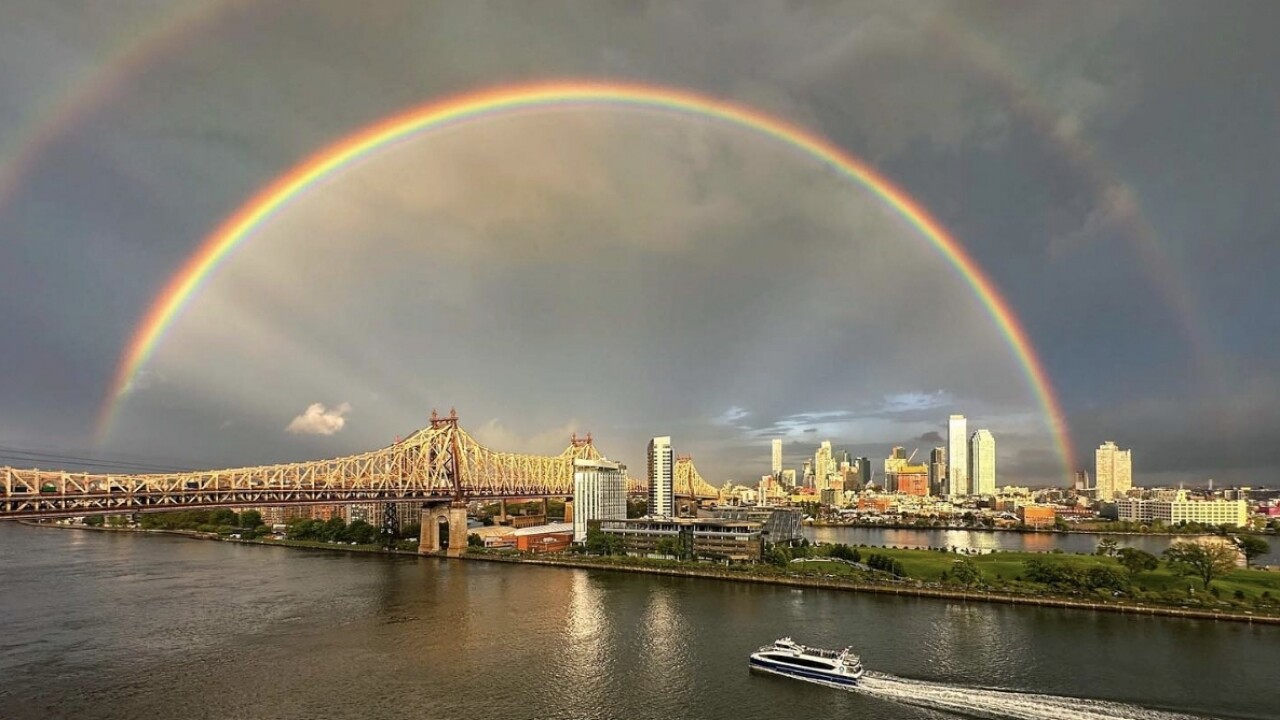
In such towns, locals don’t gasp at rainbows. They nod. Sometimes they don’t even stop walking.
This cultural normalization is important. If rainbows are common, people stop treating them as rare events and start noticing variations instead: double rainbows, supernumerary arcs, unusually intense colors.
8. The Statistics of “Every Day”
Let’s be honest with the math.
Even in the most rainbow-friendly environment:
- Some days will be fully overcast
- Some days will be dry
- Some days the timing won’t line up
Absolute daily rainbows, 365 days a year, are extremely unlikely.
But here’s the key insight:
Nature does not need to meet perfection to meet experience.
If a town produces rainbows on:
- 200 days a year
- Or even 150 days a year
That’s enough for residents to feel like rainbows are part of daily life.
Perception matters as much as frequency.
9. Human Behavior: The Hidden Variable
Rainbows don’t just depend on weather. They depend on people.
The Observer Effect
In a town where:
- People walk outside more
- Architecture opens views to the sky
- Daily routines align with daylight hours
Rainbows are noticed more often.
In contrast, a city where:
- People drive everywhere
- Buildings block horizons
- Schedules keep people indoors
…may have just as many rainbows, but far fewer witnesses.
This means a “rainbow town” is partly a social construct.
10. The Psychology of Repetition
If you see a rainbow once, it feels magical.
If you see one every month, it feels special.
If you see one every week, it feels familiar.
If you see one almost every day, something interesting happens:
you stop chasing the rainbow, and start letting it find you.
At that point, the rainbow becomes:
- A weather signal
- A background beauty
- A quiet reassurance that the world still knows how to surprise you gently
This shift changes how people relate to their environment. Frequent rainbows encourage:
- Slower observation
- Appreciation of small atmospheric changes
- Emotional grounding in natural cycles
11. Could Technology Help?
If the question were: Can humans create rainbows every day?
The answer would be yes.
Sprinklers, misting systems, fountains, and artificial waterfalls can generate rainbows on demand, as long as sunlight is present.
But that misses the spirit of the question.
The real fascination lies in naturally occurring rainbows—those not summoned, but received.
12. So, Is It Possible?
Let’s answer clearly.
Strict Answer
No single town can guarantee a naturally occurring rainbow every single day of the year without exception.
Nature does not sign contracts.
Practical Answer
Yes, it is entirely possible for a town to experience rainbows so frequently that seeing one feels like a daily expectation rather than a rare event.
Such a town would need:
- Moist, changeable weather
- Regular sunlight during precipitation
- Favorable geography
- Observant people
In that sense, the idea of a “daily rainbow town” is not fantasy. It is probability stacked in the right direction.
13. The Deeper Meaning of the Question
Perhaps the question is not really about rainbows.
Maybe it’s about whether there are places where beauty is built into the ordinary, where wonder does not require a special occasion.
A town with frequent rainbows reminds us that:
- Nature repeats its miracles endlessly
- We just have to be present
- Frequency does not cheapen beauty—it deepens it
When something beautiful becomes common, it doesn’t lose value.
It becomes home.
14. Final Thought
Is it possible to find a rainbow every day in one town?
Not as a rule.
Not as a promise.
But as a lived experience?
Yes.
If the weather is generous, the geography is kind, and the people are looking up.