






In a world dominated by spectacle, firework displays have long held the throne of celebration. From New Year’s Eve in New York to Diwali in India, the crackle, flash, and smoke of fireworks evoke awe and collective euphoria. Yet, amidst the pyrotechnic grandeur, a quieter, subtler form of illumination has begun to capture hearts: lantern-filled streets. Far from the explosive crescendo of rockets and spark showers, lanterns offer a glow that is intimate, mesmerizing, and oddly transformative. Can the gentle illumination of paper lanterns truly compete with the spectacle of fireworks? Or, more provocatively, can they outshine them?
This question is more than rhetorical. It challenges assumptions about celebration, about human attraction to light, and about the cultural narratives that shape our collective imagination. To explore it fully, we must journey through history, science, design, psychology, and urban culture—illuminating the many ways lantern-filled streets enchant, captivate, and perhaps even surpass their flashier counterparts.
The Historical Glow of Lanterns
Lanterns are not a modern invention. Their roots trace back thousands of years, across continents and civilizations. In ancient China, lanterns were not merely tools for illumination; they were symbols of prosperity, protection, and festivity. The Lantern Festival, marking the final day of Chinese New Year, is a testament to this enduring cultural love affair. Streets would be lined with lanterns of various shapes and sizes—some representing animals, flowers, and mythological figures, others inscribed with wishes and riddles.
Meanwhile, in Japan, the Obon festival adopted lanterns as guides for ancestral spirits returning to the world of the living. Across Europe, from Venice’s canals to medieval town squares, lanterns illuminated fairs, markets, and sacred spaces. In every case, lanterns conveyed something beyond mere light—they conveyed intention, hope, and artistry.
Fireworks, in contrast, arrived later in human history. Originally invented in China as instruments of celebration and warding off evil, their explosive nature made them perfect for spectacle but less adaptable to intimate spaces. Unlike lanterns, which invite contemplation, fireworks demand attention in a single, fleeting moment. This historical contrast frames the essential difference: lanterns linger, fireworks vanish.
The Science of Attraction
Why do humans gravitate toward light? Neuroscience offers an illuminating explanation. Our ancestors evolved under firelight, moonlight, and sunlight. Warm, flickering light signals safety, community, and energy. Lanterns replicate this warmth in urban settings, creating micro-environments where people feel both grounded and uplifted.
Fireworks, by contrast, appeal to our sensory thrill mechanisms. They activate dopamine pathways through sudden visual contrast and loud noise. This explains the universal gasp at the first rocket, the collective “oohs” and “aahs” at a choreographed aerial explosion. But the effect is instantaneous and ephemeral. Lanterns stimulate a different part of the brain—one that appreciates detail, narrative, and the slow unfolding of beauty.
Interestingly, lanterns’ appeal is not merely visual. Many lantern festivals incorporate subtle motion—fluttering in the wind, reflection on water, gentle swaying on strings—and this movement enhances the brain’s aesthetic pleasure. Research in environmental psychology confirms that slow, soft light paired with gentle motion can reduce stress and heighten mood, suggesting that lantern-filled streets offer a psychological richness that fireworks cannot match.
Urban Design and Nighttime Aesthetics
Cities are no longer just functional spaces—they are canvases for aesthetic storytelling. Urban planners increasingly recognize that light plays a central role in shaping experiences. Lantern-filled streets are uniquely versatile in this regard. Unlike fireworks, which require open skies and temporary infrastructure, lanterns can integrate seamlessly into streetscapes, pedestrian paths, bridges, and courtyards.
Consider a narrow alley lined with hanging lanterns, each casting overlapping shadows and creating pockets of warm light. The experience is immersive. Passersby are not merely spectators—they become part of the installation. Contrast this with fireworks, where viewers are usually positioned at a distance, separated from the spectacle by barriers and safety zones. Lanterns democratize visual pleasure: they invite proximity, interaction, and the possibility of discovery.
Moreover, lanterns can be synchronized with seasonal motifs, local culture, and architectural features. Streets in Kyoto might feature lanterns with traditional woodblock patterns, while a European city could employ minimalist paper designs to highlight historic facades. This adaptability positions lanterns as an urban design tool capable of redefining nightlife, tourism, and communal identity.
The Environmental Perspective
One undeniable advantage of lanterns is sustainability. Fireworks, for all their grandeur, have environmental costs. They release particulate matter, heavy metals, and chemical residues into the air, contributing to pollution and respiratory concerns. The loud explosions can also disturb wildlife, pets, and even humans prone to anxiety.
Lanterns, by contrast, can be crafted from biodegradable materials or energy-efficient LEDs. Solar-powered lanterns, floating lanterns on rivers, and LED installations provide dazzling illumination without harming air quality or ecosystems. In an era of growing environmental consciousness, this positions lantern-filled streets as not just beautiful but responsible—a way to celebrate without collateral damage.
Some critics argue that lanterns cannot compete in “wow factor” with fireworks. Yet, sustainability itself is increasingly a marker of sophistication. Communities and cities that prioritize green celebration send a message: beauty does not require destruction. This subtlety can resonate more deeply than a brief flash in the sky.
Cultural Resonance and Storytelling
Lantern festivals are not only visual spectacles—they are narrative experiences. Each lantern tells a story. In Taiwan’s Pingxi Sky Lantern Festival, lanterns carry written wishes, symbolically lifting hopes into the cosmos. In Thailand, the Yi Peng festival fills the night with thousands of floating lanterns, creating a shared experience of collective aspiration.
Fireworks, by contrast, tell stories in shorthand: bursts of red, blue, and gold signify celebration, yes, but little more. Lanterns, however, invite reflection, dialogue, and participation. They are interactive in both literal and symbolic terms. This cultural resonance amplifies their perceived value. A street lined with 500 lanterns is not just illuminated—it becomes a living narrative, a communal poem in light.
Interactivity and Immersive Experience
Modern festival-goers increasingly crave immersive experiences. Social media and digital storytelling have amplified expectations: people want to feel part of the art, not merely observe it. Lanterns offer this in abundance. Visitors can light lanterns, write messages, release floating lanterns on water, or even participate in installation workshops. The act of creation transforms spectators into co-authors of the spectacle.
Fireworks, by necessity, remain passive. Even choreographed shows, synced to music and technology, lack tactile engagement. This interactivity creates emotional investment. People remember the act of hanging their lantern, feeling its warmth, seeing it sway, and watching it join hundreds of others in a visual chorus. Lanterns linger in memory; fireworks, spectacular as they are, often fade from personal narrative as quickly as their sparks fade from the sky.
Technological Enhancements
Lanterns are no longer restricted to paper and flame. LED technology, programmable lighting, and projection mapping have transformed lantern festivals into high-tech, environmentally friendly spectacles. Streets can feature dynamic light sequences, lanterns that change color with sound, and interactive installations that respond to movement.
These advancements bridge tradition and innovation. A city can preserve the charm of handmade lanterns while offering dazzling effects rivaling fireworks. For example, programmable lantern arrays can simulate fireworks sequences, complete with synchronized music, without producing smoke or noise pollution. Technology thus amplifies lanterns’ versatility, positioning them as the next generation of urban celebration tools.
Psychology of Presence and Community
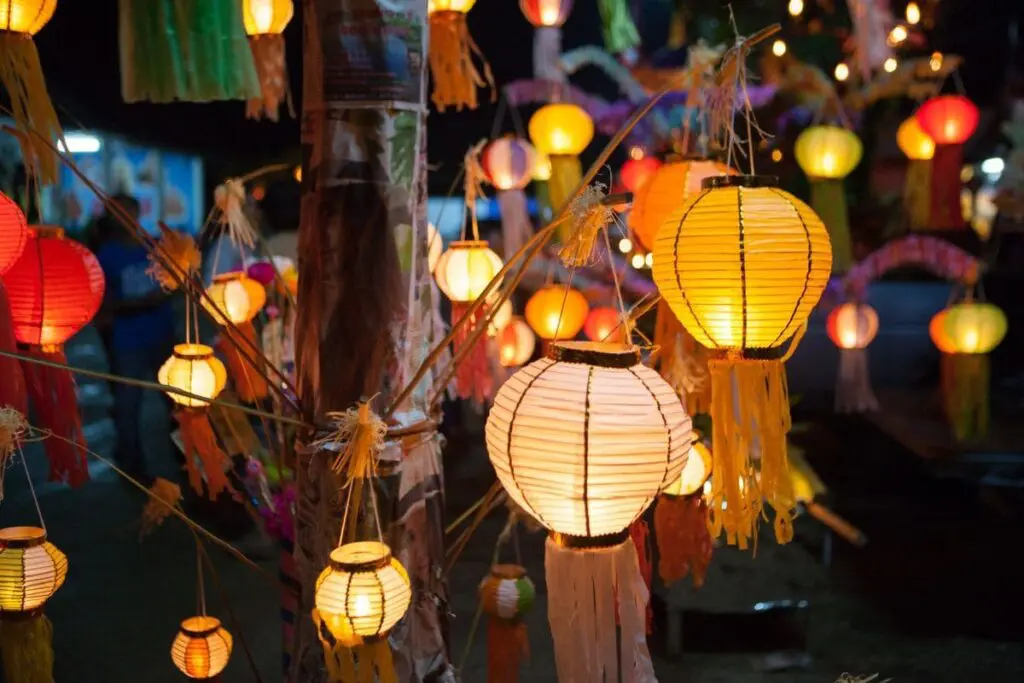
Lantern-filled streets excel at fostering presence. Unlike fireworks, which encourage brief attention and distant observation, lanterns cultivate mindfulness. Individuals walk slowly, pause to read inscriptions, interact with installations, and reflect on shared experience.
This slower tempo encourages connection. Friends and families linger, strangers strike up conversations, and communities experience collective calm interwoven with delight. Anthropologists note that rituals involving light—whether lanterns, candles, or ceremonial fires—facilitate social cohesion. In contrast, fireworks, while unifying in thrill, rarely foster sustained interaction. Lanterns create not just spectacle, but social architecture.
Economic and Tourism Potential
Cities are increasingly leveraging lantern festivals for tourism. Unlike fireworks, which require transient investment in pyrotechnics and crowd control, lanterns offer reusable infrastructure and year-round aesthetic benefits. Hotels, restaurants, and cultural venues benefit from extended visitor engagement.
Moreover, local artisans and craftsmen can participate, creating lanterns and installations that showcase regional design. This integration of culture, economy, and urban experience magnifies the festival’s impact beyond a single night of explosive entertainment. Lantern-filled streets generate sustainable cultural capital.
Case Studies: Lanterns in the Modern City
1. Lyon, France – Fête des Lumières
Every December, Lyon transforms into a city of light. Lanterns, projection-mapped buildings, and interactive installations attract millions. Visitors wander streets, cross bridges, and explore courtyards, experiencing the city as an illuminated narrative rather than a backdrop to a fleeting show.
2. Pingxi, Taiwan – Sky Lantern Festival
Thousands of paper lanterns ascend into the night sky, each carrying a wish. The visual impact is breathtaking, but the emotional resonance is deeper: participants actively engage, shaping the collective experience.
3. Chiang Mai, Thailand – Yi Peng
Lanterns float over rivers and fields, creating a vast, immersive panorama. Unlike fireworks, the light persists, moving slowly across space and time, inviting contemplation and quiet joy.
4. Tokyo, Japan – Sumida River Lantern Festival
Lanterns reflecting on water create mirror worlds. The calm, rhythmic glow contrasts with urban bustle, demonstrating lanterns’ capacity to reshape environment and mood.
These examples illustrate a recurring pattern: lantern-filled streets offer layered experiences—visual, emotional, social—that fireworks struggle to replicate.
Aesthetic Considerations
Aesthetically, lanterns excel through subtlety, texture, and multiplicity. They provide depth through layering: overlapping glows, flickering shadows, and interplay with architecture. Fireworks, by contrast, dominate through singular intensity. One is immersive, contemplative, and continuous; the other is explosive, dramatic, and transient.
Color psychology plays a role as well. Warm amber tones, soft reds, and delicate yellows create cozy, inviting atmospheres. Lanterns allow for nuanced palettes that shift through the evening, responding to wind, movement, and reflection. Fireworks are bright and brilliant, but often limited to high-contrast flashes that command attention but leave little room for subtlety.
Limitations and Challenges
To be fair, lanterns are not without challenges. Safety is a concern, particularly for flame-based lanterns. Wind, rain, and urban congestion can complicate installations. Costs for large-scale, high-tech displays can rival fireworks, and logistical planning for interactive elements demands coordination.
However, advances in LED technology, biodegradable materials, and modular designs mitigate these concerns. Even the occasional mishap—an unlit lantern, a floating lantern stuck in a tree—adds to the organic charm, reminding viewers that human celebration is inherently imperfect.
Conclusion: Light Beyond Brilliance
So, can lantern-filled streets outshine fireworks? The answer depends on the measure of brilliance. If brilliance is measured solely in pyrotechnic intensity, altitude, and volume, fireworks may retain their throne. But if brilliance is measured in emotional resonance, social engagement, environmental consciousness, aesthetic depth, and narrative richness, lanterns increasingly take the lead.
Lantern-filled streets do more than illuminate—they invite reflection, interaction, and shared memory. They transform urban spaces into living artworks, turning ordinary streets into immersive experiences of color, warmth, and wonder. In a society increasingly seeking sustainable, mindful, and communal forms of celebration, lanterns may not merely compete with fireworks—they may redefine what it means to celebrate at all.
The gentle glow of a thousand lanterns, swaying softly in the night, tells a story that fireworks never could: that beauty can be subtle, enduring, and profoundly human. In that sense, lantern-filled streets do more than outshine fireworks—they outlast them, linger in memory, and transform ordinary nights into extraordinary journeys of light.