





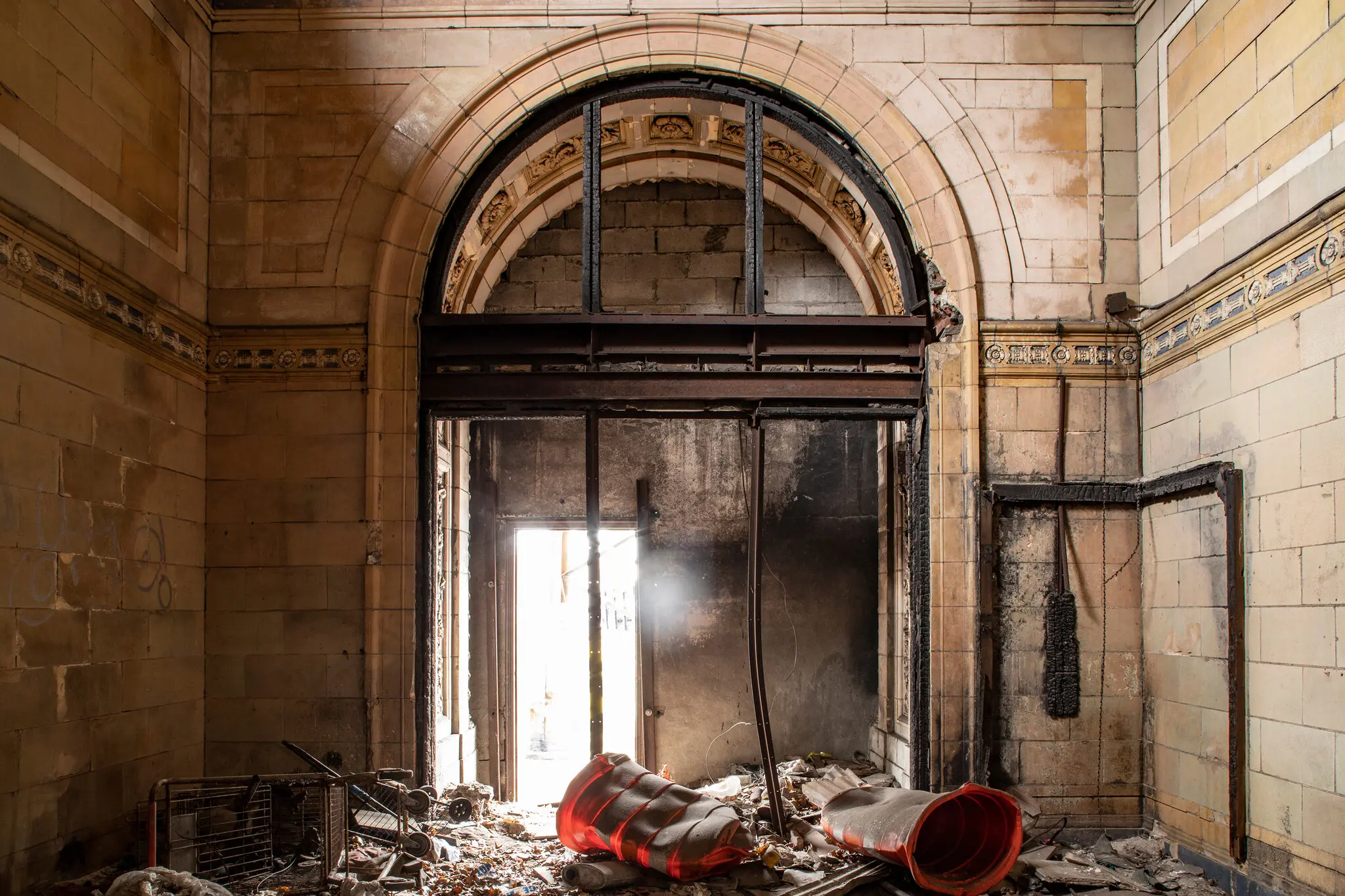

Old train stations are often treated as leftovers—beautiful, yes, sometimes grand, occasionally restored, but fundamentally obsolete. Museums, by contrast, are widely accepted as the official containers of memory. They are curated, labeled, climate-controlled, and authorized. One is seen as infrastructure; the other as culture. One once moved people; the other now moves ideas.
But this distinction may be far less clear than it seems.
When you stand inside an old train station—especially one that has outlived its original purpose—you are not just looking at history. You are standing inside a story that is unfinished, layered, and sometimes contradictory. Unlike museums, which interpret the past through selection and explanation, old train stations often retain the past in its raw, unresolved form. Their stories are not framed behind glass. They are embedded in walls, floors, timetables, scars, and silence.
This raises a compelling question: can old train stations tell more stories than museums?
Not louder stories, or more orderly ones—but richer, stranger, more human ones. To answer this, we need to examine how stories live in space, how memory is shaped by movement, and why places designed for transit may paradoxically preserve time better than places designed for preservation.
1. The Architecture of Movement vs. the Architecture of Display
Museums are built to stop time.
Their architecture encourages pause, focus, and contemplation. Objects are removed from circulation, stripped of original context, and placed within controlled narratives. The visitor is guided—sometimes gently, sometimes forcefully—from one interpretation to another. Walls speak through text panels. Silence is intentional. The goal is clarity.
Train stations were built to do the opposite.
They are architectures of urgency and flow. Everything in them—wide halls, high ceilings, clocks, platforms—exists to facilitate movement. Even waiting rooms are temporary by design. Nothing is meant to stay, including people. And yet, paradoxically, because of this constant motion, train stations accumulate traces more densely than almost any other public building.
Every journey leaves behind something intangible: a decision, a farewell, a return, a missed connection. Museums display objects that represent events. Train stations are places where events happened repeatedly, at scale, over long periods of time.
The stories told by museums are often linear and thematic. The stories embedded in old train stations are layered, simultaneous, and unresolved. They overlap without explanation.
This difference in architectural intention shapes how stories survive.
2. Memory Without Labels
In a museum, memory is labeled.
Dates, names, movements, causes, and consequences are presented with authority. Even when multiple perspectives are acknowledged, they are still curated. The visitor knows what they are supposed to learn.
In an old train station, memory is unlabeled.
A faded destination board might list cities that no longer belong to the same country. A bench may be worn smooth on one side but not the other. A staircase may show uneven erosion from decades of hurried feet. These are not explained. They do not come with conclusions.
This absence of labels does not weaken the story—it changes how it is told.
Instead of being instructed, the visitor becomes an interpreter. The station invites questions rather than answers:
- Who waited here, and for what?
- Who left and never returned?
- Why does this space feel heavy, or hopeful, or strangely calm?
Museums often tell us what happened. Old train stations let us feel that something happened, repeatedly, and that its emotional residue remains.
3. The Democracy of Stories
Museums, even the best ones, tend to privilege certain narratives.
They focus on significant events, notable figures, and identifiable artifacts. Everyday experiences—especially those of ordinary people—are often summarized or represented indirectly.
Train stations, by contrast, were used by everyone.
They were democratic spaces long before the term became fashionable. Workers, soldiers, migrants, students, lovers, refugees, tourists—all passed through the same doors, stood on the same platforms, listened to the same announcements. Their stories intersected briefly and then diverged.
An old station does not separate “important” lives from “ordinary” ones. It holds them all without hierarchy.
This is one reason why old train stations can feel emotionally overwhelming. They are saturated with unfiltered human experience. Not heroic experience alone, but anxious, mundane, hopeful, desperate, and uncertain experience. Museums may commemorate history; stations absorbed it.
4. Time as a Physical Presence
In museums, time is organized.
Periods are divided into rooms. Transitions are explained. Chronology is controlled.
In old train stations, time feels physical.
You sense it in outdated signage that once promised modernity. You hear it in acoustics designed for steam engines rather than electric trains. You see it in architectural compromises—extensions added, functions altered, technologies layered on top of one another.

Old stations often contain multiple historical moments simultaneously:
- A grand hall built for imperial ambition
- Wartime modifications made in haste
- Postwar repairs done cheaply
- Contemporary restorations that try to honor the past without fully understanding it
This coexistence of eras creates a dense temporal texture that museums rarely allow. Museums tend to isolate time periods to make them legible. Train stations let them collide.
As a result, the visitor does not simply learn about history—they experience temporal dissonance. The past does not feel distant. It feels present, unfinished, and slightly unstable.
5. Stories Written in Sound and Silence
Museums manage sound carefully.
Audio guides, controlled environments, and quiet zones are designed to support focus. Sound is informational.
Train stations are defined by sound.
Even abandoned ones seem to echo. You imagine footsteps, whistles, announcements, rolling luggage, hurried conversations in multiple languages. Silence in an old station feels different from silence in a museum. It feels like an absence rather than a calm.
This acoustic memory matters.
Sound is one of the strongest triggers of emotion, and stations were once sonic landscapes of transition. Their silence today can feel like a held breath, as if the building remembers its former noise.
Museums tell stories visually and textually. Old train stations tell stories sonically, even when no sound is present.
6. The Uncurated Emotion of Departure and Arrival
Few human experiences are as emotionally charged as departure and arrival.
Train stations were the stage for:
- Last goodbyes before wars
- First steps into new countries
- Reunions after long separations
- Silent departures that changed lives permanently
Museums can document these moments, but they cannot replicate their emotional density. A photograph of a farewell is powerful. Standing where thousands of farewells occurred is something else entirely.
Old train stations carry emotional residue not because of what they display, but because of what they hosted. The emotions were not symbolic—they were real, repeated, and unresolved.
This is why many people feel unexpectedly moved in old stations without knowing why. The building does not explain itself, but it does not need to. The emotional architecture does the work.
7. Ruins, Restoration, and the Ethics of Preservation
Museums aim for preservation through control.

Temperature, humidity, lighting, and handling are managed to slow decay. The goal is to freeze objects in an ideal state.
Old train stations rarely enjoy such perfection.
They are restored unevenly, repurposed imperfectly, or left partially abandoned. Paint peels. Stone cracks. Metal rusts. These signs of decay are often seen as problems—but they are also storytellers.
Decay reveals use.
A worn floor is not damage; it is evidence. A patched wall is not failure; it is adaptation. These imperfections show how a building responded to changing needs, limited resources, and human priorities.
Museums often hide repair. Old stations display it openly.
This raises an important ethical question: should historical places be preserved as idealized images of the past, or allowed to show the consequences of time?
Old train stations, intentionally or not, often choose the second path. And in doing so, they tell more honest stories.
8. Stations as Political Texts
Train stations are deeply political structures.
They are tied to industrialization, colonial expansion, national unification, and economic control. Railways determined which regions prospered and which were bypassed. Stations marked centers and peripheries.
Museums can explain these dynamics. Stations embody them.
A grand station in a former imperial capital tells a story of ambition and power. A modest station in a border town tells a story of negotiation and vulnerability. A station built and then abandoned tells a story of political promises unfulfilled.
Unlike museums, which often neutralize political tension through academic framing, old train stations confront visitors with scale and intent. The size of a hall, the prominence of symbols, the orientation of tracks—all reflect decisions made by authorities with specific agendas.
The building itself becomes a political document, readable without a single explanatory panel.
9. Everyday Objects vs. Everyday Spaces
Museums often collect everyday objects to represent ordinary life: tools, clothing, tickets, furniture.
Train stations are everyday spaces.
They were not representations of daily life; they were part of it. This distinction matters. Objects can be detached and recontextualized. Spaces retain context even when emptied.
A ticket displayed in a museum tells you what people used. A station tells you how people moved, waited, interacted, and negotiated shared space.
The difference is subtle but profound. One approach explains life; the other allows life to echo.
10. The Role of Imagination
Museums often limit imagination in order to ensure accuracy.
While this is necessary for education, it also narrows interpretation. The visitor is encouraged to understand, not to speculate too freely.
Old train stations demand imagination.
Because stories are not fully told, the visitor fills in gaps. This imaginative engagement makes the experience personal. Two people can stand in the same station and leave with entirely different stories.
This does not make the experience less valid. It makes it participatory.
Instead of consuming history, the visitor co-creates meaning. The station becomes a narrative space rather than a narrative product.
11. The Living Afterlife of Train Stations
Many old train stations are no longer stations at all.
They become libraries, markets, galleries, hotels, or community centers. Some remain ruins. Others are revived with new functions that coexist uneasily with old forms.
This afterlife adds another layer of storytelling.
A museum usually has one clear identity. An old station often has several. Its story does not end when trains stop arriving. It continues as the building adapts, resists, or fails.
This ongoing transformation challenges the idea that history is something finished. The station reminds us that the past is not behind us—it is under our feet, repurposed and renegotiated.
12. Are Museums and Stations Opposites—or Complements?
To ask whether old train stations can tell more stories than museums is not to dismiss museums.
Museums are essential. They provide structure, scholarship, and accessibility. They protect fragile materials and make knowledge transferable.
But they tell stories in a specific way.
Old train stations tell stories differently. Not better in every case, but deeper in certain dimensions—especially emotional, spatial, and experiential ones.
Perhaps the real insight is this: museums tell us what to remember, while old train stations remind us how it felt to live through change.
Both are necessary. But only one allows history to remain unfinished.
13. Conclusion: Stories That Refuse to Be Still
Old train stations do not ask for attention the way museums do. They do not announce themselves as educational spaces. They simply exist, often quietly, sometimes awkwardly, carrying more memory than they can comfortably hold.
They tell stories without curators.
They preserve emotion without labels.
They allow contradiction without resolution.
In a world increasingly obsessed with clarity, efficiency, and polished narratives, old train stations offer something rare: complexity without explanation. They remind us that history is not only something to be understood, but something that once rushed, waited, collided, and departed—just like the people who passed through their doors.
So can old train stations tell more stories than museums?
Perhaps the better answer is this: they tell stories that museums cannot—stories that move, linger, and refuse to stay still.